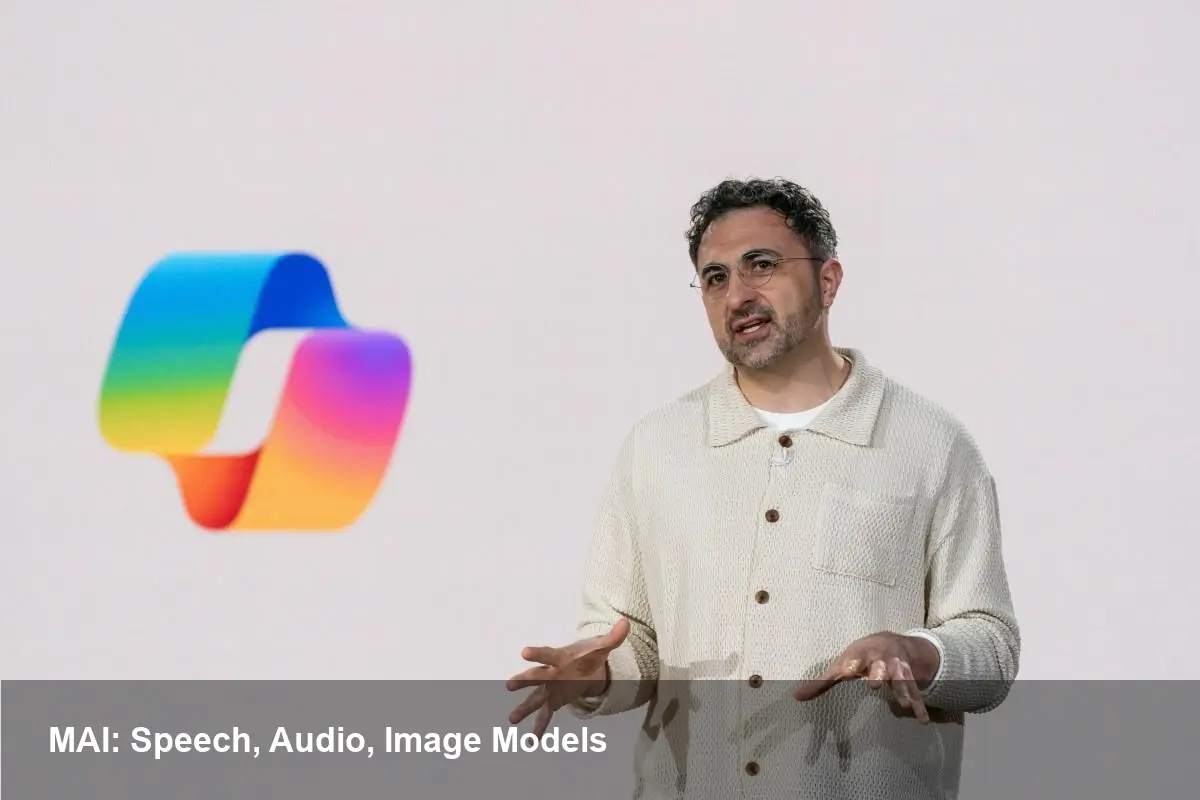
Microsoft’s MAI Launches Three Foundational AI Models

What Microsoft just shipped — and why it matters
Microsoft’s recently created MAI group has released three foundation-class AI models focused on speech transcription, audio generation and image creation. The move marks an acceleration in Microsoft’s efforts to own the full stack of generative AI capabilities beyond large language models — and it has immediate implications for developers, product teams and businesses that rely on media processing.
A quick look at MAI and where it fits
MAI (Microsoft’s dedicated model development team formed about six months ago) brings model-building closer to Microsoft’s product and cloud teams. Rather than just integrating third-party foundation models, Microsoft is now producing its own multimodal primitives — models designed to be reused, fine-tuned and embedded into products. That changes the options for teams choosing between using hosted third-party APIs, running their own open-source stacks, or licensing models through Microsoft’s ecosystem.
What the three models are built to do
- Speech-to-text: A foundation model optimized for robust transcription across accents, noisy environments and domain-specific vocabulary. This is intended for call centers, meetings, and any product that needs reliable, low-latency text output from audio.
- Audio generation: A generative audio model capable of producing realistic voice and non-speech audio. Use cases include synthetic voices for virtual agents, dynamic sound design for games and on-demand audio content creation.
- Image generation: A creative model tuned for high-fidelity visuals from text prompts and image-to-image transformations, designed for marketing, rapid prototyping, and UI/creative tooling.
These three building blocks can be combined — for example, transcribing a podcast, generating a short audio summary in a synthetic voice, and creating cover art — all staying inside a single vendor’s model family.
Concrete scenarios that show the difference
- Product team at a SaaS company: Replace costly manual meeting notes with automated, searchable transcripts. Add a feature that generates short audio highlights in a consistent synthetic voice for executives who prefer listening.
- Indie game studio: Quickly prototype character voices and environmental sounds from scripts, lowering the barrier to producing professional-sounding audio during early development.
- Marketing agency: Generate campaign imagery and versioned ads at scale, then use on-the-fly audio variants for localized audio ads without per-market voiceover sessions.
- Healthcare startup: Use accurate speech transcription for clinician notes, then combine image-generation for anonymized visualizations. (Note: high-regulation domains still require human oversight and strict data governance.)
Developer workflows and integration considerations
If you’re a developer or startup evaluating these models, think about three practical areas:
- Latency and deployment: Foundation models typically demand GPU-backed serving. For real-time transcription (meetings, call centers), pay attention to latency SLAs and whether the provider offers streaming endpoints or edge-optimized variants.
- Fine-tuning vs. prompt engineering: Out of the box, prompt engineering can get you a long way for image and audio generation. For domain-specific transcription (medical terms, legal jargon), fine-tuning or custom vocabulary injection will materially improve accuracy.
- Cost and scaling: Generative audio and high-resolution images are compute-intensive. Plan for batching, caching, and mixed-fidelity strategies (e.g., generate low-res for previews, high-res on demand) to control cloud spend.
APIs and SDKs will be the first integration points, and we should expect Microsoft to fold these models into Azure services and product experiences over time — making them accessible to enterprises that already use Microsoft cloud tooling.
Business implications: competition and platform leverage
Microsoft’s move narrows the gap between owning models and owning the customer surface area. By shipping foundation models internally, Microsoft can:
- Offer vertically integrated products where models are pre-tuned for Office, Teams, Azure and developer tools.
- Compete more directly with other foundation-model providers by offering bundled value (credit plans, enterprise SLAs, compliance tooling).
- Reduce dependence on external vendors for core multimodal capabilities.
For startups, that translates into two strategic choices: build on top of Microsoft’s models for tight Azure and enterprise compatibility, or remain vendor-agnostic and rely on open models and multi-cloud strategies.
Risks, limitations and what to watch for
- Content and IP: Generated audio and images raise questions about licensing and copyright — who owns a synthetic voice or an image derived from prompts that resemble copyrighted artwork? These legal questions are still unsettled and vary by jurisdiction.
- Safety and misuse: Audio models can be misused for deepfake voices; image models can create misleading visuals. Enterprises need robust watermarking, detection tools and policy governance when deploying these capabilities.
- Accuracy and hallucination: Transcription models perform well but can still mislabel technical terms or names. For critical flows (medical, legal, or financial transcripts) human review remains essential.
- Cost of expertise: Effectively deploying foundation models isn’t just about API keys. It requires MLOps, prompt engineering discipline, and infrastructure planning.
Three practical implications for the next 12–24 months
- Multimodal product features will become table stakes. Organizations that add integrated voice and image generation to their offerings will differentiate faster — especially in media-heavy verticals.
- Hybrid operating models will emerge. Expect a mix of cloud-hosted foundation models for scale and private, fine-tuned variants for regulated data and IP-sensitive workloads.
- New tooling and standards will grow around provenance and safety. Detection, watermarking and rights-management services will see increased demand as companies try to use generative media responsibly.
How to evaluate whether to adopt these models now
- Run a focused pilot that measures accuracy, latency and cost for your core flows — don’t guess. For speech-heavy applications, collect representative audio and benchmark transcription quality; for audio and image use cases, measure creative control and turnaround time.
- Factor in compliance. If you handle regulated data, insist on data residency, audit logs and contractual protections before feeding audio or images into third-party models.
- Think product-first. Use generative models where they reduce friction or open new revenue paths rather than adding novelty features customers don’t need.
Microsoft’s release of three foundational models is more than a product announcement: it’s a signal that multimodal primitives are moving into mainstream developer toolchains. For teams that plan carefully around integration, cost and safety, these models open creative and operational possibilities that were expensive or impractical just a year ago.