Claude Code Channels: Bringing Claude to Telegram & Discord

Why this matters
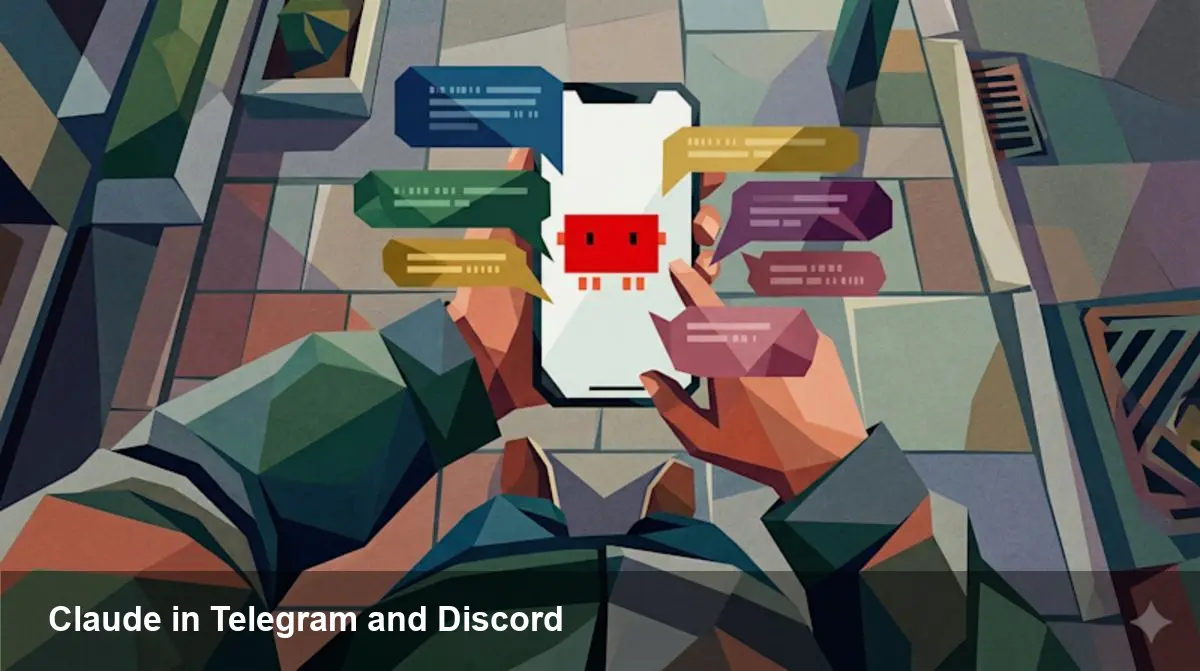
Anthropic's latest rollout, Claude Code Channels, makes it straightforward to interact with Claude from popular chat platforms such as Telegram and Discord. That shift matters because it moves a powerful, safety-focused assistant out of the browser or API playground and into the daily spaces where teams and communities already communicate.
For product teams, devs and startups, that means quicker prototyping of assistant-driven workflows, lower friction for end users, and new opportunities to make AI more context-aware by attaching persistent state to conversations.
A quick primer on the company and product
Anthropic builds Claude, a family of assistant models focused on controllability and safety. Over several releases the company has emphasized predictable behavior and guardrails, while expanding capabilities that developers care about: better instruction-following, broader context windows, and integrations that bring the model into real-world apps.
Claude Code Channels is the name Anthropic uses for the capability that links Claude directly to messaging channels (notably Telegram and Discord). The value proposition is simple: instead of building custom bots from scratch and managing state yourself, you can route chat streams to Claude with built-in memory and multi-channel support.
What Code Channels changes for developers and product teams
- Multi-channel reach: You can surface Claude in community platforms and team chats without building separate connectors for each channel. That reduces engineering overhead and speeds up time-to-value.
- Persistent, shared context: Code Channels are designed to retain long-term memory or state across sessions. For a user or a group, Claude can remember preferences, ongoing tasks, or project context so interactions feel continuous rather than one-off.
- Faster prototyping: Instead of orchestrating a microservice, message queue, and a bespoke DB for conversation state, teams can route messages to Claude and use its memory features to prototype workflows rapidly.
- Lower integration complexity: Native support for common chat platforms reduces the need to be an expert in their bot SDKs, webhooks and throttling behavior — Anthropic handles the model-facing side.
Concrete use cases
- Customer support triage on Telegram: A small e-commerce team can deploy a Claude channel on their Telegram support line to handle routine inquiries, suggest product matches, and escalate complex tickets to humans while retaining the conversation history.
- Engineering standups in Discord: A developer team can pin a Claude channel in a private Discord server that keeps track of sprint commitments, summarizes daily standups on demand, and surfaces unresolved action items from previous days.
- Coding help in community servers: Open-source projects can make Claude available in their Discord channels. Contributors can ask targeted questions about repository conventions, get example code snippets, and have the assistant remember project-specific rules.
- Sales enablement and lead nurturing: Sales teams that interact with customers via Telegram can use Claude to keep track of leads’ preferences, follow up automatically with personalized messages, and summarize customer interactions for CRM entry.
Example workflow: Internal dev bot in Discord
- Create a dedicated channel and connect it to Claude Code Channels.
- Configure what Claude should remember (project code style, test commands, or CI hints).
- Team members ask the bot: “How do I run the unit tests for module X?”
- Claude replies with step-by-step commands and stores the interaction so it can later summarize testing issues or suggest refactors.
This removes the need to implement chat persistence, authentication plumbing and context stitching manually — accelerating a useful internal tool from weeks to hours.
Business and operational considerations
- Data governance: Persistent memory is powerful but raises questions about what gets stored, for how long, and who has access. For enterprises, clear retention policies and audit logs are important.
- Compliance and PII: Accepting inbound messages from public platforms means higher risk of receiving personal data. Teams should define filters or redaction rules and consider whether channel messages should be routed through a private instance or enterprise plan.
- Cost model and scale: Integrating an assistant into high-traffic public channels can generate significant compute usage. Budgeting for usage, batching requests, and applying rate limits at the channel level will be necessary.
- Moderation and safety: Community platforms have different norms. Deploying a model that replies automatically requires guardrails: explicit disclaimers, escalation paths to human moderators, and content filters to prevent disallowed outputs.
Limitations and realistic expectations
- Not a drop-in replacement for full custom bots: While Code Channels reduce wiring work, complex logic, transactional operations (billing, account changes), and domain-specific integrations still often need backend services.
- Memory is helpful but not omniscient: Persistent context can improve continuity but is subject to policy controls and pruning. Design conversations so key facts are re-confirmed before sensitive actions.
- Platform constraints remain: Telegram and Discord impose rate limits, file size caps and webhook behavior that still shape the integration experience.
Strategic implications — three things to watch
- Mainstreaming multi-channel assistants: Expect other model providers to follow with similar channel-first strategies. The winner is likely the one that balances reach, privacy controls and a solid developer experience.
- Convergence with open-source practices: Closed models are adopting features originally championed by open-source projects — modular connectors, community-friendly bots, and long-term memory. This convergence reduces the technical gap for teams choosing between hosted and self-hosted assistants.
- New product surfaces for startups: Companies can build niche assistants (industry-specific compliance bots, developer productivity wraps) by layering business logic and integrations on top of channel-enabled models rather than reinventing the ML stack.
Practical checklist before you enable a channel
- Define what Claude should remember and how long that data persists.
- Decide which channels and user groups get access to automated replies.
- Create escalation rules and a human-in-the-loop plan for risky queries.
- Budget for API usage and monitor traffic patterns after launch.
Claude Code Channels make the prospect of pervasive, context-aware assistants more attainable. For teams that already live in Telegram or Discord, it’s a pragmatic shortcut: less plumbing, faster iteration, and the ability to prototype useful experiences inside the same apps people already use every day. If you plan to try it, start with a small internal channel, establish clear privacy rules, and iterate toward broader community deployments.