How Snapdragon Wear Elite Could Break the Smartphone’s Hold

Why this chip matters
Qualcomm’s Snapdragon Wear Elite marks a strategic push to make wearables more than smartphone companions. Rather than acting as a thin remote for your phone, devices built on this platform are intended to run richer apps, maintain persistent connectivity, and handle advanced sensing and AI tasks locally. For product teams, developers and enterprise buyers, that changes the design constraints you’ve assumed for the last decade.
A quick snapshot of the platform
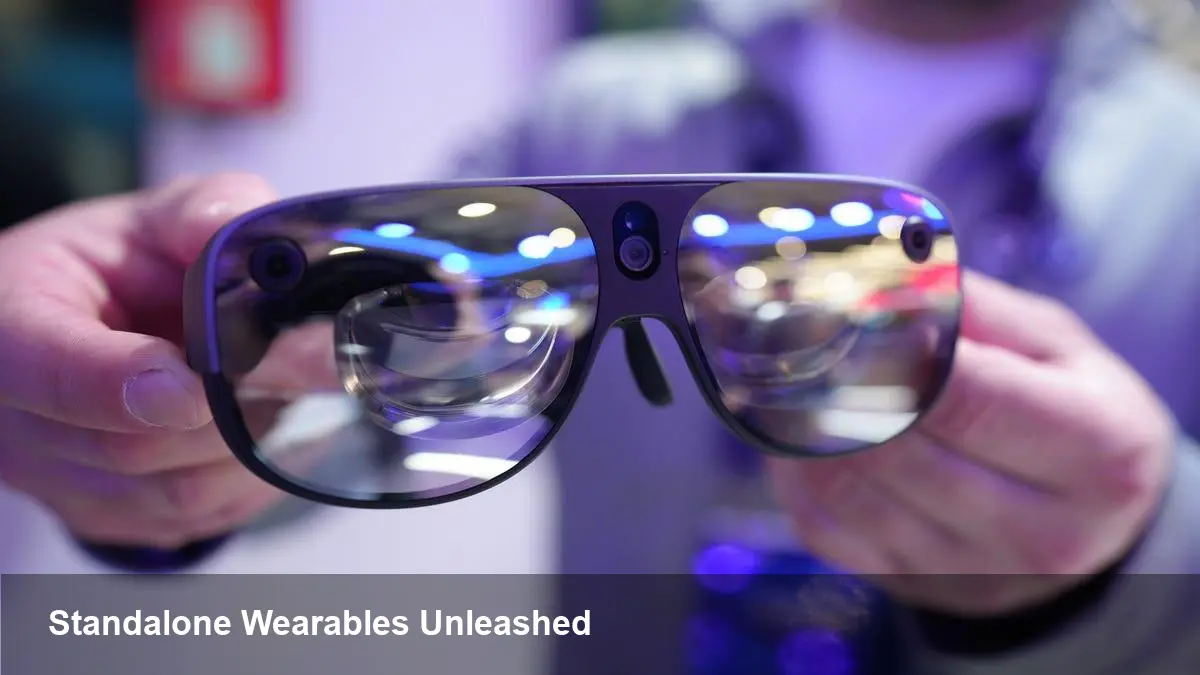
Qualcomm is a longtime supplier of SoCs for phones and wearables. The Snapdragon Wear Elite sits in that lineage but targets a different trade-off: higher compute for on-device experiences while still prioritizing battery life and thermal limits for tiny enclosures like glasses and watches. The company positions this chip as enabling truly standalone wearables — devices that can do navigation, payments, voice assistants, spatial computing and more without a paired smartphone.
I won’t list unverified benchmarks here, but think of the Wear Elite as the bridge between today’s low-power watch chips and the more capable mobile silicon used in phones. That means better graphics, larger on-device models for AI inference, and improved sensor fusion without the smartphone tether.
Four everyday scenarios that change
- A pair of AR glasses used during a commute. Instead of needing a phone in your pocket to drive navigation and contextual overlays, the glasses run mapping, object recognition and turn-by-turn directions locally while streaming only necessary data to the cloud. No constant phone handoff, fewer latency spikes, and better privacy control over what visual data leaves the device.
- A sport watch that genuinely replaces a phone on a run. It can route cellular calls, display route maps, translate snippets of audio and run injury-risk detection using local sensor streams. With the Wear Elite’s stronger ML capabilities, complex calculations that used to require pairing can run on-device for longer.
- Enterprise field gear for technicians. Lightweight heads-up displays can overlay wiring diagrams and real-time equipment telemetry while staying connected over 5G or LTE. The device can authenticate, cache maps, and stay operational in weak-signal environments since it’s not reliant on a user’s phone to act as a gateway.
- Healthcare monitors that process biosignals locally and only send alerts or aggregated data. Edge inference reduces round trips to cloud servers, letting devices filter noise and send meaningful events with lower bandwidth and higher privacy.
What this means for developers
- Rethink app architecture: Expect to design apps that can run both as rich local experiences and as cloud-augmented services. That implies a split-responsibility model: critical sensing and inference locally, heavy storage and model updates in the cloud.
- Optimize for intermittent connectivity: Standalone wearables increase scenarios where network quality varies. Developers should design robust sync strategies, conflict-free data stores, and graceful degradation for features like maps or large-media access.
- Focus on power-aware ML: The Wear Elite makes on-device models feasible, but energy is still the primary constraint. Developers must prioritize model quantization, efficient runtimes (ONNX, TensorFlow Lite, or dedicated NPUs) and wake-up strategies that minimize CPU/GPU use.
- UX reimagined for glance and voice: Smaller displays and hands-free interaction call for bite-size workflows, predictable micro-interactions, and voice or gesture fallbacks. Apps designed like smartphone ports will feel clunky.
Business and ecosystem implications
- New product differentiation: OEMs and brands can now build category-defining features into hardware rather than relying only on companion apps. That strengthens hardware IP and service bundling opportunities.
- Carrier relationships matter again: Standalone cellular-capable wearables increase demand for embedded SIMs, flexible data plans, and zero-touch provisioning at scale. Carriers that offer simple device onboarding and cross-device plans will have an edge.
- Platform and store dynamics: If more devices run full apps independently, app stores and platform policies will need to expand to handle input modalities, privacy disclosures, and OTA updates for smaller devices.
- Privacy and regulation: On-device processing gives companies a chance to minimize raw sensor telemetry sent to servers. That helps with user trust and regulatory compliance, but vendors still need clear policies about what is processed locally vs. what is uploaded.
Trade-offs and limits to watch
- Battery vs. capability: The more you push on-device compute, the harder it is to keep days-long battery life on tiny devices. Expect device-makers to tune hardware, display technology and sensor sampling to get the right balance.
- Thermal and form-factor constraints: Powerful silicon still generates heat. For glasses and slim watches, thermal design and sustained performance will be design challenges.
- App ecosystem adoption: The platform’s success depends on developers investing in optimized experiences. Without enough apps designed for standalone wearables, consumer adoption could stall.
Strategic recommendations
- For startups building wearables: Prototype with the Wear Elite or similar chips early. Validate your power budget, network modes (offline-first vs. cloud-first) and interaction model with real users.
- For enterprises: Pilot heads-up or body-worn solutions where reducing reliance on handheld phones creates productivity gains — for example in logistics, utilities, and remote assistance.
- For developers: Start learning efficient model deployment techniques and design micro-interactions for glanceable devices. Make your apps fault-tolerant to poor connectivity.
Broader implications for personal computing
Snapdragon Wear Elite signals an acceleration of the multi-device era: computation moves outward from the smartphone to a constellation of specialized devices. That won’t make phones disappear overnight, but it changes how we think about presence, identity and continuity across devices. Expect incremental shifts — more devices that can act independently but still cooperate — and a fresh wave of UX patterns and business models built around true standalone wearables.
Whether you’re designing hardware, building software, or planning digital services, this chip is another nudge to stop assuming a smartphone will always sit in the user’s pocket.