Inside SpaceX’s 2015 Falcon 9 Landing Breakthrough

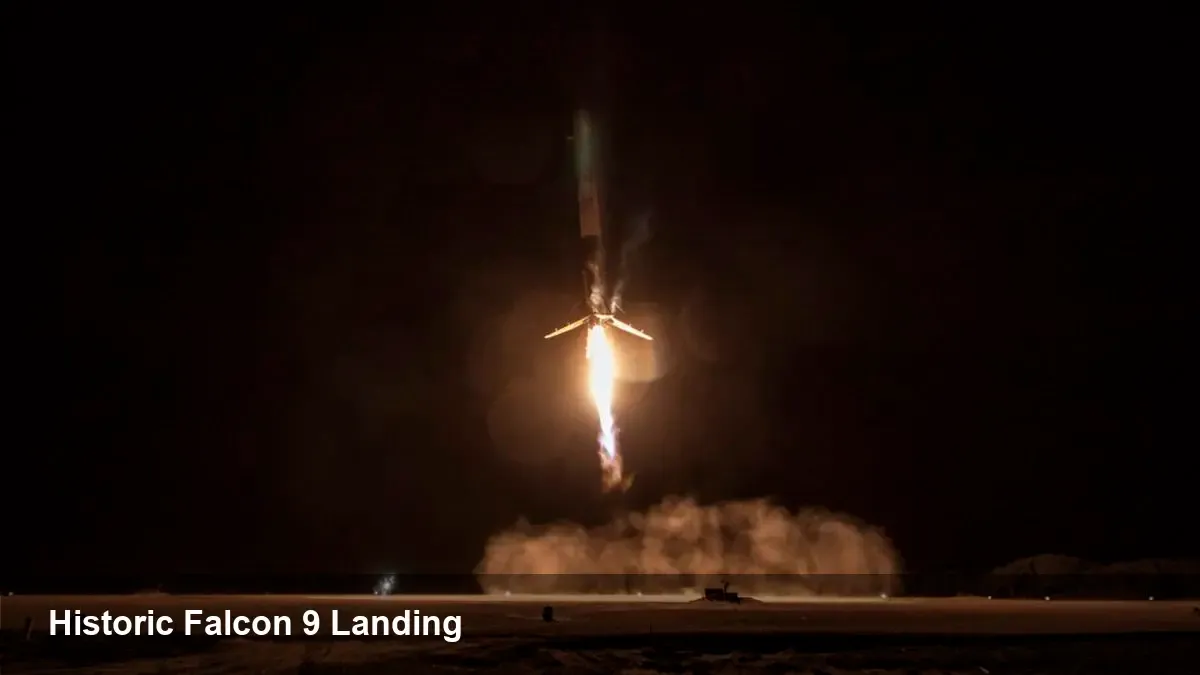
- SpaceX’s first successful Falcon 9 first‑stage landing occurred Dec. 21, 2015 on the Orbcomm‑2 mission, proving controlled recovery was possible.
- The dramatic comeback followed the June 2015 CRS‑7 failure; investigation traced the loss to a failed COPV rod‑end and quality control gaps.
- Simultaneous engineering pushes — Merlin 1D upgrades, propellant densification and new pad work at LC‑39A — were essential to enable reuse.
- The landing validated drone‑ship recovery and helped make Falcon 9’s economics viable, accelerating reusable launch.
What happened in 2015 and why it mattered
SpaceX entered late 2015 under pressure: a high‑profile CRS‑7 cargo mission had disintegrated in June, and the company was racing to prove its recovery and reuse concept. Two critical developments converged — a hard review after CRS‑7 and a major Falcon 9 upgrade — that led to the first successful first‑stage landing on Dec. 21, 2015.
CRS‑7 failure and the lessons learned
The CRS‑7 accident forced an exhaustive investigation. Engineers concluded a composite overwrapped pressure vessel (COPV) support rod‑end fractured at cryogenic temperatures after a lower‑quality part had been substituted, exposing gaps in supplier screening and quality control.
Beyond hardware fixes, the mishap changed operations. Teams added contingencies to Dragon procedures and tightened parts review. As one flight controller shouted during the CRS‑7 breakup, “Dragon is alive!” — but the vehicle was lost when parachutes failed to deploy because of procedural errors under time pressure.
The Orbcomm‑2 landing that proved reuse
On Dec. 21, 2015 an upgraded Falcon 9 (later called Full Thrust) launched Orbcomm‑2 and returned its first stage to a controlled landing. That night validated guidance, grid‑fin control and the new landing legs and set the baseline for routine recoveries from droneship and landings.
Technical moves that made the comeback possible
Engine and structure upgrades
The Falcon 9 Full Thrust package included higher‑performance Merlin 1D engines (roughly +15% thrust) and lighter structure work that collectively raised payload by about a third versus earlier versions.
Propellant densification
Propellant densification — super‑chilling liquid oxygen and kerosene to pack more mass into the tanks — delivered another 8–10% performance gain. The process was technically risky, requiring novel chill systems and careful handling of LOX at very low temperatures, but it was a decisive multiplier for reuse economics.
LC‑39A and operational scale
Securing NASA’s historic Launch Complex 39A in 2013 gave SpaceX the infrastructure to expand operations. Converting the pad and staffing for higher cadence were essential to move from experimental returns to frequent missions.
Why the landing changed launch economics
The successful 2015 landing transformed Falcon 9 from a single‑use rocket into a candidate for reuse. Recovering a first stage reduced marginal launch cost and enabled SpaceX to test rapid refurbishment workflows — a step change that pushed the industry toward reusability as a practical business model.
Bottom line
SpaceX’s first Falcon 9 landing was not an isolated triumph but the culmination of painful failures, targeted engineering upgrades, and operational expansion. Together these moves made routine first‑stage recovery—and the economics of reusable rockets—realistic for the first time.