
When OAuth Redirects Turn Malicious: Practical Defenses

A concise background
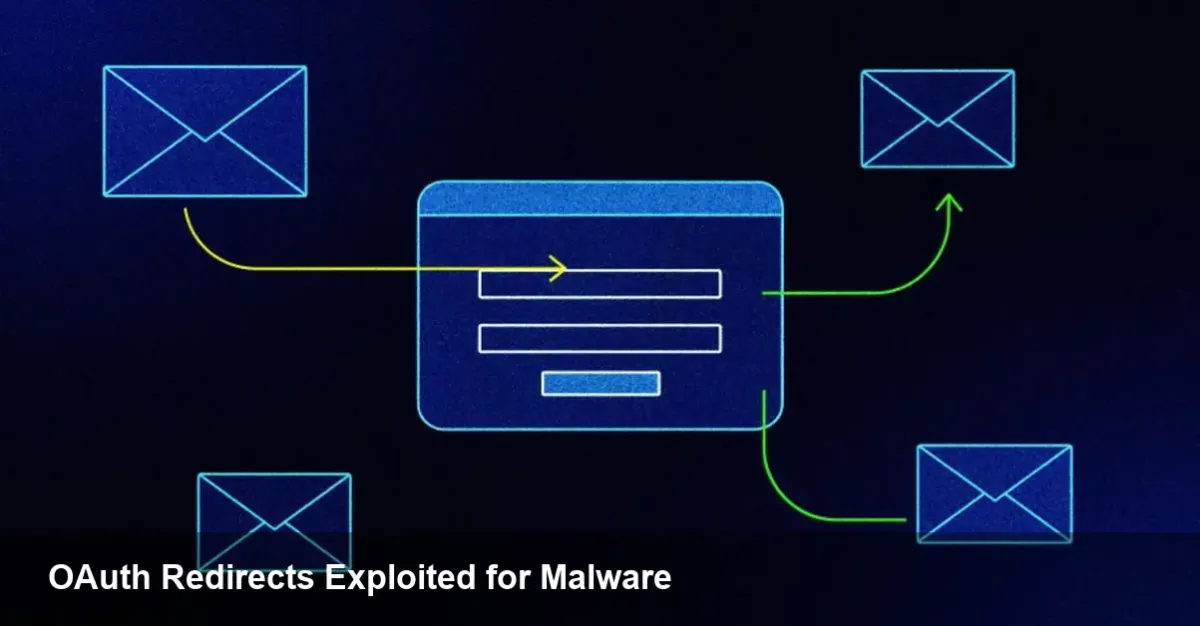
Microsoft recently flagged an uptick in campaigns that weaponize OAuth redirect flows to deliver ZIP-based malware and EvilProxy links against government entities. Rather than rely on password theft through classic credential phishing, attackers are increasingly abusing legitimate OAuth consent and redirect behavior to obtain access tokens, bypass MFA, or steer victims toward real-time account proxies.
OAuth and related authorization mechanisms were built to make single-sign-on and delegated access convenient. Attackers have learned to disguise malicious intent inside those same flows — delivering malware payloads in ZIPs or handing victims an EvilProxy link that captures tokens as they sign in.
How this abuse typically looks (concrete scenario)
- Targeting and lure: A recipient in a government agency receives a convincing message — sometimes tailored and sometimes generic — with a link framed as a document, ticket, or secure message.
- Redirect to malicious app: Clicking the link lands the user on an OAuth consent dialog or an intermediary page that redirects to a malicious app’s OAuth redirect URL. The app requests permissions (scopes) such as email, profile, or even offline_access.
- Token interception or immediate payload: If the user grants permission, the attacker gets tokens or refresh tokens. In other variants, the redirect serves a ZIP file download containing a loader, script, or executable that the user is coaxed into opening.
- EvilProxy variant: The user is tricked into authenticating via a proxy that relays the real login flow to the identity provider while capturing tokens and session cookies in real time. Because the user completes authentication legitimately, MFA may be bypassed.
Example: An analyst receives a ‘secure delivery’ link. The link opens a page that asks for consent to an app claiming to need mailbox access. The app is malicious; on consent, the attacker obtains an access token and extracts emails or can send on behalf of the user.
Why government targets are attractive
- High-value data: Government accounts often hold sensitive policy documents, internal communications, and intelligence.
- Persistent access opportunities: Long-lived refresh tokens or poorly monitored app-consent activity can give attackers continued access.
- Operational impact: Disrupted communications or exposed credentials can affect public services and national security.
Attackers balance ease-of-use (redirect-based scams are simple to launch) with high payoff when targets are high-value.
Immediate steps for defenders (administrators & security teams)
- Audit and restrict application consent policies: Block tenant-wide user consent for third-party apps and require admin approval for new enterprise app registrations.
- Enforce app verification: Only allow apps with verified publishers and pre-approved redirect URIs to request sensitive scopes.
- Adopt conditional access and session controls: Require phishing-resistant MFA (FIDO2/WebAuthn) for high-risk roles, and block legacy auth where possible.
- Monitor sign-in and consent telemetry: Look for spikes in app consent grants, unusual redirect URIs, or tokens issued to apps with low reputation.
- Hunt for anomalous token activity: Refresh token usage from unexpected locations, or broad-scoped tokens used by low-privilege accounts, are red flags.
- Block known malicious domains and proxies: Maintain and update blocklists for EvilProxy and associated command-and-control hosts.
These actions reduce the attack surface and make it harder for attackers to gain or maintain access via abused OAuth flows.
What developers and app owners should do
- Lock redirect URIs: Avoid wildcard or generic redirect URIs — use exact, HTTPS-only endpoints and validate them on the server side.
- Use PKCE for public clients: Proof Key for Code Exchange mitigates code interception attacks for native and single-page apps.
- Validate the state parameter and use anti-CSRF protections: Ensure state is present, unique per request, and checked on callback.
- Minimize scopes: Request the least privilege necessary; avoid requesting offline_access or wide mailbox scopes unless strictly required.
- Implement short-lived tokens and rotation: Rotate refresh tokens and implement bound tokens where possible (token binding to client or device).
- Display clear consent information: Make the app publisher obvious and explain why each scope is needed to help users spot suspicious requests.
Developers who harden OAuth apps make it materially more difficult for attackers to exploit legitimate flows.
Detection and incident response pointers
- If you detect a compromised token or suspicious consent, revoke the app’s access, rotate credentials, and force reconsent where necessary.
- Perform account-level containment: reset sessions, reset refresh tokens, and require a reauthentication using phishing-resistant MFA.
- Investigate the initial vector: Was a ZIP file opened? Was the user redirected to a third-party consent page? Preserve logs and timelines.
- Share indicators: Publish malicious redirect URIs, domains, and file hashes to internal threat feeds and, where appropriate, with wider security communities.
Business and operational implications
- Operational friction vs. security: Tightening consent and blocking app registration increases administrative overhead. But for high-risk sectors — government, critical infrastructure, finance — the tradeoff favors stricter controls.
- Supply-chain risk: Attackers can register seemingly legitimate apps to impersonate vendors. Vet third-party integrations carefully.
- User training still matters: Even with controls, social engineering remains effective. Training that focuses on consent dialogs and redirect URIs is important.
Near-term trends to watch
- OAuth phishing-as-a-service growth: Tools that generate fake consent flows and proxy real sign-ins will become easier to deploy, increasing volume of campaigns.
- UX-driven defenses: Major identity providers will likely tighten consent UI and app verification processes to reduce accidental approvals.
- Token hardening: Expect wider adoption of short-lived, bound tokens and mechanisms from OAuth2.1 that reduce the utility of intercepted tokens.
If your organization handles sensitive public-sector data, treat OAuth consent and redirect hygiene as a first-class security control. Start by auditing app consent, restricting user consent for third-party apps, and training staff to recognize suspicious redirects — small changes that significantly raise the cost for attackers.