What Meta’s decision to drop E2E for Instagram DMs means

Why this move matters
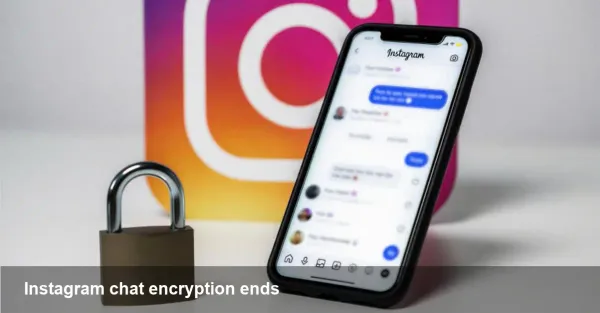
Meta recently announced it is halting its rollout of end-to-end encryption (E2E) for Instagram direct messages. For people who equate encrypted DMs with private conversations, and for developers building on top of social messaging flows, that change has concrete consequences. This article explains what changed, why it matters for users and businesses, and how developers and security teams should adapt.
Quick background: what was planned and what stopped
Meta — the company behind Facebook, Instagram and WhatsApp — had been working to extend stronger privacy protections across its messaging products. End-to-end encryption ensures only the sender and recipient can read message content; platforms can’t decrypt the text even if asked. Meta implemented E2E on WhatsApp years ago and had been testing or preparing E2E for Instagram DMs. The recent decision pauses or cancels the widespread deployment of E2E in Instagram DMs, with the company pointing to low adoption during tests as a primary reason.
Practical effects for different users
Everyday users
If you used an unencrypted Instagram DM to send sensitive personal information, nothing changes immediately — Instagram still provides transport-level encryption (TLS) between your device and their servers. But the platform can access message contents for moderation, safety checks, or legal requests. For users who prioritize privacy, losing E2E on DMs reduces the guarantee that messages are only visible to participants.
Example: An activist coordinating events from a public account might prefer E2E to prevent platform or third-party access to the conversation. With E2E off the table, sensitive coordination must use other encrypted channels or in-person methods.
Journalists, sources and vulnerable communities
End-to-end encryption has been a practical safeguard for whistleblowers and at-risk individuals. Without E2E on Instagram DMs, these users need to choose alternatives (e.g., Signal, WhatsApp with E2E enabled, or secure email) when exchanging highly sensitive information. Expect a modest migration of privacy-conscious users to other apps.
Small businesses and creators
Many small merchants and creators rely on Instagram DMs for customer support and transactions. The absence of E2E may be double-edged: it allows Instagram to apply automated moderation and safety features that can block scams or policy violations, but it also means business conversations could be reviewed for ad personalization or targeted safety interventions. Companies that need confidentiality for contracts, invoices, or legal documents should switch to dedicated encrypted channels or enterprise messaging suites.
Developer and platform implications
APIs and integrations
Developers building tools that integrate with Instagram’s messaging features (for chatbots, customer support, CRM syncs) will not have to contend with the operational restrictions that E2E introduces. End-to-end encryption complicates server-side processing because message payloads are unreadable without user keys. With E2E halted, integrations can continue to parse messages for automation, analytics and moderation.
However, this also means dependency on platform-side access: if Instagram changes policies or limits API permissions, developers lose visibility. Consider building integrations that degrade gracefully and avoid storing sensitive user content on your servers unless legally and ethically required.
Moderation, AI, and safety engineering
One of the clearest reasons platforms cite for avoiding E2E is the ability to detect and remove illegal content, child exploitation, or coordinated harm. Without E2E, Instagram can use on-platform signals and machine learning to flag abuse. This supports safety teams but raises trade-offs around false positives, surveillance risks, and the potential chilling effect on free expression.
For engineering teams, expect continued investment in server-side ML models, better metadata analysis, and tools that balance automated action with human review. Developers building safety tooling should tune for behavior patterns (metadata, timing, attachments) rather than relying on message text alone.
Pros, cons and some hard trade-offs
- Pros:
- Better content moderation and law-enforcement cooperation.
- Easier integration for customer support and CRM systems.
- Lower technical complexity for platform features like cross-account syncing.
- Cons:
- Reduced privacy guarantees for users who need strong confidentiality.
- Increased responsibility on Meta to handle and secure large volumes of readable user data.
- Potential erosion of trust among privacy-conscious communities.
Short scenarios to illustrate
1) A customer sends bank details via DM to a seller; platform access helps automated fraud detection but exposes sensitive contents to platform-side review. 2) A journalist accepts an anonymous source via Instagram DM; with no E2E, the source might be better off using a different app that preserves confidentiality by design. 3) A developer builds a support chatbot that reads incoming DMs to route tickets; the absence of E2E enables the bot but raises questions about storing PII.
Longer-term implications and strategic insights
1) Platforms will continue to balance safety and privacy, but that balance will vary by product. Meta’s decision signals a willingness to prioritize moderation and operational flexibility on social platforms where content risk is high.
2) Demand for truly private communication will likely consolidate around apps that offer E2E by default (Signal, WhatsApp for some use cases). Businesses that need confidentiality may adopt hybrid strategies: public interactions on social platforms, sensitive exchanges on encrypted channels.
3) Technical innovation may shift toward middle-ground approaches: client-side selective encryption, zero-knowledge proofs for moderation signals, or privacy-preserving metadata analysis. Expect research into ways to detect illicit behavior without reading plain text.
What developers and companies should do now
- Audit any workflows that rely on unreadable message payloads and prepare fallback logic if platform policies change.
- For customer support, avoid requesting sensitive identifiers over DMs; implement a handoff to secure channels for PII or payments.
- Security teams should reassess data retention and access controls, given the platform will retain readable message content for moderation and legal compliance.
- Product managers should map user expectations and offer clear UI signals when conversations are not end-to-end encrypted.
Meta’s choice to stop pushing E2E to Instagram DMs reframes the trade-offs between privacy and safety for a large social network. For users who require absolute confidentiality, the path forward is clear: migrate sensitive conversations to apps built around encryption. For businesses and developers, the decision reduces some technical constraints but increases the ethical and compliance responsibilities tied to readable user communications.