Patch released for Chrome zero-day CVE-2026-2441

Quick summary
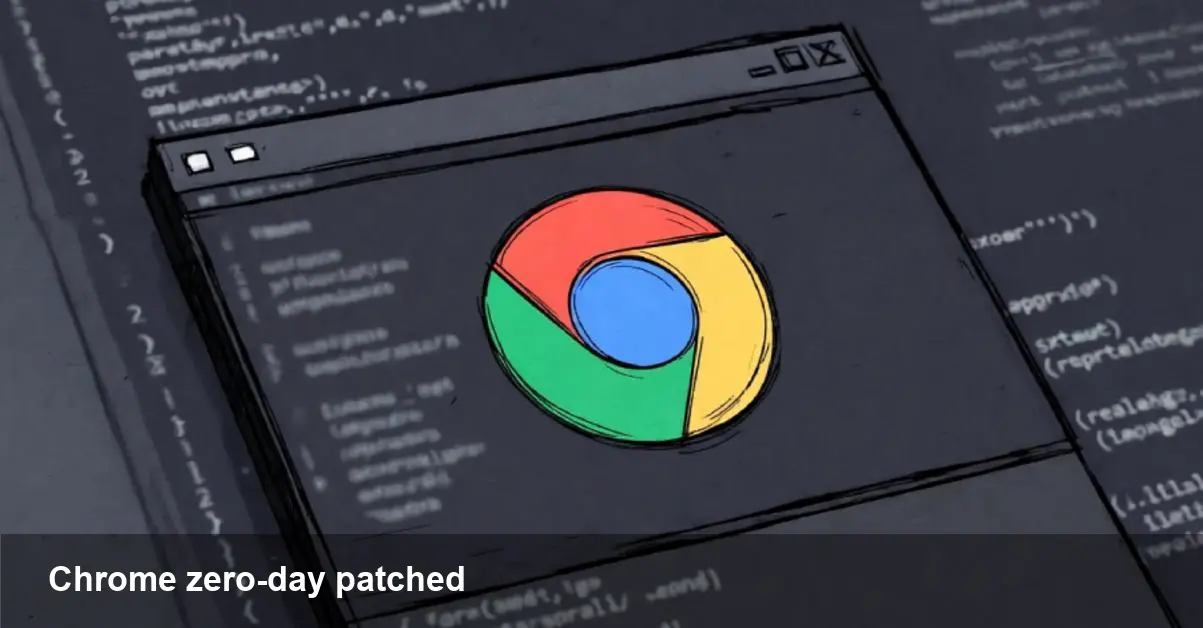
Google has released an urgent update for Chrome to address CVE-2026-2441, an actively exploited zero-day that targets the browser's CSS engine. The flaw is a use-after-free in CSS processing that can be chained to achieve code execution even within the browser sandbox. If you run Chrome, you should prioritize updating right away.
What the vulnerability is and how attackers used it
CVE-2026-2441 is a memory-corruption bug in Chrome’s CSS handling. In technical terms, an attacker can trigger a use-after-free condition while parsing or applying CSS, which lets them manipulate memory in a way that can lead to arbitrary code execution. Although modern browsers include multiple mitigations — sandboxing, ASLR, and memory safety layers — exploit chains can combine this flaw with other conditions to break out of restrictions and execute code in the renderer process.
Security teams observed exploitation in the wild prior to Google’s fix, which is why this was pushed as a high-priority update. The attack surface is broad: simply visiting a malicious page or content delivered via malvertising could be a vector.
Why this matters for users and organizations
- Browser zero-days are high-risk because browsers are an everyday attack surface: users open links and web content constantly.
- A CSS-focused exploit is significant because styling code is ubiquitous and often trusted; it's exchanged in third-party content, ads, and embedded widgets.
- Active exploitation means attackers already have working code, increasing the likelihood of targeted and opportunistic attacks.
For individuals, the main consequence is that an unpatched browser could be used to deliver further payloads, steal data, or install additional malware on the system. For enterprises, a compromised browser — especially one used for privileged tasks or with access to internal apps — can become a beachhead for lateral movement.
Immediate steps for end users
- Update Chrome now: use the browser’s update mechanism (Menu > Help > About Google Chrome) to install the latest patch. Chrome typically applies critical fixes quickly, but manual checks are recommended.
- Restart the browser after the update to ensure the patch is active.
- Avoid unknown or suspicious links and sites until you confirm Chrome is updated.
- If you use Chrome on mobile devices, check for updates in the Play Store or App Store and install them.
Recommendations for IT and security teams
- Enforce immediate patching: push the Chrome update through your enterprise management tools (SCCM, JAMF, Google Admin Console, etc.) and track compliance.
- Prioritize high-risk groups: users with admin privileges, developers, and those with access to sensitive internal systems should be updated first.
- Use browser hardening: enable Site Isolation and other Chrome security features (e.g., Enhanced Safe Browsing) where feasible. Consider restricting access to high-risk websites through web proxies or filtering.
- Audit extensions: malicious or vulnerable extensions increase attack surface. Use enterprise policies to limit extensions to a managed allowlist.
- Monitor telemetry: look for unusual crashes in renderer processes, unexplained child processes, or outbound connections immediately after suspicious browsing events.
Detection and incident response guidance
Detecting exploitation of a browser zero-day can be challenging because exploit code often leaves minimal traces beyond a crash or anomalous process behavior. Practical steps:
- Search logs for renderer process crashes and correlate with user browsing activity for suspicious domains.
- Use endpoint detection and response (EDR) tools to examine process trees for unusual child launches from Chrome.
- Examine network logs for outbound connections to known malicious infrastructure — though many exploit chains use encrypted channels or living-off-the-land techniques.
- If exploitation is suspected, isolate the affected host, capture memory and disk images, and preserve browser state for forensic analysis. Coordinate with threat intelligence and law enforcement if warranted.
Notes for developers and web teams
There’s no simple CSS-level patch you can apply to your site to block an exploit in the browser engine; this is a client-side bug. However:
- Avoid loading third-party content without controls. Use subresource integrity for scripts where possible, and limit third-party CSS and widgets to trusted providers.
- Implement a strong Content Security Policy (CSP) to reduce the risk of cross-origin content injection and minimize avenues for delivering exploit payloads.
- Encourage users to keep browsers updated by surfacing reminders in help pages or support workflows.
Broader implications and what comes next
- Browser security remains a critical battleground. Attackers continue to find creative ways to exploit components that process complex inputs (HTML, CSS, JS). Vendors will keep prioritizing rapid patching and layered mitigations, but defenders must match that speed on deployment.
- Supply-chain and third-party content controls are increasingly important. Malvertising and third-party widgets are common distribution vectors for browser exploits — restricting or vetting these reduces exposure.
- The role of telemetry and crash reporting grows. The faster developers and vendors can detect exploitation patterns, the faster they can ship mitigations. Organizations should ensure crash and telemetry data is available to security teams while respecting privacy requirements.
Practical wrap-up
CVE-2026-2441 is a serious, actively exploited Chrome zero-day affecting the CSS engine and enabling sandboxed remote code execution. For most users and organizations the single most effective action is to update Chrome immediately and ensure that enterprise patching mechanisms roll the fix out to all endpoints. Beyond the urgent update, strengthen browser policies, tighten third-party content, and monitor for anomalous behavior to reduce future risk.
Keeping browsers current and reducing unnecessary third-party exposure are simple but powerful defenses against this class of attack. What steps will you prioritize this week to harden browser security in your environment?