Meta ends Instagram E2EE chats on May 8, 2026: impact and next steps

What changed and why it matters
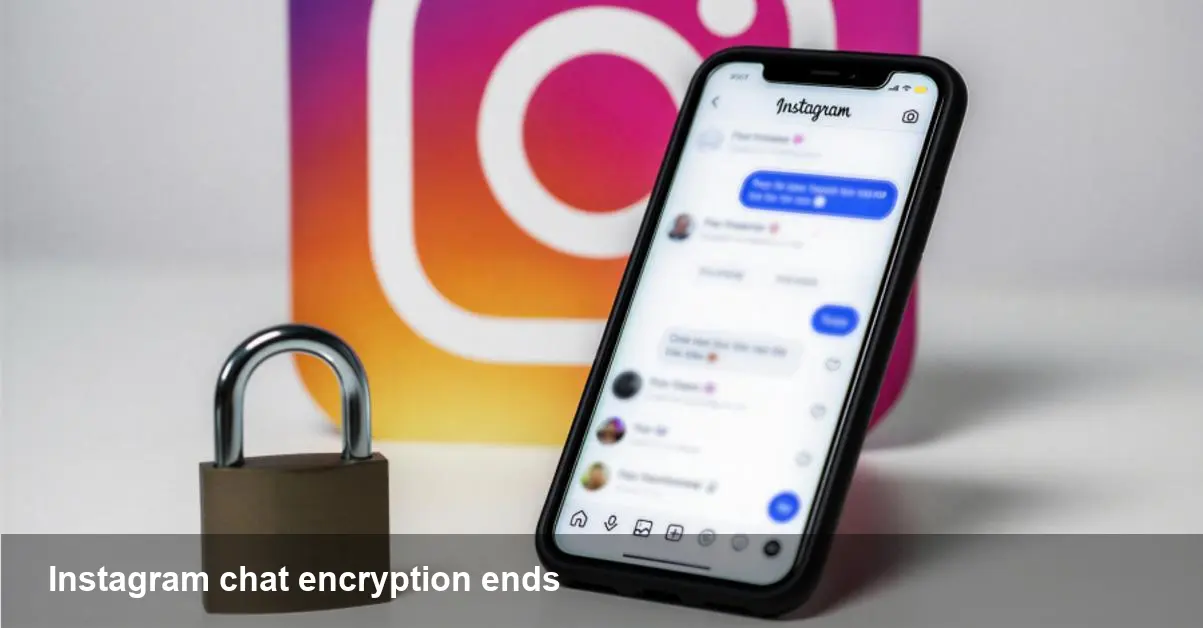
Meta has announced it will stop supporting end-to-end encrypted (E2EE) chat on Instagram starting May 8, 2026. The company originally piloted encrypted direct messages in 2021 as part of broader efforts to increase user privacy across its messaging stack. Reversing course on that feature signals a shift in how one of the world’s largest social platforms balances privacy, safety and regulatory expectations.
For everyday users, developers building on Instagram messaging APIs, and businesses that use Instagram for customer communication, this move has practical consequences. Below I break down what’s happening, show concrete steps different groups should take, and offer a few strategic takeaways about the future of encrypted messaging.
Quick facts
- Product: Instagram Direct messages (E2EE chat support)
- Company: Meta
- Effective date: May 8, 2026
- Original pilot: E2EE test on Instagram began in 2021
User impact: privacy, data access, and choices
If you used Instagram’s E2EE chat option, conversations that were previously protected end-to-end will no longer be supported after the change. That alters the threat model in two ways:
- Messages will potentially be accessible to the service provider (or retained by the platform) in ways they were not under E2EE. That may reduce protection against account-level or server-side breaches.
- Some safety features that rely on non-encrypted access to messages (for example, automated detection of abuse or child-safety screening) become easier to apply when encryption is removed — which is likely part of the calculus behind the change.
What users should do now
- Export important conversation data. If you have sensitive threads you want to archive, back them up before the change.
- Consider alternative apps for sensitive communication. If E2EE is a hard requirement, apps like Signal and WhatsApp (which has default E2EE) remain options.
- Review account security. Independent of encryption, enable multi-factor authentication, use strong passwords, and periodically audit connected apps and devices.
For developers and integrators: rethink messaging flows
Companies that use Instagram messaging APIs or run customer support through DMs will need to re-evaluate several technical and compliance aspects.
Immediate actions
- Audit integrations. Identify any systems that depended on E2EE behavior or that stored message data under assumptions of limited access.
- Update privacy notices and contracts. If you collect or store user messages, disclose how they’ll be handled now that encryption support is changing.
- Test automated moderation pipelines. If your moderation relied on server-side access, expect a shift in how content is processed and logged.
Design considerations
- If your app requires confidentiality guarantees for customers (e.g., telehealth, legal advice), avoid Instagram DMs for that use case and build workflows that route users to encrypted channels you control.
- Use message retention policies. Decide how long to keep messages and implement secure deletion routines to limit exposure.
Business and brand implications
Brands that rely on Instagram for sales, lead generation, and support will see policy and operational impacts:
- Trust signals: Customers who assumed private DMs may feel differently if privacy guarantees change. Communicate clearly to preserve trust.
- Legal exposures: Depending on jurisdictions, changes to encryption may affect compliance with data protection or retention laws. Legal teams should update risk assessments.
- Platform dependency risk: This is a reminder to diversify customer communication channels (email, SMS, chat platforms with different privacy postures) so a single platform decision doesn’t block operations.
Concrete scenario: a healthcare clinic A clinic using Instagram DMs for appointment scheduling and informal medical exchanges will need to move patient-specific information to HIPAA-compliant systems or to messaging platforms that offer the appropriate protections and BAA (business associate agreement) if required.
Broader implications for the encrypted messaging ecosystem
Meta’s reversal on Instagram E2EE is part of a larger tension between privacy advocates, platform designers, and regulators. Here are three implications worth watching:
1) Policy and regulation will shape product architecture Governments and safety organizations continue to press platforms to make content accessible for moderation and law enforcement. Platforms will design features with those pressures in mind, and product roadmaps may shift faster than cryptographic deployments can adapt.
2) User behavior will further fragment by trust needs Expect a clearer split in user choices: routine social interactions will remain on mainstream platforms with varied privacy guarantees, while highly sensitive communications will migrate to purpose-built encrypted apps. This polarization will affect feature development and business opportunities.
3) New commercial models around trust and verification Companies may begin offering tiered communication experiences: convenience-first channels for everyday interactions and paid or verified encrypted channels for high-sensitivity use cases. Identity verification and metadata protections will be differentiators.
Limitations and realistic expectations
- Removing platform-level E2EE does not automatically make messages entirely public or insecure; platforms still implement transport security, access controls, and internal logging. But the level of protection against platform-side access changes.
- No single messaging app will solve every problem. End-to-end encryption addresses certain threat vectors but not all privacy risks (e.g., device compromise, social engineering, backups).
Tactical checklist (30–90 days)
- Export message histories you need to keep.
- Inform customers and users about the change and what it means for their conversations.
- Audit integrations and update privacy policies.
- Move confidential workflows off Instagram DMs to appropriate tools.
- Implement or reinforce MFA and device security across teams.
Two questions product leaders should ask now
- How does our communication strategy change if a major platform alters its privacy guarantees? Build contingency plans.
- Which parts of our user experience must remain confidential, and what tools or contracts do we need to make that promise credible?
Shifts like Meta’s decision on Instagram encryption are reminders that privacy features are not only technical artifacts; they are policy choices shaped by regulation, safety priorities, and business strategy. For developers and organizations, the practical response is clear: inventory your dependencies, communicate with users, and route sensitive exchanges to channels engineered for confidentiality.