How Reddit Could Use Biometrics to Curb Bots and Fraud

Why Reddit is rethinking identity verification
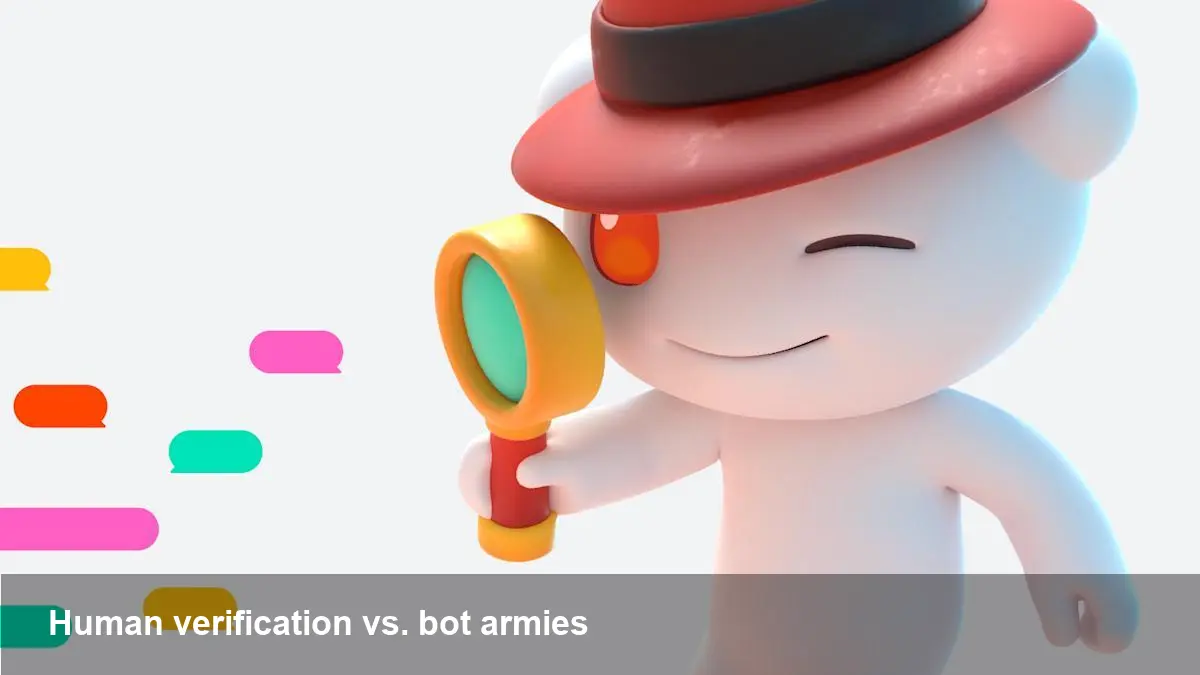
Reddit’s value comes from community-driven discussion, but automated accounts, coordinated networks and fake profiles have been eroding trust and skewing conversations. The company’s leaders have publicly signaled a desire to add stronger identity checks to reduce bot-driven manipulation, spam and ad fraud. One option under consideration is biometrics as a lightweight on-ramp to prove someone is a person without forcing full-name registration.
For developers, moderators and product teams, a move toward identity verification represents a material shift in how Reddit would balance anonymity, safety and platform integrity.
What "biometric verification" could mean in practice
Biometric verification can take different forms depending on privacy goals and implementation constraints:
- On-device face or fingerprint attestation: the user’s device performs a local check that a living human is present and returns an attestation token (no biometric image leaves the device).
- Third-party identity services: vendors provide identity checks (selfie vs. ID, liveness tests) and return a pass/fail assertion to Reddit.
- Privacy-preserving approaches: cryptographic protocols or zero-knowledge proofs that confirm “some biometric matched” without revealing the biometric itself.
Reddit’s leadership has framed biometrics as a lightweight way for the platform to verify users — emphasizing minimal friction while increasing confidence that accounts map to real humans.
Why platforms consider this: clear use cases
Reddit would not be doing this simply for the technical challenge. Practical use cases include:
- Reducing bot-driven vote manipulation and false trending topics.
- Cutting down spam and credential-stuffed fake accounts that amplify scams.
- Improving ad quality by lowering click-fraud and ensuring advertisers reach legitimate audiences.
- Giving moderators more confidence when enforcing rules on brigading, harassment or coordinated campaigns.
For brands and developers building on Reddit data, cleaner signals improve targeting and analytics.
Alternatives and hybrid strategies
Biometrics is only one tool. A pragmatic rollout often combines multiple strategies:
- Phone or SMS verification: cheap and widely used, but vulnerable to SIM farms and automation.
- Device attestation APIs (e.g., Android SafetyNet / Play Integrity, Apple DeviceCheck): prove a device’s integrity without tying to a biometric.
- Behavioral signals and ML detection: traffic patterns, posting cadence and network analysis to catch coordinated automation.
- Reputation layering: progressive features that unlock as users earn trust (karma thresholds, time-based checks).
A layered approach reduces reliance on any single brittle control and allows different subreddits to choose stricter or looser verification levels.
Developer and moderator workflows to plan for
If Reddit adopts biometric or stronger identity checks, several practical considerations matter:
- Granular opt-in: allow users (or subreddits) to opt into more verified environments rather than forcing platform-wide identity collection.
- Token-based assertions: developers and mods should receive cryptographically signed tokens indicating verification status, not raw biometric data.
- API and privacy controls: third-party apps, bots and moderation tools will need clear API endpoints reflecting verification state and respecting user privacy.
- Auditing and appeal: automated flags based on verification status must be auditable and contestable to avoid false positives.
Engineering teams will need to handle token lifecycle, revocations, and regional privacy compliance (GDPR, CCPA and others).
Trade-offs and risks
No verification strategy is risk-free.
- Privacy concerns: even attested claims can alarm users who prefer pseudonymity. Mishandled biometric data can cause severe reputational and legal damage.
- Inclusion and accessibility: not every user has a modern smartphone or is willing/able to provide biometric signals. Hard checks can exclude vulnerable groups.
- Centralization and vendor risk: outsourcing to a single identity provider creates lock-in and concentrated liability.
- Attack surface: biometrics reduce some fraud but introduce new spoofing vectors. Liveness and multi-factor approaches are essential.
A thoughtful design prioritizes keeping biometric material off servers and using attestations or cryptographic proofs instead.
Business implications for advertisers and data partners
Advertisers want cleaner audiences; identity verification can raise CPMs by improving signal quality and reducing fraud. However, stricter identity requirements could shrink addressable audiences, especially in niche or privacy-sensitive communities. For data partners and API consumers, the key will be access to verification metadata that preserves anonymity while improving trust.
Concrete rollout scenario: staged, community-driven
A realistic deployment path could look like this:
- Pilot in high-risk verticals (political ads, cryptocurrency communities) where bot harm is highest.
- Offer subreddit-level toggles for “verified-only” posting or voting.
- Provide third-party auditing and clear transparency reports about how many verifications were performed and why actions were taken.
- Expand to opt-in user verification for features like creator payouts or account recovery.
This staged path limits shock to the ecosystem and gives moderators and developers time to adapt.
Three forward-looking insights
- Privacy-first biometrics will become a vendor differentiator: providers that offer on-device attestation or zero-knowledge proofs will win trust. Platforms that keep raw biometric data off their servers will face less regulatory and user pushback.
- Reputation systems will pair with identity checks: a verified account that still posts spam should lose privileges faster than an unverified account. Identity helps, but is not a substitute for behavior-based moderation.
- Regulation will accelerate design choices: lawmakers focused on election integrity and ad transparency will push platforms toward stronger identity measures, but they’ll also demand safeguards for free expression and minority protections.
What product teams should start doing now
- Audit reliance on weak signals (SMS, CAPTCHA) and map where stronger identity would materially reduce harm.
- Prototype token-based verification so internal tools can consume identity assertions without handling raw biometrics.
- Engage community moderators early; their buy-in will determine whether verification is perceived as a safety feature or censorship tool.
Reddit’s interest in identity verification — including biometrics — forces a balancing act between trust and anonymity. How the company chooses to implement verification will shape its communities, the advertising market on the platform, and the broader discussion about identity online.