Samsung Galaxy S26 Ultra Review: A Quiet, Privacy-First Flagship

Why the S26 Ultra matters even without a headline feature
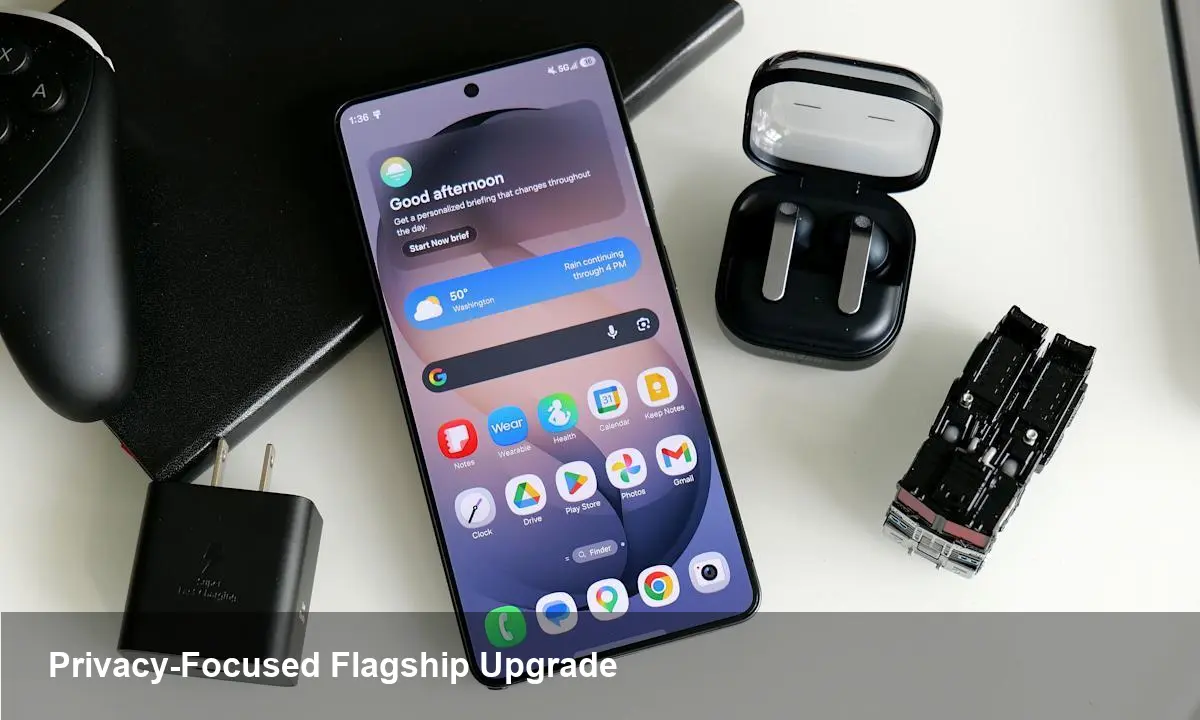
Samsung's Galaxy S26 Ultra arrives as a textbook example of a mature flagship: no radical reinvention, but a collection of smart refinements that add up. The most visible new element is a display that treats privacy as a first-class hardware feature. Around that are subtle camera, battery, and software improvements that target professionals and power users who want incremental gains rather than dramatic surprises.
If you're deciding whether to upgrade from an S24 or S25 series phone, the S26 Ultra won't shock you. But for commuters, executives, and creators who value discreet viewing and reliable daily performance, several of its changes could be decisive.
A short background on Samsung's approach
Samsung has refined the Galaxy S line over many generations. The Ultra models are the company's laboratory for premium hardware: the largest displays, top-tier camera systems, and extra productivity features like S Pen support. Rather than chase a single headline innovation this year, Samsung concentrated on ergonomics, display tech, and incremental sensor and software improvements—an approach that favors stability and long-term value.
The privacy-first display: what it is and how you’ll use it
The standout on the S26 Ultra is the new display mode that reduces side-angle visibility through hardware-level optical control. In plain terms, the screen actively narrows its readable angle so someone glancing over your shoulder sees a dimmed or obscured image while you still see a clear picture straight on.
Practical scenarios where this matters:
- On public transit, reading sensitive PDFs, banking apps, or confidential emails becomes less risky.
- In meetings or cafés, presenting a slide or chart to one person while keeping other nearby viewers from seeing details is easier.
- For professionals handling medical records, legal documents, or corporate strategy, it’s a fast way to minimize casual exposure without changing workflow.
This isn’t the same as a cheap privacy film—because the privacy behavior is built into the panel it can be toggled quickly, integrated with Do Not Disturb modes, or even activated automatically for certain apps.
What else changed (and what stayed the same)
- Cameras: Expect refined imaging rather than a complete overhaul. Improved sensor tuning and smarter computational processing deliver more consistent low-light shots and better color fidelity across focal lengths. Photographers will appreciate software-driven features that smooth transitions between zoom levels.
- Performance and battery: The S26 Ultra keeps the flagship performance profile but focuses on efficiency. That translates to smoother multi-day use under mixed workloads rather than raw benchmark spikes. Fast charging and wireless charging remain core features.
- Software: One UI continues to mature, with small but useful tweaks to multitasking and the S Pen ecosystem. Samsung’s recent emphasis on on-device AI shows up as subtle automation in photo editing and suggestion systems, which help save time without cloud dependency.
For developers: small changes that matter
If you build apps for enterprise, retail, or media, the S26 Ultra nudges a few areas to consider:
- Privacy-aware UI/UX: With a hardware privacy display in play, expect users to prefer single-view layouts (content optimized for a narrow viewing cone). Consider layouts that keep sensitive elements centrally located and non-essential elements to the periphery.
- Auto-mode integrations: Apps can benefit if Samsung exposes toggles or APIs to detect or control the privacy display. Imagine a banking app that requests temporary privacy lock while a transaction is in view.
- On-device processing: Improved local AI and better camera tuning mean more users will rely on device processing for features like instant transcription or image analysis. Optimizing for local ML runtimes (quantized models, efficient Core ML/Android NNAPI equivalents) will cut latency and preserve privacy.
Business value: who should care and why
- Executives and road warriors: The privacy display is a convenience and a risk-mitigation tool. It reduces accidental data exposure during travel or public meetings.
- Healthcare and legal professionals: Quick, hardware-backed privacy is attractive when compliance and discretion matter. It lowers the friction of checking sensitive records in shared spaces.
- Retail and sales teams: Presenters can keep pricing or internal notes private while showing product imagery to customers.
For companies that provide devices to staff, the S26 Ultra is a defensible premium choice—especially where a small hardware feature can reduce the need for process changes or additional privacy accessories.
Limitations and trade-offs
No device is perfect. The S26 Ultra’s privacy display is useful but not infallible: someone can still see snippets at wider angles, and it doesn't replace encrypted communications or secure document handling. There’s also the practical trade-off that features delivered as hardware add to the bill of materials—so expect a premium price relative to non-privacy-optimized models.
Other trade-offs include minimal generational gains in raw camera resolution or battery size. Samsung prioritized quality and consistency over headline-grabbing specs, which can frustrate buyers hoping for a dramatic leap.
Two quick scenarios to illustrate value
1) The commuter consultant: You’re reviewing confidential slides on a packed commuter train. With the S26 Ultra’s privacy display engaged, you can proof notes and send last-minute edits without worrying about the person across the aisle getting a clear view. 2) The product demo in a café: A sales rep shows a prototype UI to one client while keeping pricing and internal metrics hidden from nearby tables. The display reduces the need to hunch over or shield the screen with your body.
What this signals for the future
- Privacy hardware will become a selling point, not just software toggles. Expect more OEMs to explore optical or micro-louver solutions as data exposure becomes a bigger user concern.
- Tighter integration between hardware privacy features and software ecosystems. API access for app-controlled privacy modes would unlock useful workflow automations for enterprise apps.
- Continued shift toward on-device AI. Handling more processing locally amplifies privacy and responsiveness, and devices like the S26 Ultra illustrate that balance.
If you want a flagship that emphasizes day-to-day practicality and protects casual data exposure, the Samsung Galaxy S26 Ultra makes a persuasive case. It’s not a revolution, but for users who value discretion and consistent performance, it’s exactly the kind of thoughtful upgrade the market needs.