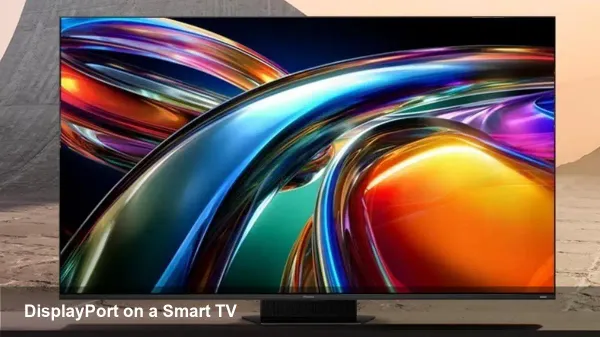
Hisense UR9 vs LG G6 and Samsung S95H: Smart OLED Rival?

Why this matters now
Hisense has been quietly aggressive in the premium‑TV space, and the UR9 is its latest bid to close the gap with high‑end OLEDs. For buyers and developers trying to optimize content for living rooms, the question isn’t just image quality — it’s value, feature set, and practical tradeoffs like burn‑in risk and HDR performance.
This article breaks down what the UR9 brings to the table, how it behaves in real‑world scenarios, and where it sits relative to two established OLED alternatives: the LG G6 and the Samsung S95H.
A brief background on the brand and the model
Hisense has built a reputation for bringing advanced display technologies into lower price tiers. The UR9 series continues that trend: it’s a premium LCD that leans heavily on dense local dimming (mini‑LED style) and aggressive image processing to chase OLED’s strengths — deep blacks, high contrast, and vivid HDR. Unlike true OLED panels used by LG and Samsung’s OLED lines, the UR9 achieves contrast through backlight control rather than self‑emissive pixels.
That design choice has practical consequences: it avoids permanent burn‑in and can achieve higher sustained peak brightness, but it may still lag in black uniformity and off‑axis contrast compared with OLED panels.
What the UR9 actually offers (short technical primer)
- High‑density backlight with many independently controlled zones (mini‑LED approach). This lets the TV dim small portions of the screen to deepen blacks and raise localized contrast.
- Advanced local dimming and upscaling algorithms to improve perceived detail, especially in HDR content.
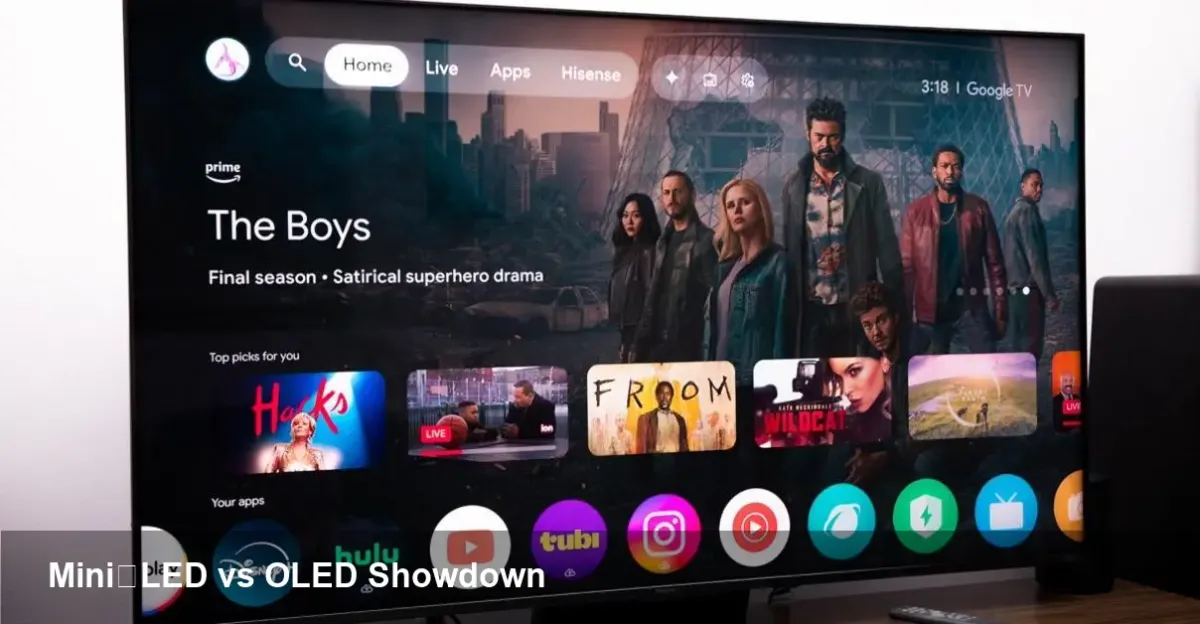
- Modern smart platform and connectivity expected on premium sets today: HDR formats, streaming apps, and gaming‑centric features such as low input lag and variable refresh support (check model specs for exact HDMI versions and VRR capabilities).
The UR9 targets the benefits people buy OLED for — deep blacks and punchy HDR — while keeping some of the LCD advantages like higher peak brightness and no risk of image retention.
Real‑world scenarios and how the UR9 behaves
Living room movie nights
If your viewing setup is mostly head‑on in a dark room, OLED still has the edge: infinite contrast and perfect pixel‑level blacks produce superior shadow separations and subtle filmic detail. The UR9 narrows the gap, though, particularly on HDR highlights where its high peak brightness can make specular highlights pop more than an OLED in the same room.
However, in scenes with large bright objects against dark backgrounds, you may notice haloing or blooming around bright elements — a side effect of zone‑based dimming. Calibration helps, but the structural limitation exists.
Bright rooms and daytime viewing
Here the UR9 can be compelling. Its sustained brightness and anti‑reflective coatings often make it more usable in well‑lit rooms than an OLED, where peak highlights can wash out and deep blacks become less visible.
Gaming
For console and PC gamers, features matter as much as raw picture quality. A UR9 with low input lag and support for high refresh rates or VRR gives fast action a fluid, responsive feel. Compared with LG G6 and Samsung S95H OLEDs, the UR9 can compete strongly on features. OLEDs still provide superior motion clarity in some cases due to instant pixel transitions, but the UR9’s brightness and absence of burn‑in risk make it practical for long gaming sessions.
Content creation and calibration work
If you’re color‑grading or doing critical video work, OLED panels (LG G6, Samsung S95H) are often favored for reference because of superior black levels and wide color accuracy when properly profiled. The UR9 can be a very good secondary monitor for HDR previewing — especially to see how HDR highlights will look on bright LCD screens — but it isn’t a drop‑in replacement for a professionally profiled OLED or dedicated mastering monitor.
How it stacks up vs LG G6 and Samsung S95H
- Contrast and black levels: OLEDs win for pixel‑level blacks; the UR9 closes the gap significantly, especially after good calibration, but zone dimming can’t perfectly match self‑emissive pixels.
- Brightness and HDR impact: UR9 often outperforms OLEDs in sustained peak brightness, making HDR highlights more pronounced in bright rooms.
- Longevity and burn‑in: UR9 has a clear advantage — no burn‑in risk. OLEDs require some care for static UI elements.
- Viewing angles: OLEDs maintain contrast and color off‑axis better. UR9 will shift more as you move left or right.
- Price/value: The UR9 is positioned to undercut OLEDs on price while delivering similar headline performance. That said, pricing places it squarely in competition with established OLED options, so the practical choice depends on which tradeoffs matter most to you.
Practical buying guidance
- Choose the UR9 if you prioritize daytime brightness, HDR pop, or want a high‑end image without the burn‑in risk. It’s also a solid pick for heavy gamers who will use the screen for many hours a day.
- Lean toward the LG G6 or Samsung S95H if absolute black levels, cinematic shadow detail, and wide viewing angles are mission‑critical (home theater purists, colorists, or large family rooms where off‑axis viewers are common).
- If you’re economical but demand high image quality, shop both camps — mini‑LED LCDs and OLED deals — and compare calibration results in person if possible.
Business and developer implications
- Streaming platforms and app developers: better mid‑range hardware like the UR9 compresses hardware diversity. Developers should test HDR metadata handling across both LCD mini‑LEDs and OLEDs because highlight tone mapping can look very different.
- Game studios: designers should continue to implement dynamic UI options (adjustable HUD brightness, auto-hide static elements) to support both OLED and bright LCD audiences.
- Content producers and post houses: cheaper high‑brightness displays in homes mean HDR mastering needs to consider how highlights map on both bright LCDs and OLEDs; deliverables and viewer expectations are diverging again.
3 forward‑looking takeaways
- Mini‑LED and advanced local dimming are no longer niche — they are becoming a credible alternative to OLED for mainstream buyers.
- Price pressure from companies like Hisense will push OLED makers to compete on price and features, accelerating innovation and potential value for consumers.
- The proliferation of both bright mini‑LED sets and deep‑black OLEDs makes end‑user experience more dependent on content mastering and TV tone‑mapping than on any single display technology.
For many buyers, the UR9 represents a pragmatic middle ground: near‑OLED contrast with LCD advantages where they matter. If you can see one in person and compare HDR content side‑by‑side with OLED candidates like the LG G6 or Samsung S95H, that will be the fastest way to decide which picture tradeoffs match your living room and viewing habits.