NASA: What the Artemis III Milestone for Engineers, Developers, and Industry

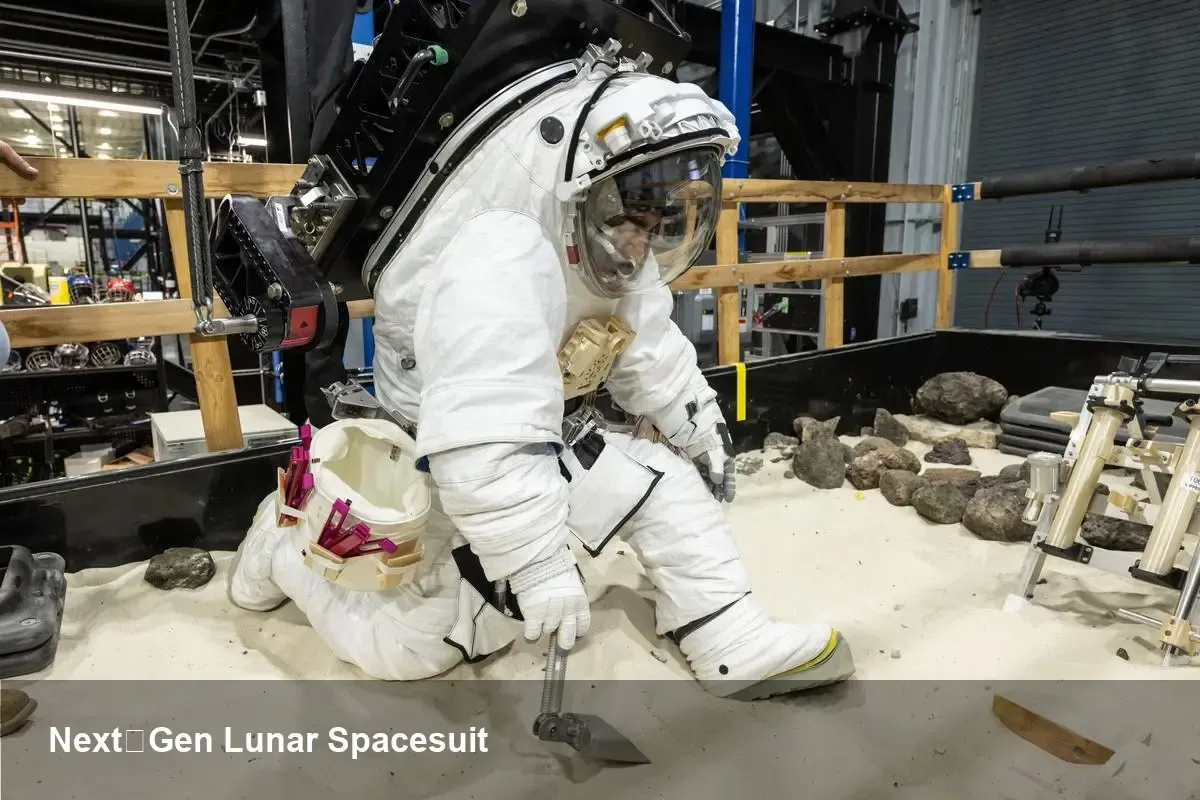
NASA’s program to land astronauts on the Moon again has moved a critical piece of hardware closer to flight: the next-generation spacesuit intended for Artemis III has cleared a contractor-led technical review. That milestone is more than a line item in a program schedule — it reshapes development priorities across materials science, embedded systems, human factors, and the commercial ecosystem that supports space exploration.
Why this review matters
A contractor-led technical review is where the team responsible for building the suit demonstrates that designs, subsystems, and integration plans meet technical requirements and are ready to move from detailed design into production and system testing. Passing such a review indicates the project has matured past conceptual risk and that major interfaces, life‑support requirements, mobility targets, and safety analyses are converging.
For engineers and product managers, this is the equivalent of a software release passing an architecture and security gate: it frees up budget and scheduling certainty for long-lead items, allows teams to ramp manufacturing, and shifts attention to verification, validation, and field testing.
What “next-generation” actually changes
Compared with legacy suits used for in-orbit EVAs, the new lunar suits prioritize several different tradeoffs:
- Mobility and Range of Motion: Lunar surface tasks require bending, kneeling, and long-distance traverses. New joint designs, bearings, and soft-hard hybrid layers improve ergonomic articulation.
- Dust Mitigation: Lunar regolith is extremely abrasive and electrostatically sticky. Improved seals, surface coatings, and airlock interface designs aim to reduce abrasion, clogs, and contamination of suit systems.
- Life Support and Autonomy: Portable life-support systems (PLSS) for lunar EVAs are being optimized for longer excursions and more autonomous monitoring — including integrated sensors, fault detection, and adaptive thermal control.
- Human-Machine Interfaces: Gloves, helmet displays, and communications are being upgraded for higher situational awareness and lower cognitive load during physically demanding tasks.
Concrete scenarios: how the suit will be used
1) Geological sampling on uneven terrain
An astronaut exits the lander, traverses a slope to reach an outcrop, crouches, and collects regolith samples. The suit’s lower-limb mobility enables stable kneeling; glove tactile improvements let the astronaut use precision tools without compromising pressurization integrity. Integrated suit telemetry records joint angles and environmental context for scientists and mission control.
2) Long-distance traverse with tethered rover support
A team uses a light rover to carry heavy equipment. The suit’s PLSS monitors oxygen consumption and battery state while embedded sensors warn of approaching dust storms or extreme thermal gradients. The suit’s communications stack manages voice, video, and telemetry across a mesh network linking astronauts and the rover.
3) On-orbit maintenance and contingency ops
Although built for lunar surface work, the suit’s modular architecture supports in-orbit servicing tasks and emergency egress, reducing the number of unique suit inventories across missions.
What this means for software and systems developers
The modern spacesuit is as much a software platform as a pressure garment. Key opportunities and priorities:
- Telemetry pipelines: High-frequency health and performance telemetry must be reliable, bandwidth-efficient, and resilient to intermittent links. Developers should design protocols with graceful degradation and prioritized data channels.
- Digital twin and simulation: Virtual replicas of the suit and astronaut biomechanics accelerate testing and reduce costly physical trials. Integrating physics-based models, sensor noise simulations, and hardware-in-the-loop setups lets teams validate control algorithms and fault responses early.
- Safety-critical embedded software: State machines for life support, redundancy management, and emergency response must be auditable, deterministic, and certifiable under NASA standards. Familiarity with model-based design and formal verification pays off.
- HMI & autonomy: Helmet displays and voice interfaces should reduce cognitive load; consider adaptive interfaces that present only mission‑critical information based on context.
Business and commercial implications
A matured suit program unlocks downstream markets and spin-offs:
- Component suppliers: Advances in seals, bearings, and coatings may translate into tougher consumer materials and industrial robotics components.
- Sensor and comms startups: Demand for low-power, radiation-hardened sensors and mesh comms for lunar distances can drive new product lines.
- Training and simulation vendors: Digital twin demand creates a larger market for physics engines, motion capture systems, and immersive training solutions.
- Commercial suit-as-a-service: With modular suit architecture, operators could lease configurations for LEO missions, private lunar landers, or research facilities.
Limitations and risks to watch
- Integration Complexity: Introducing more modularity and software-driven behaviors increases interface risk. Careful interface control documents and rigorous integration testing are essential.
- Environmental Unknowns: The lunar surface presents dust and thermal challenges that remain difficult to fully replicate on Earth. Field testing in analog environments (polar deserts, vacuum chambers, regolith simulants) is still necessary.
- Certification Burden: Safety-critical systems require exhaustive verification. This can slow down iterative improvements and requires skilled verification engineers.
Three implications for the next five years
1) Modular, upgradable suits will become standard: Expect a shift from monolithic, mission-specific suits to modular architectures that are upgraded incrementally, lowering long-term program cost and increasing flexibility.
2) Commercial ecosystems will widen: As NASA and partners stabilize core suit designs, third-party suppliers and startups will find lower barriers to providing sensors, consumables, training, and software tools tailored to EVA operations.
3) Data-driven EVA optimization: Rich telemetry from suits and digital twins will enable optimization of EVA plans, predictive maintenance of suit components, and improved astronaut training informed by objective performance metrics.
What founders and product teams should do now
- Invest in simulation-first development: If you’re building sensors, UI, or software for EVAs, create validated digital twins to iterate faster and prove performance before hardware integration.
- Prioritize standards and interfaces: Early alignment on data formats, comms protocols, and mechanical interfaces will make integration with prime contractors easier and faster.
- Focus on ruggedization and low-power design: Components that survive dust, vacuum, thermal cycles, and limited power budgets have a clear market advantage.
Bottom line
The contractor-led review marks a significant technical maturation for the suit planned for Artemis III. Beyond the immediate milestone, it signals a shift toward more software-defined, modular, and data-driven EVA systems. For developers, startups, and industry partners, that creates concrete technical challenges — and concrete business opportunities — around simulation, sensors, comms, and verification. The Moon will always be hard; the tech stacks we build now determine how fast and how safely we can work there.