
Isaacman Says Orion Heat Shield Safe for Artemis II Launch

- Key takeaways:
- NASA Administrator Jared Isaacman says he has "full confidence" in Orion’s heat shield for Artemis II after a half-day review with engineers and outside experts.
- Engineers traced the Artemis I char-loss issue to trapped gases in non‑permeable Avcoat and validated fixes through arc‑jet testing and wind‑tunnel work.
- NASA will fly Artemis II on a steeper reentry profile to reduce time in the vulnerable heating regime and completed a damage‑tolerance evaluation showing the crew would remain safe even in severe failure scenarios.
- Independent reviewers and former astronauts Danny Olivas and Charles Camarda were briefed; Olivas reversed his reluctance to fly, while Camarda remains critical of the workaround.
New NASA chief conducts final review
Jared Isaacman convened a half‑day review at NASA Headquarters and sat through detailed briefings from Orion engineers, including program lead Howard Hu and heat‑shield lead Luis Saucedo. After reviewing test data and an independent review’s findings, Isaacman said he has "full confidence in the Orion spacecraft and its heat shield."
What went wrong on Artemis I
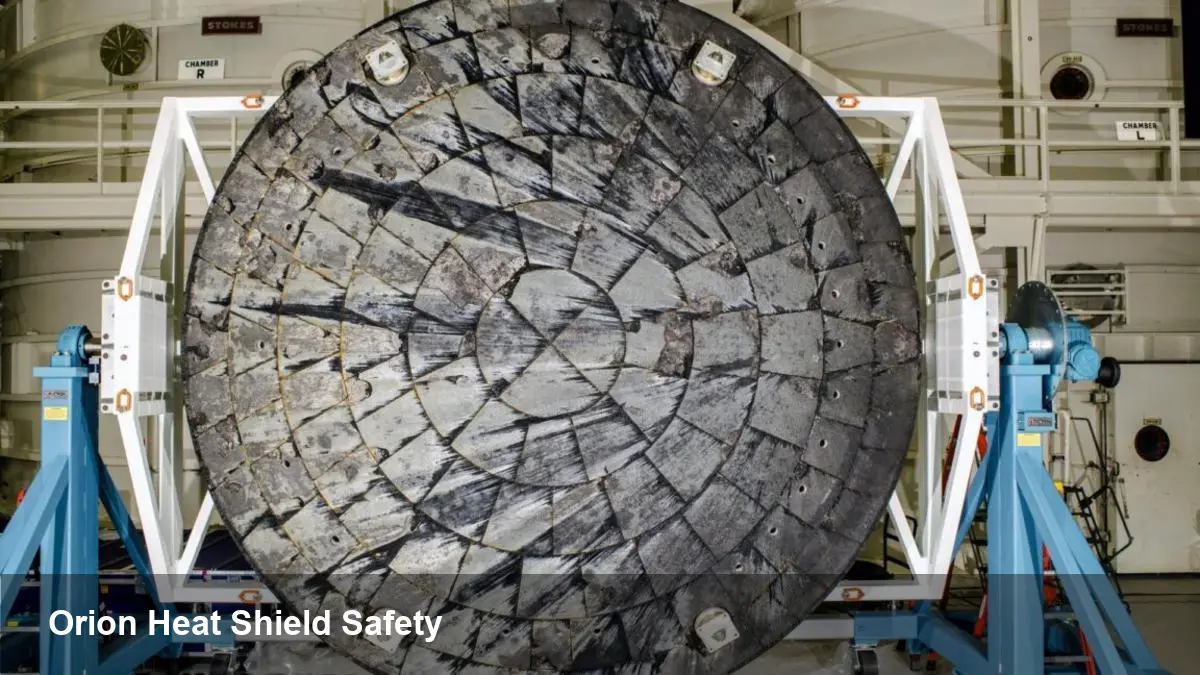
Orion’s heat shield uses 186 Avcoat blocks to survive reentry heating up to about 5,000°F. During Artemis I, sections of the char layer—intended to ablate predictably—spalled away, leaving cavities. Engineers traced that char loss to trapped gases caused by Avcoat that was effectively impermeable and could not vent during heating.
Extensive testing and the "what if we’re wrong" study
NASA conducted arc‑jet testing, wind‑tunnel work, and ground facility tests to reproduce and analyze the failure mode. Teams also ran a formal damage‑tolerance evaluation—informally called "what if we’re wrong"—simulating scenarios where large Avcoat sections were lost.
Those tests stressed Orion’s composite base and internal titanium framework for periods longer than the expected Artemis II heating. "We have the data to say, on our worst day, we’re able to deal with that if we got to that point," an agency engineer said, concluding the vehicle structure and crew would remain protected and recovery would be possible.
Why NASA will not swap in a new shield
NASA considered using the permeable Avcoat designed for Artemis III or delaying to test in low‑Earth orbit. Leadership decided against swapping CSMs because CSM‑2 (Artemis II) is configured as a free‑return vehicle with unique docking and tunnel requirements; retrofitting would be complex and would delay mission learnings.
The chosen fix: a steeper reentry profile
Rather than replacing the shield, NASA will return Artemis II on a steeper entry trajectory, reducing time under the critical heat load from about 14 minutes on Artemis I to roughly eight minutes. Modeling and arc‑jet results predict significantly less cracking and spallation with this profile.
Outside experts and transparency
Isaacman invited former astronauts Charles Camarda and Danny Olivas to observe the session. Olivas, who previously had reservations, said he would now fly on Orion after reviewing the data. Camarda remained wary of accepting a workaround long term and urged renewed investment in NASA research. Isaacman framed the briefing as part of a transparency push: "That level of openness and transparency is exactly what should be expected of NASA."