How Artemis II Reframed Apollo with Modern Space Photography

Why images still define a lunar mission
Few technologies shape the public memory of spaceflight like photography. The grainy, high-contrast frames from the Apollo era did more than document history — they created an aesthetic and a set of visual references that generations associate with the Moon. Artemis II, NASA’s crewed lunar flyby mission, deliberately leaned into that visual legacy while using 21st‑century imaging tools to expand how we see Earth, the Moon, and crewed exploration.
A quick refresher: Artemis II and its crew
Artemis II is NASA’s first crewed mission in the Artemis program to send humans beyond low Earth orbit since Apollo. The mission’s four-person team — commander Reid Wiseman, pilot Victor Glover, mission specialist Christina Hammock Koch, and Canadian Space Agency astronaut Jeremy Hansen — flew aboard the Orion spacecraft on a lunar flyby, giving the crew opportunities for both scientific observation and public-facing imagery.
What’s different now: digital, computational, immediate
Compare a Hasselblad film frame taken on Apollo to a modern RAW image from Orion and you see several practical differences:
- Dynamic range: Modern sensors and HDR workflows capture far more detail in both lunar shadows and sunlit areas, avoiding blown highlights on the Moon’s surface and preserving Earth’s cloud structure.
- Color fidelity and processing: Digital color science plus in-orbit postprocessing lets teams tune images for more accurate or more cinematic results depending on mission goals.
- Immediate distribution: Unlike Apollo, where images took hours or days to process and transmit, Artemis II could downlink higher-quality previews quickly for outreach and newsrooms.
- Metadata and orientation: Every frame from Artemis II carries precise timing, spacecraft attitude, and camera settings, enabling richer scientific context than many Apollo-era photos offered.
For photographers and engineers, this is a step change: the crew can shoot knowing the image file is already a data product with embedded telemetry, useful for public engagement and analytic follow-up.
Reimagining classic compositions: practical examples
The Artemis II team deliberately revisited several visual motifs from Apollo and earlier lunar missions to create modern counterparts — not to mimic exactly, but to create continuity and highlight new perspectives.
- Earthrise redux: Apollo 8’s Earthrise is arguably the most famous lunar photo. Artemis II could repeat the concept with higher-resolution sensors and better contrast control, capturing more atmospheric detail on Earth while still showing the stark lunar limb.
- Limb and crescent studies: The Moon’s thin crescent and the razor‑sharp limb were staples of Apollo-era photography. With modern gear, the crew could produce sequences that bracket exposures for HDR composites, revealing faint features along the terminator.
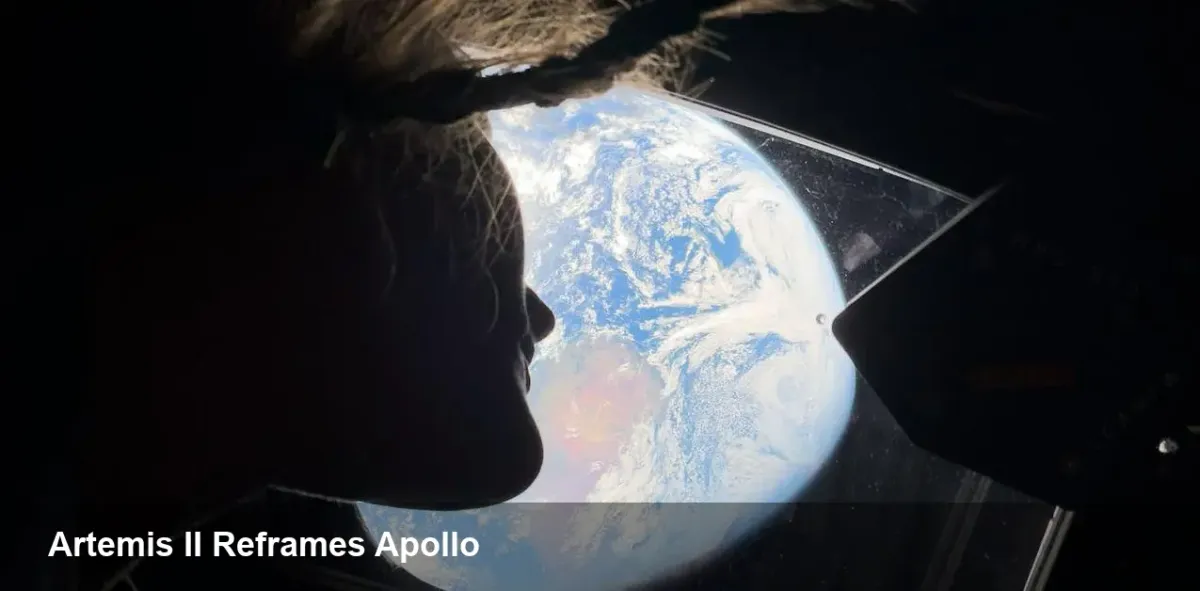
- Human-in-the-loop frames: Rather than just exterior landscapes, Orion’s internal shots of crew members framed against the lunar window create intimate, narrative-driven images that echo the human scale of Apollo shots while using contemporary portrait techniques.
These choices are not merely nostalgic. They offer visual continuity between programs and help the public intuitively compare missions separated by half a century of technological change.
The technical and operational realities inside Orion
Space photography is more than pointing a camera — it’s constrained by hardware, safety and orbital mechanics.
- Window geometry and reflections: Orion’s windows are small and layered; reflections from interior lights and helmets demand careful lighting control or the use of polarizers and lens hoods.
- Vibration and microgravity motion: Handheld shots require secure tethering and short shutter times; image stabilization (in camera or lens) helps but crew training in stable bracing is essential.
- Radiation and exposure management: High-energy particles can create sensor artifacts. Operators use shielding, select exposure windows, and run calibration frames to mitigate noise.
- Timing with trajectory events: Best views depend on spacecraft orientation and the timing of lunar approach or Earthrise. That requires cross-discipline planning between mission ops and the crew’s photo brief.
Understanding these constraints informed how the crew planned sequences and selected gear, producing technically strong images under demanding conditions.
Why this matters beyond pretty pictures
Photographs from Artemis II do more than fill social feeds.
- Public engagement and recruitment: Iconic images help maintain political and financial support for human exploration by translating complex missions into emotionally resonant visuals.
- Science and engineering: High-fidelity images with embedded telemetry support photogrammetry, surface characterization studies, and cross-referencing with orbital datasets.
- Cultural continuity: Reframing Apollo-era motifs lends modern missions a sense of continuity, which helps the public and policymakers see Artemis as part of a multi-generational program rather than a reboot.
For media producers, historians, and educators, these images become primary sources for storytelling and curriculum development.
Practical implications for imagery pipelines and apps
Developers and institutions working with space imagery should expect and plan for a few shifts introduced by missions like Artemis II:
- Standardized metadata schemas: Deep-space image metadata should include spacecraft attitude, distance to target, and camera calibration — not just timestamps and exposure.
- Faster public APIs: Real-time or near-real-time preview pipelines will require robust bandwidth allocation and cloud integration to get images to apps and newsrooms quickly.
- Preservation-ready archives: High-resolution DNG/RAW files plus contextual telemetry must be preserved alongside curated JPEGs; long-term access requires robust storage and open access policies.
These points create opportunities for startups and developers building tools for image enhancement, archival search, VR exhibitions, and educational platforms.
Looking ahead: three implications
- Computational imaging will converge with mission ops. Expect future missions to bake HDR bracketing, denoising, and telemetry-aware postprocessing into standard camera suites.
- Live, high-quality feeds will change public expectations. More people will expect near-real-time access to visually rich mission data — a shift that will pressure bandwidth and comms architectures.
- Archival rigor becomes essential. As imagery grows richer and more widely reused, metadata standards and provenance tracking will determine the scientific and historical value of photos decades from now.
Modern images from Artemis II are more than aesthetic updates; they’re data-rich artifacts that change how we collect, share and interpret space missions. For photographers, engineers and product teams building the next generation of space imagery tools, Artemis II offers practical lessons: prepare for constrained hardware, prioritize metadata, and design pipelines that serve both public engagement and scientific inquiry.
If you work on imaging software, think about how your tools can accept telemetry, handle high dynamic range, and deliver both press-ready visuals and preservation-grade archives — that’s where the next wave of lunar photography will live.