What Developers Should Do If Apple Can Delist Apps

The legal reality: platforms keep the keys
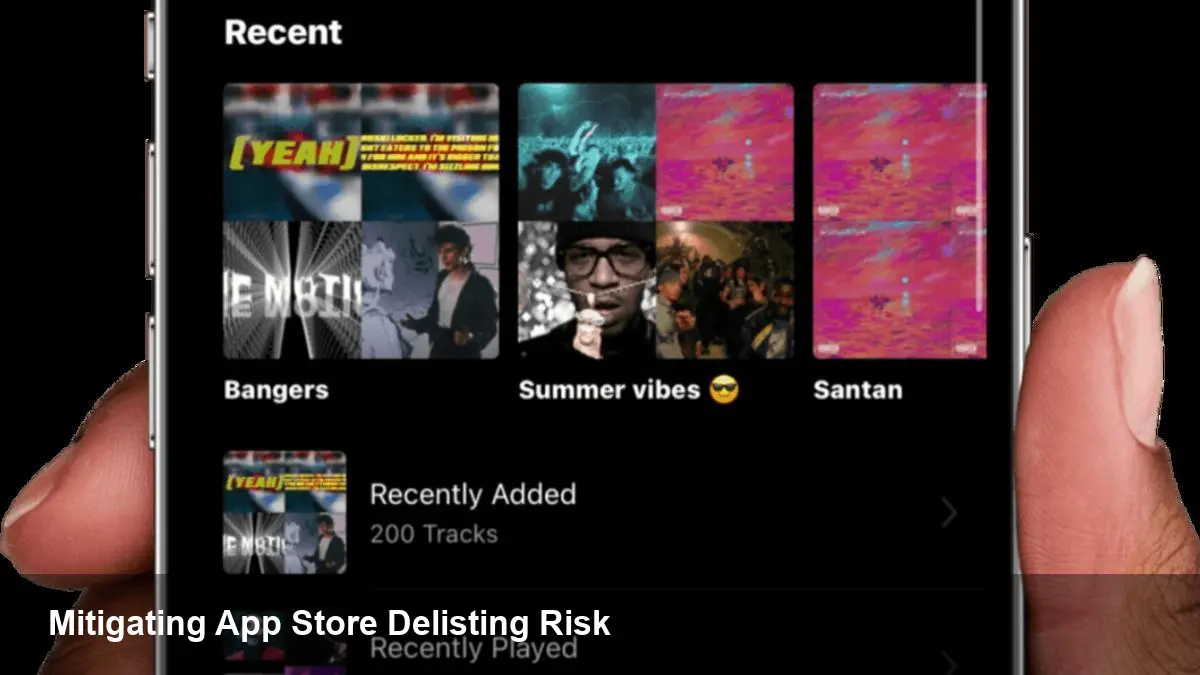
A recent court ruling reaffirmed something many mobile developers already suspected: Apple can remove apps from the App Store “with or without cause.” The case at the center involved the Musi app, which challenged Apple’s removal powers in court; the judge dismissed the lawsuit and even sanctioned lawyers for inventing facts. Beyond the headlines, the decision underscores a simple truth for app makers: platform control is a business risk you must manage.
Why this matters for developers and businesses
For independent developers, startups, and enterprises that depend on iOS distribution and in-app subscriptions, delisting is not just an inconvenience — it can be an existential threat. App removals interrupt onboarding, block updates, halt purchase flows, and destroy user trust. Even temporary delisting can push churn higher, reduce Lifetime Value (LTV), and create costly support burdens.
Key immediate impacts:
- Revenue disruption for subscription and paid apps.
- Broken trust and communication gaps with active users.
- Technical fallout when OTA updates stop or entitlements are revoked.
- Increased legal and PR costs if removal is unexpected.
Real-world scenarios to keep in mind
- An indie music player relies on in-app purchases and loses storefront visibility after being removed; user acquisition stalls and subscriptions lapse.
- A B2B app used internally by companies is delisted; while enterprise provisioning might allow installs, new hires cannot easily get the client, disrupting operations.
- A freemium social app with ad partnerships is delisted during a campaign, causing advertisers to pause buys and undermining future ad revenue negotiations.
These examples mirror what happened with Musi and other past disputes: the platform’s contractual power can outstrip any single developer’s leverage.
Practical steps to reduce delisting risk
You can't force Apple to change its rules, but you can design your business and engineering practices to be resilient.
1) Diversify distribution channels
- For non-iOS platforms, publish to alternative app stores and the web. For iOS, use a Progressive Web App (PWA) alongside your native client when possible so users have a fallback path.
- For enterprise deployments, consider Apple Business Manager and Mobile Device Management (MDM) solutions to keep critical clients available to corporate customers.
2) Separate critical functionality from platform-specific code
- Architect your backend so that critical features (authentication, data storage, paid services) are server-side and accessible independent of the app. This reduces the injury to users when the client is temporarily unavailable.
- Offer web-based portals for billing, support, and core features so users can continue work without the native app.
3) Harden release and monitoring workflows
- Add App Store status checks into your CI/CD pipelines and alerting systems so teams notice removals instantly.
- Keep an archive of signed binaries and provisioning profiles to support side-loading in enterprise contexts where permitted.
4) Strengthen user communication and contingency plans
- Build automated email and in-app messaging flows that activate if the app is removed. Tell paying customers how to access service via web or alternative apps.
- Maintain a public status page and a communication playbook for app removal incidents.
5) Financial and legal preparedness
- Model worst-case revenue scenarios and maintain runway to survive a temporary delisting.
- If you're large enough, negotiate contract terms with platform vendors for enterprise-focused apps. When litigation is considered, choose counsel who will stick to verifiable facts — the Musi litigation shows courts punish invented claims.
Product and developer workflow changes that help
- Use feature flags and server-side feature delivery so you can disable at-risk functionality quickly without a new app submission.
- Decouple subscription verification from the client where possible. For example, let your servers serve content to authenticated users irrespective of client-side store checks.
- Maintain a reproducible build system and artifact repository (signed builds, metadata) to demonstrate provenance if you need to appeal or negotiate with the platform.
Business model implications
Apps that depend solely on App Store visibility or Apple-controlled purchase flows are inherently fragile. To reduce risk:
- Adopt multi-channel monetization: subscriptions + web payments + enterprise licensing.
- Build direct relationships with high-value customers (email, phone, corporate portals) so you can transition them off the app if needed.
- Price for risk: early-stage startups should price to cover platform policy volatility or retain a buffer in customer acquisition costs.
Legal and policy considerations
The court outcome confirms that platform terms and developer agreements give Apple broad discretion. That won’t end regulatory scrutiny — governments and competition authorities are increasingly interested in platform gatekeeping — but practical protections for most developers today remain limited. Litigation is costly and uncertain, and the recent sanctions in the Musi case are a reminder: legal fights that rely on shaky allegations can backfire.
Three implications for the next few years
1) Expect growing pressure for App Store transparency. Developers and regulators will push for clearer delisting reasons and better appeal processes. 2) The case strengthens the argument for cross-platform approaches and web-first strategies. PWAs, web subscriptions, and desktop clients become more strategic. 3) Large enterprises will increasingly demand contractual guarantees or private distribution options for mission-critical apps, driving new tools and services around enterprise provisioning.
Practical recommendation
Treat App Store availability as a single point of failure and plan accordingly. For founders and product leaders, that means building alternative access paths, keeping core services server-side, and preserving direct customer relationships. For engineers, it means reproducible builds, robust monitoring, and architecture that tolerates client absence.
Platforms will set rules; developers need strategies. The Musi case is a reminder not to rely solely on goodwill, legal theory, or hope. Design your product and business so they survive if your client is temporarily or permanently removed from a store.