How Tim Cook Navigates Apple’s Relationship with Government

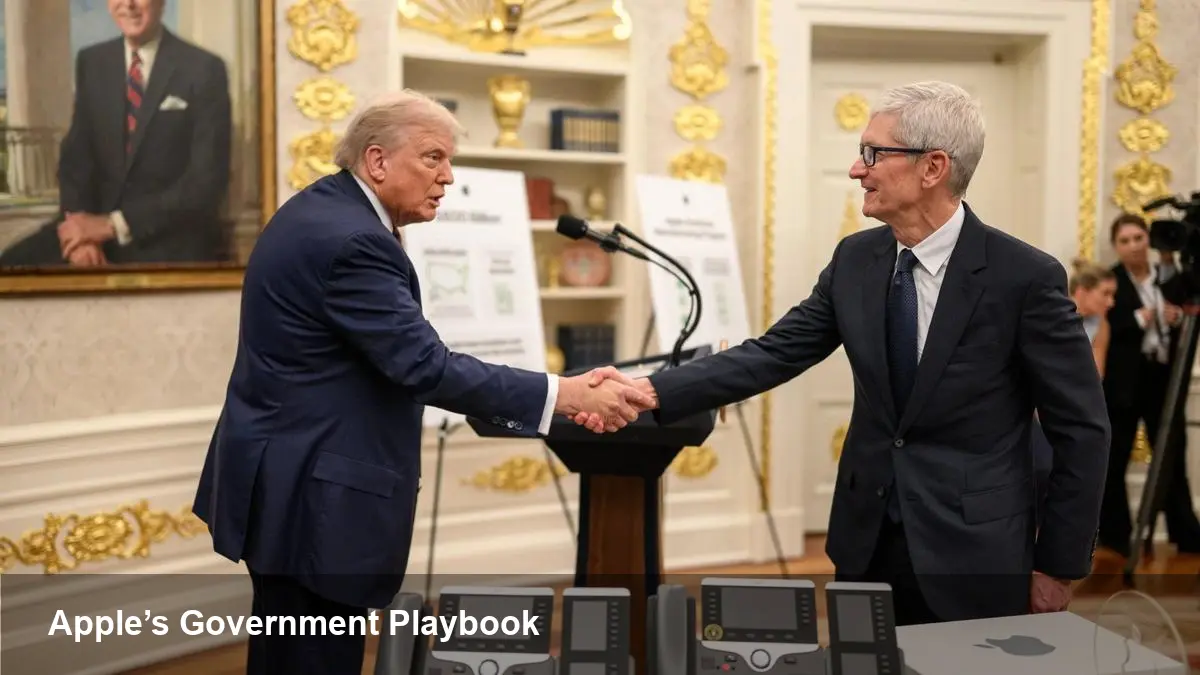
Why a tech CEO sits across from presidents
Apple turned 50 in 2026. That milestone has renewed attention on how the company runs at the intersection of technology, commerce and public policy — and on the role Tim Cook plays as its public face. Interactions between big tech leaders and administrations are routine: companies want to protect customers, operations and market access; governments want to understand and influence technologies that touch national security, jobs and privacy.
Cook has made no secret of maintaining lines of communication with policymakers. Treating governments as accessible partners — not just regulators — is a deliberate posture: it buys time, clarifies misunderstandings, and gives companies a seat at the table where rules that shape entire industries are drafted.
A concise history of Apple’s government-facing moments
Apple’s recent history is full of episodes where CEO-level engagement mattered. High-profile disputes over device encryption, trade disputes and tariffs, questions about App Store policy and developer economics, and the complexities of manufacturing in China all required executive involvement. Since becoming CEO in 2011, Cook has led Apple through moments that demanded negotiation with lawmakers and regulators globally. The company’s public stances on privacy, supply chain practices, and corporate responsibility are products of both internal strategy and external pressure.
Practical outcomes of CEO-level engagement
When a CEO can talk directly to policymakers, the benefits are concrete:
- Faster clarification of technical issues: a misunderstanding about how encryption or data collection actually works can be resolved before it becomes a law.
- Mitigated operational risk: conversations about tariffs, export controls or immigration policy can influence the scale or timing of enforcement, giving firms room to adapt.
- Opportunity to shape guardrails: working with officials on nascent areas like AI governance or app marketplaces lets a company propose workable rules rather than simply react to them.
For Apple-specific stakeholders that translates into things like fewer sudden disruptions to global supply chains, more predictable App Store rules for developers and continued emphasis on device-level privacy protections.
What this means for users and consumers
When Apple engages with government actors, end users often feel the downstream effects:
- Privacy promises can be defended at the policy level, which may preserve encryption or limit data-sharing mandates.
- Global pricing or release timing can be affected by trade negotiations or tariffs; hardware launches and availability sometimes reflect those realities.
- Public policy outcomes can influence features — for example, whether a product ships with certain data-collection options enabled by default.
Users should remember that corporate statements are a combination of product strategy and public-policy positioning. Access to decision-makers can protect consumer-facing features, but it does not guarantee outcomes aligned with every public interest.
What developers and startups should watch
For app developers and smaller platform businesses, Apple’s conversations with governments matter because they shape the rules of engagement:
- App Store regulation: regulatory pressure can drive Apple to change fees, dispute resolution processes, or API access. Developers must track regulatory moves that could alter revenue models.
- Compliance complexity: new privacy or cybersecurity rules introduced at the national level can mean additional engineering work to maintain app listings across jurisdictions.
- Competitive dynamics: if policy changes limit Apple’s control over the platform, third-party distribution channels or alternative business models can suddenly look more feasible.
Startups should build policy awareness into their product roadmaps. When a large platform company like Apple influences lawmakers, it creates both risks and opportunities for companies that rely on the platform’s rules.
Trade-offs and reputational risks
There are downsides to visible government relationships. Close ties can be portrayed as coziness that undermines public trust, particularly when administrations make unpopular choices. For Apple, which sells privacy and values-driven brand identity, alignment with government policy is a balancing act. Engaging early with officials can prevent harmful regulation, but it also exposes firms to criticism that they are lobbying for special treatment.
Moreover, CEOs can’t control every outcome. Negotiations are only one input into legislative and regulatory processes that include many stakeholders — Congress, regulatory agencies, global governments, civil society groups and competitors.
Concrete scenarios: three realistic outcomes
1) Tariff pressure rises: Direct talks with trade officials may delay or narrow tariff impacts, giving Apple time to shift production or mitigate price impacts for consumers.
2) App marketplace rules tighten: Apple’s arguments to regulators could preserve certain platform controls, but may also lead to targeted reforms requiring API access or alternative payment options for developers.
3) Security vs. law enforcement clash: High-level engagement can reduce the chance of sweeping mandates to break encryption, but governments can still pass narrower laws or pursue legal cases that compel targeted disclosures.
What to watch next — three implications for the future
- Policy will be technology-aware: Governments are getting better at understanding technical trade-offs. Expect negotiations to center on implementable rules rather than abstract demands.
- Supply-chain and geographic diversification will accelerate: Firms will keep pushing production options outside single countries to reduce geopolitical leverage points.
- Platform governance will fragment: As regulators press for interoperability and competition, the App Store model could evolve into a patchwork of region-specific rules.
For founders, the takeaway is simple: incorporate regulatory scenarios into product design and choose partners with clear public-policy strategies. For developers, keep an eye on App Store governance and privacy laws; they’ll determine a lot of the business models you can pursue.
Apple’s conversations with any administration are part influence, part risk management. They don’t guarantee perfect outcomes, but they do shape the environment where devices, apps and data live — and that matters to anyone building or buying technology today.