Why the Shutdown of Elder Scrolls: Blades Matters

A compact history: Bethesda’s mobile experiment
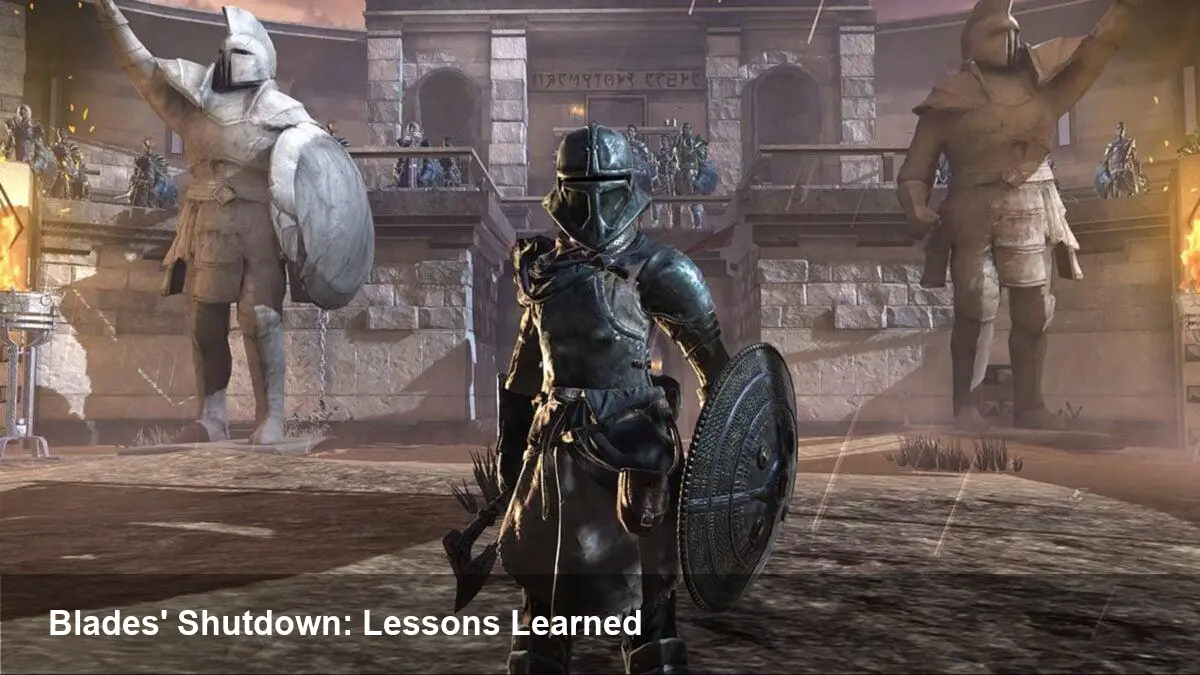
Bethesda Game Studios — the studio behind Skyrim and Fallout 4 — took a noteworthy detour with The Elder Scrolls: Blades, a mobile-first spin on its flagship fantasy franchise. Announced publicly after years of anticipation, Blades was positioned as a way to bring Elder Scrolls combat, progression and collectible systems to phones and small screens while exploring how a AAA franchise could live as a live-service mobile title.
The headline now is simple: Bethesda has announced that the game will be taken offline on June 30, 2024. That marks the end of a server-dependent product built around regular updates and online features.
What this means for players right now
If you play Blades, the immediate practical concerns are familiar to anyone who’s used a persistent, online-only game:
- Progress and saves: When a title like this shuts down, server-backed progression (character stats, inventories, progression trees) usually becomes inaccessible. Unless Bethesda provides an export tool or offline mode, much of a player's progression can be lost.
- Digital purchases: Consumables and cosmetic items bought with real money are often non-refundable unless the publisher states otherwise. Your best immediate action is to check official Bethesda support pages and your app store’s refund policy and to contact support if you have outstanding purchases.
- Community features: Social hubs, leaderboards, and multiplayer interactions disappear, so any player-driven events, clans or shared accomplishments end with the servers.
A practical scenario: a player who invested months and money into building a top-tier character or rare cosmetics may find those assets vanish or become purely aesthetic memories. For collectors and streamers, that loss is both sentimental and, in some cases, financial.
Why studios sunset live games — a quick primer
Closing a live title isn’t necessarily a failure; it’s often a business decision driven by a combination of factors:
- Running costs versus revenue: Servers, live ops teams, marketing and ongoing content production are recurring expenses. If retention and monetization don’t justify those costs, studios reallocate resources.
- Strategic focus: Companies may decide to prioritize larger projects or franchises (for Bethesda, big single-player RPGs or other IP investments) over niche or experimental products.
- Technical debt: Mobile titles with architecture tightly coupled to persistent servers can be expensive to maintain and are harder to rework into low-cost, offline-friendly versions.
In Blades’ case, the shutdown underscores how even a high-profile IP can struggle to sustain the lifecycle that mobile live-ops platforms demand.
Lessons for developers and product teams
The Blades shutdown offers several practical takeaways for teams building live, server-backed games.
- Design for graceful decay
- Plan an exit strategy from day one: build data export routes, let players download character backups, or implement robust offline modes that can survive server closures.
- Decouple game-critical systems
- Where feasible, separate non-essential online features (leaderboards, cosmetic syncing) from core gameplay so the latter can survive as an offline product.
- Be transparent and generous on sunsetting
- Clear timelines, compensation policies, and communication reduce player frustration. Offering partial refunds, credits toward other titles, or export tools improves long-term brand health.
- Measure engagement with long-term ROI in mind
- Short-term revenue spikes from events or monetization experiments can mask weak retention. Use cohort analysis and LTV modeling to decide whether continued investment is justified.
Concrete developer scenario: a studio building a collectible-heavy mobile RPG can design the inventory to be exportable as a JSON file and provide a single-player sandbox mode that works without server validation. That preserves customer trust even if live services end.
What businesses should take away
For publishers and executives, Blades’ lifecycle is a reminder that leveraging a big IP isn’t a guaranteed success on mobile.
- Brand risk: Shutting down a branded product can irritate core fans. Thoughtful sunsetting and migration strategies (credits toward other games or account-wide bonuses) protect long-term franchise value.
- Opportunity cost: Resources tied up in underperforming live games could delay high-value projects. Regularly reassess portfolio allocation.
- Contractual clarity: If third-party platforms or partners are involved, have clear clauses for shutdowns, data ownership and refund obligations.
A practical business move: when launching an IP-driven mobile title, include a contingency budget and a sunsetting playbook that anticipates regulatory inquiries and community management needs.
Broader implications and what’s next
There are three implications worth keeping an eye on:
- Greater pressure for digital consumer protections
- As more value becomes purely digital and server-dependent, regulators and app stores may start requiring clearer refund and portability rules for purchased digital goods.
- Hybrid design will get more attention
- Teams will increasingly prefer architectures that allow portions of a game to continue offline or be converted into single-player experiences, reducing the total cost of ownership over time.
- IP diversification matters
- Big franchises will continue to expand into mobile, but success will favor teams that treat mobile as its own product category with its own KPIs rather than as a simple brand extension.
For Bethesda and similar studios, the shutdown of Blades frees up resources that could be funneled into major upcoming projects — and it may also motivate tighter policies around how live mobile experiments are launched and supported.
Practical checklist for players and developers
Players:
- Check official support pages and app store refund policies.
- Screenshot important achievements and back up any exportable data.
- Reach out to support quickly if you have recent in-game purchases.
Developers:
- Add an exit strategy to your product requirements.
- Build modular systems so online features can be toggled off.
- Keep the community informed and offer clear remediation where appropriate.
Elder Scrolls: Blades won’t be the first live game to close and it won’t be the last. What stands out in this example is how it highlights the human and technical consequences of server-dependent games: players lose time and sometimes money; developers and studios learn hard lessons about design, cost and communication. If you build or support live games, treating the end of service as part of the product lifecycle — not an afterthought — is the clearest way to protect both users and the brand.