Why PUBG’s Top‑Down Spin‑Off Closed After Two Months

A quick post-mortem: what happened
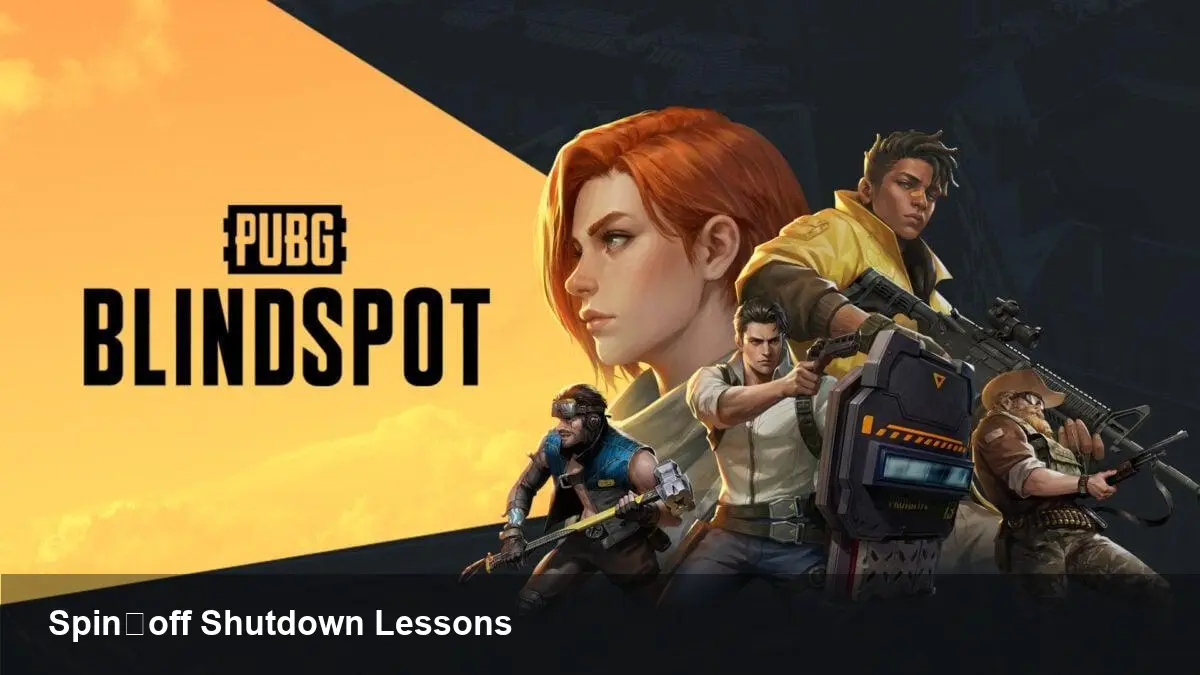
A recent top-down tactical spin-off from the PUBG family launched into early access, attracted initial attention, and then shuttered operations barely two months later — before it ever left early access. The short lifecycle is a useful case study for developers, product leads and publishers about the risks of taking a major IP in a new direction without a tight plan for retention, monetization and community building.
Below I unpack the likely causes, practical lessons for teams shipping live games, and what this means for the future of IP-driven spin-offs.
Background: why a PUBG spin-off mattered
PUBG helped popularize large-scale, last-player-standing shooters on PC and consoles. That core identity is strong, which is why using the PUBG brand for new experiments is attractive: it promises instant recognition, press coverage and a ready audience.
But a top-down tactical approach flips the familiar on its head. Instead of the visceral, first/third-person immersion players expect from PUBG, this format emphasizes strategic positioning, map awareness and a different pacing. That divergence is both the opportunity and the risk: it can attract a new audience or alienate the one that propelled the original franchise.
Where the rollout likely went wrong
Based on the short timeline and common failure modes for live games, several intertwined problems probably contributed to the shutdown.
- Misaligned player expectations. Many players who click on a PUBG-branded release expect the core battle-royale feel. When the mechanics, camera perspective and pacing change drastically, conversion from interested players into engaged community members requires clearer messaging and onboarding than the team provided.
- Weak retention signals. Early access is supposed to be a place to build players, not just sell access. If the new mechanics didn’t create compelling looped play — or if matchmaking and progression felt shallow — daily active users dropped quickly and the server economics became untenable.
- Discovery and streamer uptake failed. New IP experiments succeed partly because streamers and influencers can demonstrate the emotional highs. Top-down tactical games are harder to package into jump-in-and-watch content compared with cinematic, first-person encounters. Less streamer engagement meant fewer organic eyeballs and fewer new players.
- Monetization pressure without polish. Publishers often expect early revenue from cosmetics, battle passes or limited-time stores. If the game feels unfinished or the monetization conflicts with the player experience, adoption stalls and negative reviews compound the problem.
- Technical and operational costs. Running live servers, supporting multiple regions and patching bugs requires an ongoing burn. Without a solid retention curve, short-term operating costs outweigh income fast.
Practical scenarios: how this plays out for players and studios
Scenario 1 — The impatient pivot: The studio released the game quickly under brand pressure to capture market attention. Early analytics showed low retention. To stem losses, leadership pushed to add monetized content immediately, but that content felt incongruous and turned off potential long-term players. The game never established a committed core community.
Scenario 2 — The discovery trap: Marketing focused on the brand rather than the genre shift. Players who expected a traditional PUBG experience downloaded the title, disliked the playstyle and left negative reviews. Organic discovery on storefronts collapsed, and paid user acquisition costs rose beyond return thresholds.
Scenario 3 — The technical drain: The team underestimated the server and QA burden for even a small active player base. Frequent stability issues and slow patch cadence drove players away faster than the team could fix problems, accelerating the decision to wind down.
What teams should do differently next time
For studios experimenting with established IPs, the checklist is simple but hard:
- Define identity early: Be explicit in marketing and onboarding about how the spin-off differs from the mainline franchise. If you want fans of the original, build bridges — not surprises.
- Prioritize retention KPIs in early access: Track day-1, day-7 and day-28 cohorts and set hard thresholds. If players aren’t returning, invest in core loop improvements before monetizing heavily.
- Use closed tests to calibrate influencers: Early access can’t substitute for a controlled, closed influencer pass that helps shape perception and content narratives.
- Match scope to resources: A spin-off doesn’t need to be as feature-dense as the flagship, but it does need a reliable technical baseline and a modest roadmap of content updates to keep players engaged.
- Communicate transparently with the community: When early access is an experiment, play that card. Let players see the roadmap, metrics and priorities. Community buy-in can buy you time to iterate.
Broader implications for publishers and the market
1) Brand leverage is not a substitute for product-market fit. An established IP can open doors, but it won’t keep doors open without a game that satisfies the expectations of its new target players.
2) Early access is a commitment, not an exit strategy. Shutting down two months in signals either poor planning or unrealistic financial expectations. Publishers should budget live-ops runway and accept that some experiments will need 6–12 months to prove out.
3) Genre hopping requires curated discovery. When you change the lens on a popular franchise, think about where your audience will find you — different genre tags, different influencers, and different storefront categories.
What this means for developers and founders
If you’re a studio considering a spin-off, treat the project as a startup: small cross-functional team, tightly defined metrics, and a readiness to pivot or persevere based on data. For publishers, the message is to give these experiments both marketing freedom (to reposition the brand) and operational patience (to stabilize retention).
For players, it’s a reminder to read the early access notes and understand whether a title is an experiment or a reimagining of a franchise you love.
The rapid closure of this top-down tactical experiment is disappointing but instructive. It highlights how even well-known brands can misstep when they don’t align design, messaging, and live economics — and it gives a clear blueprint for how to do it better next time.