Why Pokémon FireRed & LeafGreen on Switch Matters

The comeback: what happened
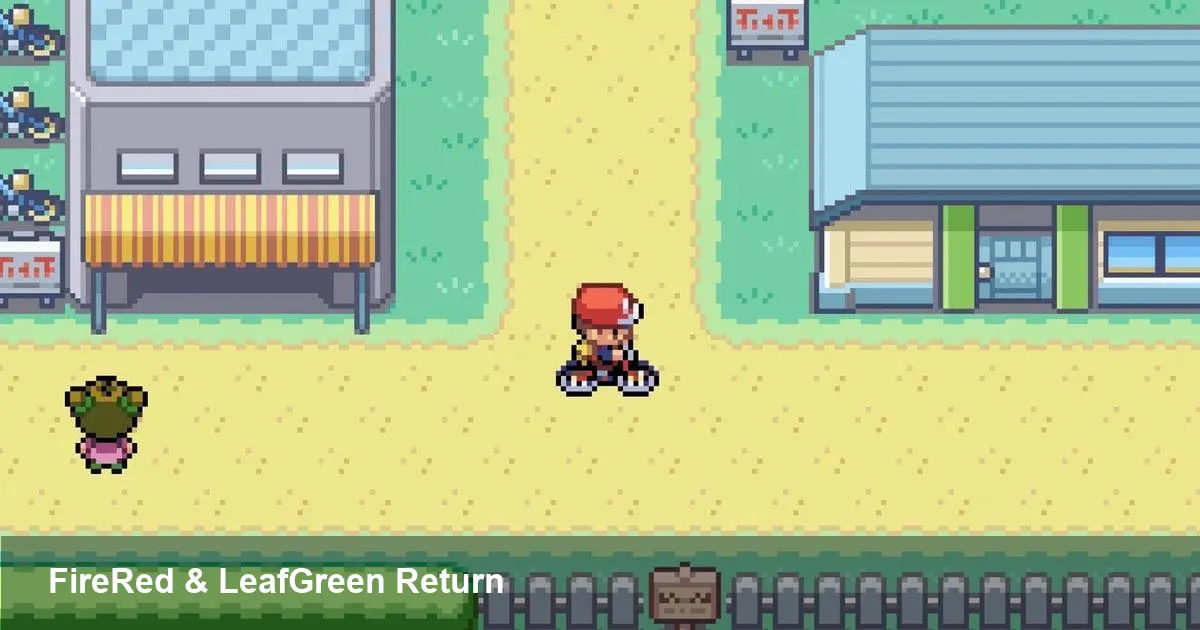
Nintendo quietly re-released Pokémon FireRed and LeafGreen on the Switch eShop. The two Game Boy Advance-era remakes — long cherished for updating the original Red and Blue adventures — climbed the eShop sales charts almost immediately. That surge speaks to a large, nostalgia-driven audience and continuing appetite for legacy Pokémon experiences.
But the release hasn’t been entirely smooth. Early product listings or communications had suggested compatibility with Pokémon Home, the cloud-based service Nintendo uses to store and transfer Pokémon across titles. Those references were later removed by Nintendo, leaving players and collectors uncertain about whether creatures caught in these re-releases will be movable into more recent Pokémon games.
Why Pokémon Home compatibility matters
Pokémon Home is the official bridge between modern Pokémon ecosystems. For many players its primary uses are:
- Consolidating a collection across Sword/Shield, Brilliant Diamond/Shining Pearl, Legends, Scarlet/Violet, and legacy imports.
- Allowing competitive players and completionists to curate and move favorite Pokémon into current meta games.
- Serving as long-term cloud storage so rare or sentimental creatures aren’t lost when you change consoles.
If FireRed and LeafGreen on Switch do not integrate with Home, their value as more than a nostalgia experience drops for a subset of players. A standalone re-release is still attractive for casual play, preservation, and speedrunning, but it becomes functionally isolated from the broader Pokémon ecosystem.
Real-world scenarios
- The collector: You want that original Charizard you raised in FireRed to sit alongside a living dex in Pokémon Home. Without Home compatibility, the only way to preserve the experience is to maintain a Switch save file — you can’t migrate the creature into future competitive or online play.
- The competitive veteran: You’re rebuilding a team and prefer particular natures or moves learned in older titles. If bridges to Home exist, you could feasibly recreate or migrate legacy mons into current formats; absent that, older-gen mechanics remain inaccessible.
- The preservationist / archivist: Historic releases are important to game preservation. A Switch release helps keep GBA titles playable on modern hardware, but if those copies remain siloed, their relevance to the living franchise is limited.
Technical and business reasons Nintendo might have removed Home references
There are several plausible reasons Nintendo pulled mentions of Pokémon Home compatibility:
- Backend readiness: Implementing a transfer pathway requires server-side work and QA. Nintendo may have realized Home’s systems weren’t ready to accept direct imports from a re-released GBA-style title.
- Save and data format mismatch: GBA-era mechanics, movesets and item systems differ from modern games. Converting old data to modern formats safely — without breaking balance or losing metadata like OT, IDs, or hidden values — is nontrivial.
- Anti-exploit checks and security: Allowing older ROM-style saves into the Home ecosystem raises the risk of exploiting glitches or unsupported Pokémon states. Nintendo may delay Home support to design safeguards.
- Licensing or legal checks: There can be minor licensing elements tied to Pokémon distributions or regional differences that affect cross-title sharing.
- Product positioning: Nintendo sometimes chooses to keep classic releases self-contained to preserve an authentic experience rather than turning them into mere transfer tools.
Any combination of these could explain why Home compatibility was removed from public-facing text while the release proceeded.
What this means for players and developers
- Short-term: Expect confusion and possibly a follow-up announcement. If Home support is truly coming, Nintendo may reintroduce it after server updates or patches. If not, players should not assume they can migrate Pokémon out of the Switch re-releases.
- For speedrunners and modders: The re-release increases access to a consistent platform, but lack of Home integration makes it primarily a single-system target for records, rather than a source for cross-title experiments.
- For competitive and longevity-focused players: The release is a chance to re-experience GBA-era mechanics, but you’ll need to plan around potential isolation of your Pokémon if transfers are disabled.
Business implications
This episode highlights a recurring balance Nintendo faces: maximizing the commercial value of legacy titles while protecting the integrity of its live services. Selling classic games on Switch is low-risk revenue with high demand; however, adding Home compatibility elevates a simple re-release into a system-level feature requiring ongoing support. That increases long-term cost and operational complexity.
For third parties — e.g., merchandisers, speedrunning event organizers, or community-run tournaments — the re-release offers fresh content to build around. But ambiguity about Home support may dampen enthusiasm for initiatives that rely on cross-title continuity.
Three forward-looking insights
- Expect phased launches: Nintendo may ship legacy titles quickly and add ecosystem integrations in later updates. Watch for firmware or Home-service patches after launch.
- Cross-generation transfer is an operational bottleneck: Seamless portability of Pokémon across decades of titles is technically challenging. Nintendo’s approach moving forward will likely prioritize newer generations and guardedly integrate older ones.
- Preservation vs. integration trade-off will shape product design: Classic re-releases that remain siloed better preserve original mechanics and glitches — which some players want — while integrated releases increase utility but require altering or sanitizing original data.
Practical steps for players today
- If you care about moving Pokémon into modern games, wait for an official Nintendo confirmation before investing time in breeding or catching into the new Switch copies.
- Back up your save state on the Switch where possible, and document what's in your box for later reference.
- Engage with official Nintendo channels or trusted community forums for updates; if Home support is coming, it will likely be announced formally.
The quick rise of FireRed and LeafGreen on the eShop shows demand for classic Pokémon experiences is very much alive. Whether those experiences become part of the broader Pokémon Home ecosystem remains an open question — and one with real consequences for collectors, competitors, and preservationists alike.