When a Tomodachi Life ROM Hit the Web: What to Learn

What happened and why it matters
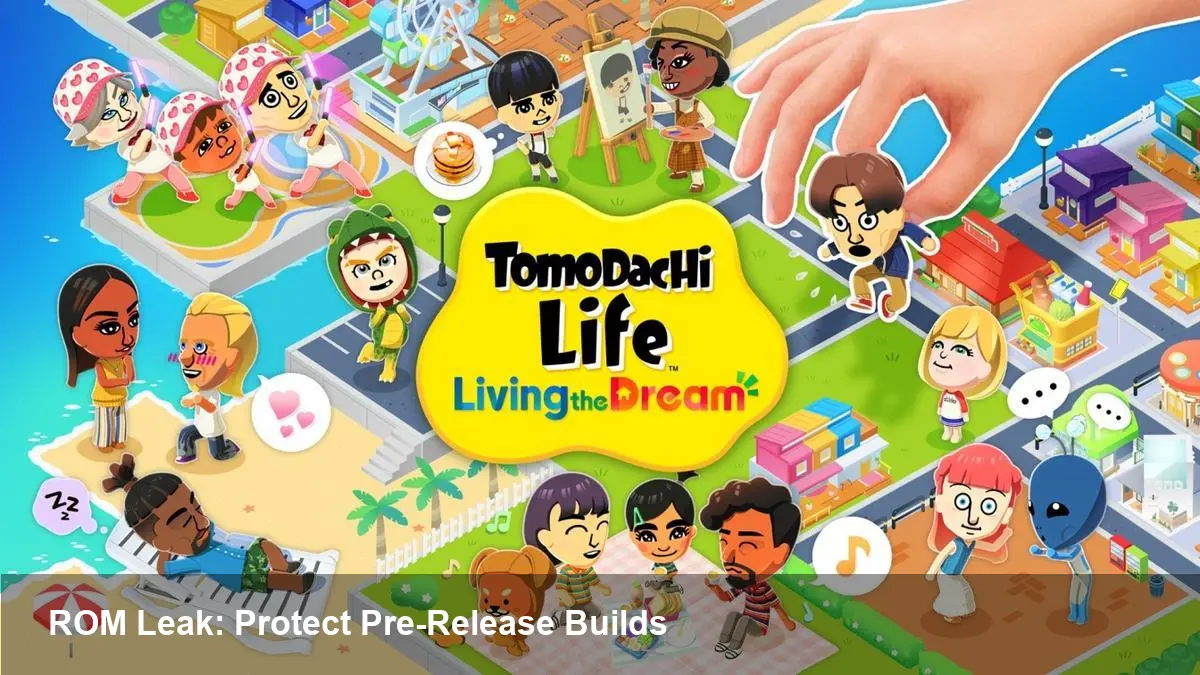
A few days before a planned release, a complete ROM image of Tomodachi Life: Living the Dream appeared online. For players this is an easy snapshot: you can download and run the game early. For the company, publishers, and developers, it’s a costly reminder that pre-release builds are high-value assets that attract attention from hobbyists, pirates, and opportunistic leakers.
Tomodachi Life is a Nintendo franchise with a devoted audience; leaks involving Nintendo titles are especially visible because the company closely controls distribution and cultivates strong pre-launch anticipation. A leak occurring so close to launch compresses the window for response and can influence sales, reviews, and the rollout of post-launch services.
Below I break down how ROM leaks typically happen, what they mean for different stakeholders, and practical measures developers, publishers, and platform holders can take to reduce risk or blunt the impact.
Common leak vectors (how ROMs hit the web)
- Retail/physical copies shipped early: cartridges or discs that get sold or scanned before the official date. Even one early sale can produce a full dump.
- QA, localization, and certification partners: third parties with legitimate access may have weaker controls, increasing exposure.
- Internal employees and contractors: accidental or malicious uploads from a build server or developer machine.
- Dev kits and test hardware: unlocked developer consoles or emulator builds can be shared physically or online.
- Continuous integration and cloud storage misconfiguration: build artifacts left in public buckets, misconfigured CI, or leaked tokens can expose binaries.
Understanding these channels matters because different mitigations apply: hardening supply chains addresses physical leaks, while cloud and CI hygiene curtail digital leakage.
Immediate business and product impacts
- Sales and marketing: an early leak can reduce the urgency to pre-order or wait for launch, but it can also generate buzz. The net effect varies by game, audience, and how official channels respond.
- Reviews and impressions: if embargoes are broken, early impressions can skew reception before fixes or day-one patches deploy.
- Multiplayer and live features: server keys, matchmaking, or microtransaction endpoints tied to launch can be exposed, leading to fraud or service abuse.
- Legal and reputation costs: pursuing takedowns and designating leak sources takes resources and carries PR risks.
Smaller teams are often hit harder: a big publisher may absorb the cost, but an indie developer can lose a meaningful portion of expected revenue or have their planned live service undermined.
Practical defenses — operational and technical
- Secure supply chain and retail timeline
- Delay physical distribution so that cartridges/discs don’t leave secure facilities before embargo. Use strict chain-of-custody for physical media.
- Require retail partners to sign clear delivery and sale-date agreements and monitor for early listings.
- Harden digital build systems
- Enforce least privilege for build servers, CI/CD pipelines, and artifact storage. Rotate and scope credentials to avoid broad-access tokens.
- Scan all public storage and Git histories for leaks of keys, certificates, or builds.
- Protect binaries with cryptography and gating
- Digitally sign release binaries and embed runtime checks so leaked ROMs without proper signatures can’t access server-side features.
- Use feature flags and server-side gating for online components; keep core progression or monetization checks on authoritative servers.
- Watermarking and forensic tracing
- Embed unique, hard-to-remove identifiers per build, per partner, or per physical run. Passive forensic watermarks help trace leaks without impacting gameplay.
- Contractual and legal scaffolding
- Strong NDAs, clear contractual security obligations, and pre-arranged notice-and-takedown workflows with partners reduce friction when responding.
- Emergency communications and patching
- Prepare a playbook for leaks: legal takedown templates, a communications plan to reassure customers, and ready-to-deploy patches or server-side mitigations.
Concrete scenarios and how to respond
Scenario: A retail cartridge gets sold early and a dump appears online. Response: Immediately identify the SKU, determine the affected batch, pursue marketplace takedowns, and issue a short public statement asking players to wait for the official launch. If the leak includes server credentials, rotate them and stage a hotfix.
Scenario: A build is exposed via an open cloud bucket used by a localization partner. Response: Revoke compromised keys, audit the partner’s environment, notify users as required under contracts, and consider expedited shipping of a patched build to reviewers and distributors to regain narrative control.
Scenario: A dev accidentally commits a signed build to a public repo. Response: Remove the artifact, rotate any keys embedded in the build, and review commit history. Deploying signed-release verification can prevent unsigned builds from connecting to live services.
Trade-offs and why prevention is better than cure
Some mitigations add cost or complexity: server-side gating needs infrastructure, watermarks require engineering effort, and legal frameworks take negotiation. But the cost of an unplanned leak—lost revenue, damaged launches, and diverted staff time—often exceeds the ongoing investment in security practices.
For indie teams, prioritize low-friction protections: strict CI permissions, artifact signing, and simple watermarks. For larger publishers, invest in supply-chain encryption, partner audits, and automated leak detection.
Broader implications for distribution models
Digital distribution and streaming services change the calculus. Cloud streaming (game-as-a-service) reduces the value of a local ROM, since the executable runs on remote servers. Conversely, tightly integrated live services mean leaked credentials or server-side API schemas become more valuable targets.
We’re likely to see two parallel trends: stronger server-side gating and more sophisticated forensic watermarking. Anti-piracy tactics will increasingly move into operations and platform design rather than just legal action.
Practical checklist (quick actions after a leak)
- Revoke and rotate any exposed keys or certificates immediately.
- Confirm whether online services are impacted; apply server-side blocks if needed.
- Launch takedown notices for hosted copies and monitor secondary sites.
- Communicate with customers and partners transparently but strategically.
- Push hotfixes or emergency server-side patches where possible.
When a high-profile title like Tomodachi Life appears early online it’s a reminder: even mature publishers face basic operational risks. Reducing those risks is largely about discipline — tighter CI/CD, better partner contracts, and planning for rapid incident response. For developers and business leaders, the lesson is simple: treat pre-release builds as crown jewels and engineer both your processes and infrastructure accordingly.