Ship the Steam Controller First: A Better Launch Strategy

Why a controller-first launch matters
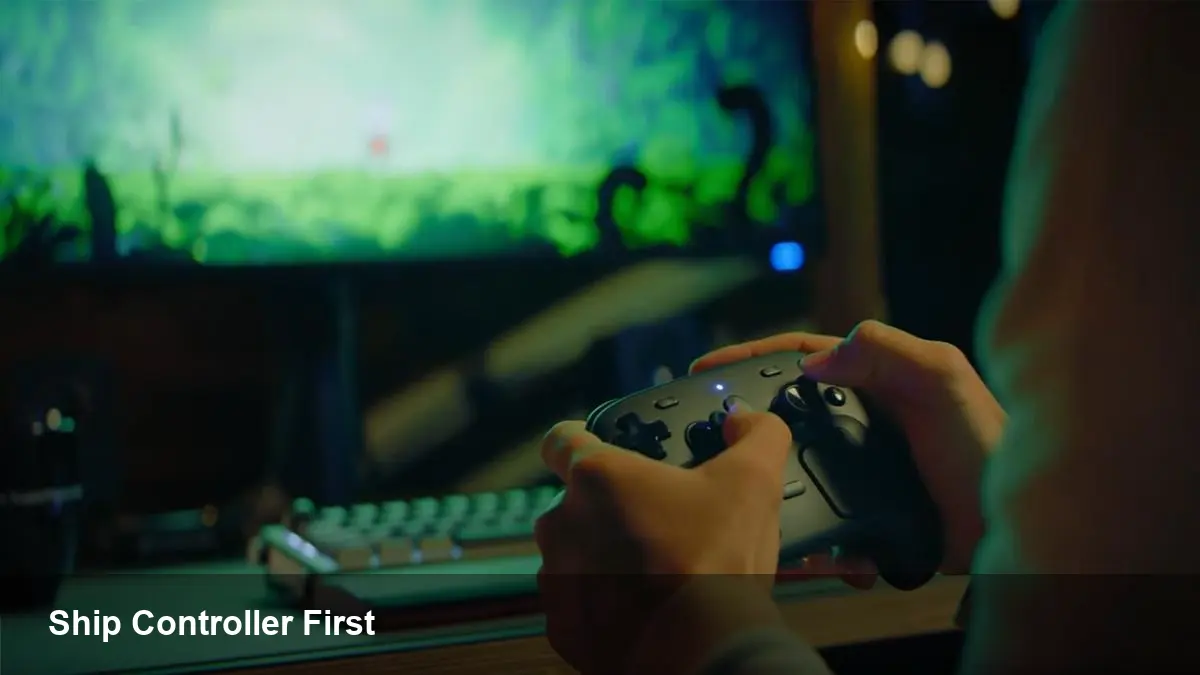
When a company like Valve decides to enter hardware, the launch sequencing matters as much as the devices themselves. The Steam Controller isn’t just another gamepad — it’s the user-facing bridge between PC games and the living-room TV. Shipping the controller well ahead of Steam Machines or any console-style hardware would provide tangible benefits for gamers, developers and Valve’s ecosystem strategy.
Below I’ll cover why a staggered rollout can accelerate adoption, concrete scenarios where an early controller helps, developer and QA implications, and the strategic trade-offs Valve — or any platform owner — should weigh.
Quick background: what the Steam Controller brings
Valve built the Steam Controller around two main goals: make mouse-and-keyboard games comfortable on a couch, and make controller input flexible enough for a huge library of PC titles. Instead of relying purely on analog sticks, it uses touchpads, configurable haptics and a remapping layer (Steam Input) to emulate mouse movement, hotkeys and other complex inputs. The controller is tightly coupled with Steam’s Big Picture interface and cloud-sync profiles, so player configurations can follow them across machines.
That design makes the device more than hardware — it’s a developer-facing input layer and a data pipe for usage and configuration patterns.
Real-world scenarios where an early controller launch helps
- Consumer evangelism and feedback loop: Putting controllers in gamers’ hands early produces real usage data and feedback on ergonomics, button mapping defaults and feature requests. Those insights are far more actionable than lab tests when tuning haptics, latency or default sensitivity curves.
- Developer tuning and QA: Indie studios and middleware authors need time to adapt. If a controller ships first, developers can test, patch, and publish controller-friendly builds or default control schemes long before complete Steam Machines arrive. That reduces launch-day compatibility problems that typically plague new input systems.
- Peripheral ubiquity without hardware constraints: A separate controller launch lets Valve expand reach beyond its own branded boxes. Players can pair a Steam Controller with existing gaming PCs, HTPCs, Steam Link-style streamers and even consoles where supported. That creates a larger installed base and makes the eventual Steam Machine launch less risky.
- Marketing and retail momentum: Retail and online stores can stock and promote a standalone controller. Controller sales generate brand visibility and revenue independent of the bigger — and riskier — hardware play.
Developer workflow: what changes if the controller arrives first
- Early SDK access: Valve should ship a robust SDK and sample profiles alongside retail controllers. That enables studios to bake in default control mappings, tutorial prompts and UI tweaks that expect touchpad input or remappable triggers.
- Profile sharing and telemetry: If Valve enables profile publishing and opt-in telemetry, developers can see how players map controls across genres. That helps refine default presets and identify genre-specific issues (e.g., turn-rate sensitivity for shooters vs. camera drift in strategy titles).
- CI and QA integration: Studios can add Steam Controller tests to continuous integration pipelines and test farms. Automating regression tests for input mappings and haptics prevents last-minute surprises when living-room players start expecting polished behavior.
Business value and ecosystem effects
- Faster network effects: Controllers in the wild make the platform sticky. Players who buy a Steam Controller are more likely to use Steam Big Picture and later consider a Steam Machine for a simpler living-room experience.
- Lowered barriers for hardware partners: If Valve proves a healthy base of controllers exist, third-party OEMs manufacturing Steam Machines face less uncertainty. They don’t need to gamble on creating demand from scratch.
- Monetization paths: Configuration marketplaces, professionally curated control profiles, or even haptic profile packs become possible revenue streams once a critical user base exists.
Pros and cons of a controller-first approach
Pros:
- Rapid feedback cycle for hardware design and software features.
- Larger, diversified installed base before committing to full system SKUs.
- Gives developers the runway to support the input model properly.
Cons:
- Risk of consumer confusion if the controller isn’t clearly positioned (is it for PC users, future Steam Machines, or streaming?).
- Fragmentation: multiple hardware launches over time require coordination so features roll out smoothly across firmware and Steam client versions.
- If the controller fails to gain traction, it could undermine confidence in the broader living-room strategy.
Technical limitations and what to watch for
- Latency and pairing: The controller’s wireless stack must be robust across the types of home networks and streaming setups gamers use. Early shipping helps discover corner cases like interference with IoT devices or multi-controller synchronization problems.
- Mapping complexity: A flexible remapping layer is powerful, but it creates UX complexity. Defaults need to be intuitive for non-technical users; otherwise many won’t bother to personalize controls and will blame games for poor inputs.
- QA burden: Game studios will need to test a wider input matrix, increasing QA costs unless Valve provides excellent tools and device emulation.
Two practical rollout recommendations
1) Ship a developer kit and retail controller together, but make the SDK and profile-sharing features available to devs first. That way studios can prepare without waiting for general consumer availability.
2) Include strong on-device tutorials and first-run configurations. For mainstream adoption, players need an easy way to set sensitivity, haptics and mapping presets tied to popular genres.
Three implications for the future of gaming input
- Controllers as a platform for experimentation: A programmable controller with cloud-synced profiles turns a peripheral into an interface platform. Expect creative input schemes and accessibility-first designs to come from such flexibility.
- Greater importance of software layers: The success of any unconventional controller will depend on the quality of the software layer (remapping, cloud sync, sharing). Hardware alone won’t move the market.
- Influence on cloud streaming: As cloud gaming grows, a widely adopted controller standard that works well over streams reduces friction for streaming services and could become a de-facto input device for home streaming solutions.
An early, well-supported Steam Controller release solves a lot of coordination problems and gives developers the breathing room they need to make the living-room PC experience actually pleasant. More importantly, it treats the controller as an ecosystem kickstarter — not just a peripheral — which is exactly the role it needs to play if Valve’s broader hardware vision is going to stick.