Project Helix and the Xbox roadmap: what the 2027 alpha means

Why Project Helix matters now
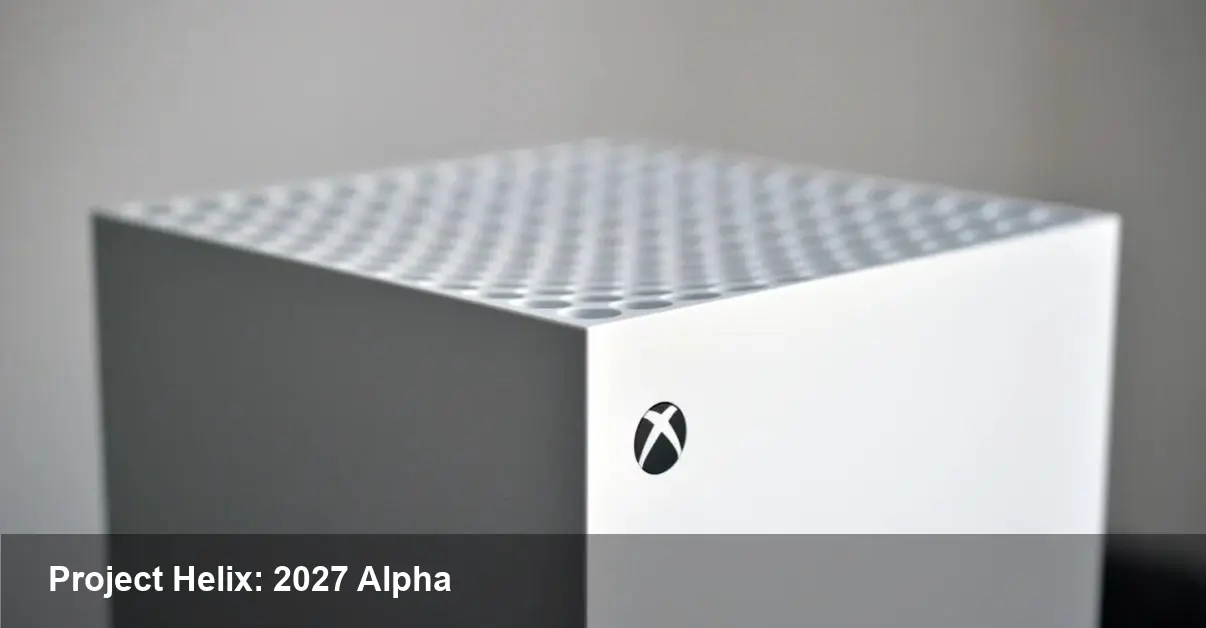
Microsoft has confirmed plans for a next-generation Xbox platform under the codename Project Helix. The company signaled that the platform’s developer alpha won’t arrive until 2027, which pushes meaningful engineering work and public testing further into the decade. For studios, middleware vendors, and platform partners, that delay changes when technical decisions, optimizations and business models must be locked in.
Project Helix isn’t just another console refresh. It sits inside Microsoft’s broader strategy: a hybrid of first-party game investment, a subscription-first distribution model with Game Pass, and a deep push into cloud streaming via Xbox Cloud Gaming. That combination makes any new hardware design more than a performance bump — it’s an axis for how games will be created, packaged, and delivered.
What a 2027 alpha means for developers and teams
- Longer lead time for engines and toolchains. With an alpha arriving in 2027, engine teams (Unreal, Unity, proprietary engines) have breathing room to plan feature parity and new backends. But they’ll need to schedule integration work earlier in their roadmaps so studios can begin testing on preview hardware in time for release windows.
- More time to migrate platform-specific features. Studios that target console exclusives or console-specific enhancements (advanced ray tracing, custom IO pipelines, hardware-accelerated compute) can prototype on existing hardware and cloud instances, then iterate against Helix SDKs once alpha arrives.
- QA and certification planning shifts. The usual console certification cycles must account for a late alpha. QA teams should prepare to ramp up automated test coverage and cloud-based regression suites so that when the Helix devkits appear, validation is efficient.
Concrete scenario: a mid-sized studio planning a 2029 exclusive. They can use 2024–26 to lock art pipelines, multiplayer netcode, and platform-agnostic systems. Once Helix alpha arrives in 2027, allocate 6–12 months for low-level optimization and certification; schedule final feature freezes accordingly.
Practical implications for businesses and publishers
- Supply-chain and revenue forecasting. Hardware launch windows affect first-party marketing and retail cycles, but with Microsoft’s Game Pass model, platform success is less dependent on initial unit sales and more on subscriber growth and retention. Publishers should weigh traditional launch marketing against long-term subscription engagement strategies.
- Monetization design evolves. Subscription platforms encourage live-service thinking: content cadence, player retention metrics, and in-game economies become bigger levers than boxed-sales spikes. A delayed alpha compresses the time publishers have to optimize live metrics for a new console form factor.
- Opportunity for middleware and tooling vendors. As studios prepare for a new platform, tools that help with performance profiling, storage/IO optimization, and cloud integration will be in greater demand. Third-party vendors who provide migration paths or automated optimization for DirectX-driven pipelines can capture early adopter customers.
Engineering and architecture expectations
Microsoft has historically iterated on custom Xbox SoCs, low-latency storage subsystems, and tight OS-level integration with DirectX. For Project Helix, anticipate continued emphasis on:
- Storage performance and fast asset streaming to reduce memory pressure.
- Hardware-accelerated ray tracing and machine learning inferencing for animation or upscaling.
- Tight cloud-local integration to blur lines between local console performance and streamed experiences.
Developer tooling will likely emphasize profiling across local and cloud runtimes, deterministic rollback for networked sessions, and more robust diagnostics for mixed compute (CPU, GPU, dedicated accelerators). Teams that invest early in telemetry, scalable CI pipelines, and platform-agnostic code paths will find it easier to adapt when Helix alpha hardware arrives.
Risks and limitations for studios and Microsoft
- Fragmentation risk. A longer gap between current consoles and Helix can create a generational overlap where developers must support multiple Xbox families concurrently (current gen, refreshed hardware, and Helix). That multiplies testing and optimization costs.
- Timing vs. market cycles. If the alpha is late in 2027, shipping timelines and retail cycles could compete with competitor releases or shifts in consumer spending. Microsoft’s subscription focus mitigates some risk, but market attention windows are finite.
- Dependence on cloud. Pushing features that rely on cloud compute or streaming can alienate regions with poor network infrastructure. Studios must plan graceful degradation and ensure parity for offline-first players.
Three practical moves studios and startups can make today
- Strengthen cross-platform abstractions. Build a thin platform layer so the majority of your codebase is hardware-agnostic; isolate platform-specific performance hacks behind clear interfaces.
- Automate performance regression testing. Use CI to capture baseline CPU/GPU budgets and flag when a change moves you closer to a target platform’s limits.
- Prototype cloud-assisted features. Experiment with server-side compute for AI-driven NPCs or upscaling so you have design and telemetry data well before Helix alpha arrives.
What this signals about Microsoft’s console strategy
Microsoft appears to be pacing hardware innovation against its services footprint. By scheduling a later alpha, the company gives platform partners and internal studios time to refine cloud-first features and subscription engagement mechanics. It also indicates confidence that long-term value will come from Game Pass and ecosystem lock-in, not a single launch weekend.
Looking forward: hardware cycles will remain important, but the interplay between cloud services, subscription economics, and developer tooling will define how successful a next-gen console truly is. For teams building for Xbox’s future, that means investing in flexible architectures, robust telemetry, and cloud-ready design now — so the moment Project Helix arrives, they’re ready to take full advantage.