Pearl Abyss Responds to AI Art Use in Crimson Desert

What happened
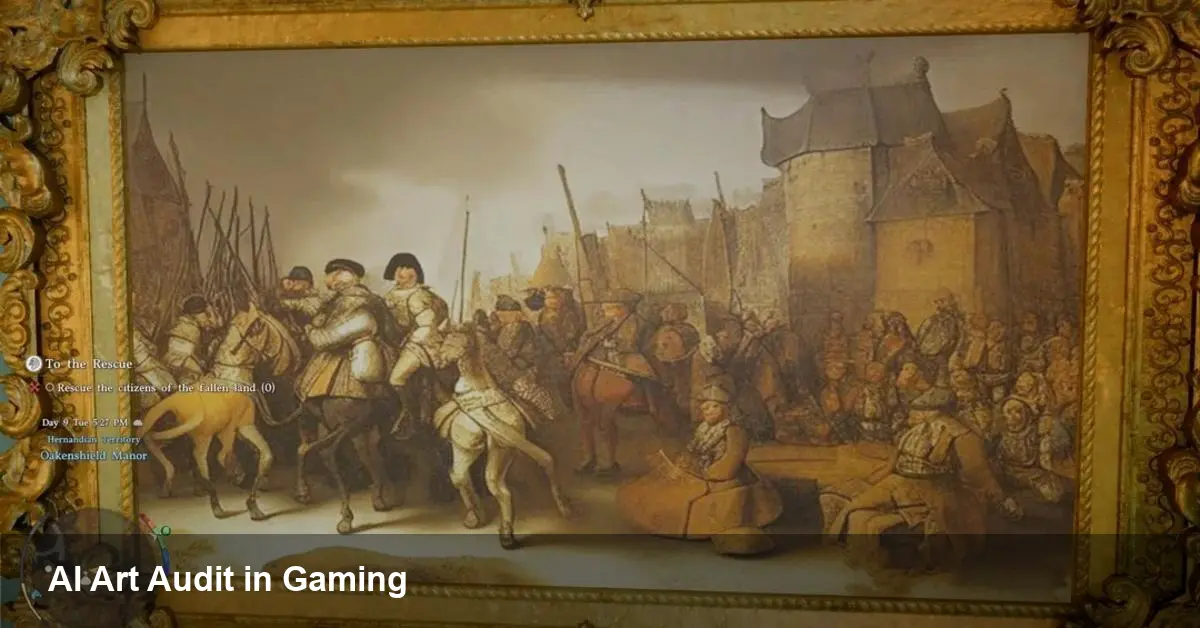
Pearl Abyss, the studio behind the upcoming action RPG Crimson Desert, publicly acknowledged that some assets associated with the project contained AI-generated imagery and issued an apology. The company said it is performing a comprehensive audit to identify and remove any assets created with generative AI tools from the game and its promotional materials.
That admission prompted immediate discussion across developer communities and among players: how did AI-generated art end up in a high-profile AAA project, what standards were breached, and what should studios change in their workflows to prevent recurrence?
Why this matters beyond headlines
The controversy is more than a PR bump — it highlights gaps in asset provenance, supply-chain controls, and the evolving legal and ethical landscape around AI-generated content. For game studios, especially those operating with large external partner networks, the incident is a reminder that creative pipelines are only as robust as their weakest link.
Key practical impacts:
- Brand trust is at stake. Players and partners expect studios to be transparent about creative sources.
- Legal exposure may follow if third-party AI outputs reuse copyrighted material in ways that violate other creators’ rights.
- Internal processes and vendor contracts will require updates to define permitted tools and deliverables.
How AI content likely entered the pipeline
While Pearl Abyss didn’t detail every step, typical scenarios include:
- Contracted artists used AI-assisted image generation as a reference or even as finished art without disclosing it.
- Marketing teams experimenting with quick mockups used generative tools and those images mistakenly progressed into public-facing channels.
- Asset versioning and attribution were insufficient, so downstream teams could not trace origins reliably.
Even when AI is used legitimately for ideation, it must be recorded and communicated. Without clear tagging and approval gates, a single unauthorized image can propagate across concept art, key art, and promotional assets.
Short-term developer and player implications
For developers and in-house artists
- Expect stricter documentation: studios will require explicit declarations of toolchains used to create each asset.
- Contracts with freelancers and agencies will likely add clauses banning undisclosed AI generation or requiring provenance logs.
- Review and QA stages will incorporate provenance checks alongside technical and artistic reviews.
For players and communities
- Immediate visibility: promotional images, trailers, and store assets will be rechecked and potentially pulled or replaced.
- Community trust will hinge on transparency — a clear, demonstrable audit process reassures players more than an opaque statement.
Concrete steps studios should take now
- Asset provenance tracking
- Implement metadata policies: every asset (concepts, textures, sprites) should include a small metadata record noting creator, tools, date, and usage rights.
- Use a central asset-management system (AMS) with mandatory fields; reject uploads missing provenance.
- Vendor and contributor contracts
- Add clauses that require disclosure of generative tools and that prohibit undisclosed AI-generated final deliverables.
- Define remediation steps and penalties for noncompliance to deter covert workflows.
- Automated detection and audit
- Deploy tooling that can flag likely AI-generated images (not foolproof but useful for triage).
- Schedule periodic audits where a cross-functional team verifies a sample of assets for adherence to policy.
- Clear internal policies
- Differentiate between permitted uses (ideation, reference) and prohibited ones (passing off AI output as final original art without disclosure).
- Train producers and art directors to spot and question unfamiliar visual styles or artifacts.
Example scenario: preventing a repeat
Imagine a mid-sized studio working with remote concept artists. The studio adds an AMS requirement that every upload includes: author name, whether any generative tools were used, and a link to the source prompt or dataset if applicable. Artists who used generative tools must mark the asset as "AI-assisted" and attach derivative notes. A producer’s dashboard flags any unmarked assets for manual review before they can be used in marketing. This simple guardrail preserves creative freedom while making provenance traceable.
Broader industry implications
- Contract and IP norms will shift
- Expect standard contract language disallowing undisclosed AI-generated deliverables. Insurance and warranty language may evolve to cover AI provenance risks.
- Tooling and standards will emerge
- We’ll see more mature AMS features for generative provenance, plus community-led standards for tagging AI contributions in creative work.
- Reputation now requires operational rigor
- Player communities reward transparency. Studios that move quickly to audit and correct mistakes will preserve goodwill; those that don’t risk long-term damage.
Limitations and unresolved questions
- Detection reliability: current AI-detection tools produce false positives and negatives, so human audit remains essential.
- Ownership and derivative definitions: the legal status of AI-generated works and whether they infringe on training data copyright remains unsettled in many jurisdictions.
- Creative tradeoffs: over-restricting generative tools could stifle legitimate productivity gains for concepting and iteration.
What this means for founders and studios
If you run or advise a studio, treat this episode as a prompt to build practical controls, not as a reason to ban open experimentation. Define where generative AI adds value (rapid ideation, style exploration) and where it shouldn’t substitute for original work (final key art, unique IP elements) without explicit acknowledgment.
Funding conversations and publisher relationships will increasingly probe for compliance frameworks. Having documented processes for provenance, vendor oversight, and remediation is becoming part of a studio’s operational hygiene.
Looking ahead
The Pearl Abyss announcement is an inflection point more than an isolated scandal. It accelerates an industry-wide conversation about how to balance creative speed with accountability. Studios that integrate provenance-first workflows, update legal agreements, and educate teams will navigate the shift better than those that ignore it.
Transparency and systems — not just apologies — will determine which studios retain player trust while leveraging AI to iterate faster.