Nintendo shares plunge 10% on weak profit, margin fears

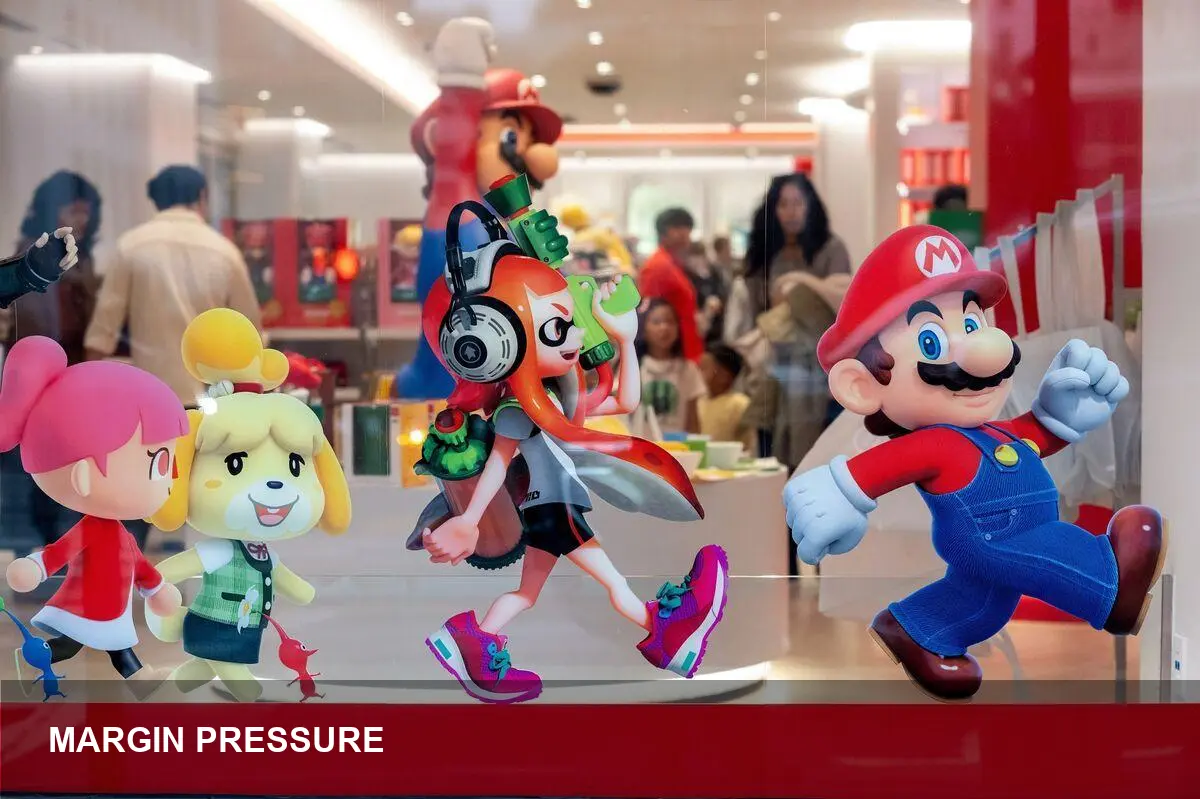
- Nintendo’s stock fell about 10%, its largest one-day drop in 18 months, after the company reported disappointing earnings.
- The earnings revealed a significant hit to profit margins, raising investor concern about cost pressure going into 2026.
- Market attention is focusing on soaring memory chip prices in 2026 as a key risk that could further squeeze margins and production costs.
What happened
Nintendo Co. saw its shares slide roughly 10% after releasing disappointing quarterly results that surprised investors. The move represented the company’s biggest single-day fall in about 18 months.
Why margins mattered
The earnings update showed a notable deterioration in profit margins, a central reason for the market reaction. Investors interpreted the numbers as a sign that Nintendo’s ability to convert sales into profit has weakened.
Memory-chip cost risk for 2026
Beyond the immediate profit miss, attention quickly turned to input-cost pressure — specifically, sharply higher memory chip prices expected in 2026. Memory is a key component in gaming hardware and cartridges, so rising prices could lift production costs and compress margins further.
Investor implications
The share drop suggests investors are re-pricing Nintendo for a tougher cost environment and more volatile earnings. For shareholders, the immediate concern is whether margins will recover or continue to deteriorate if component costs remain elevated.
What to watch next
Watch for Nintendo’s forward guidance, any commentary on supply-chain contracts or hedging strategies, and moves to offset higher component costs — such as pricing adjustments, cost cuts, or product mix changes. Analysts and investors will also track whether memory-chip suppliers provide signs of easing prices or continued tightness into 2026.
Bottom line
Nintendo’s earnings surprise and the resulting 10% slide underline how sensitive consumer electronics and games-makers are to component-price swings. With memory-chip costs flagged as a looming 2026 risk, the company’s near-term margin outlook will be a focal point for markets and shareholders.