Microsoft’s Gaming Copilot Arrives on Xbox Series in 2026

What Microsoft is adding and why it matters
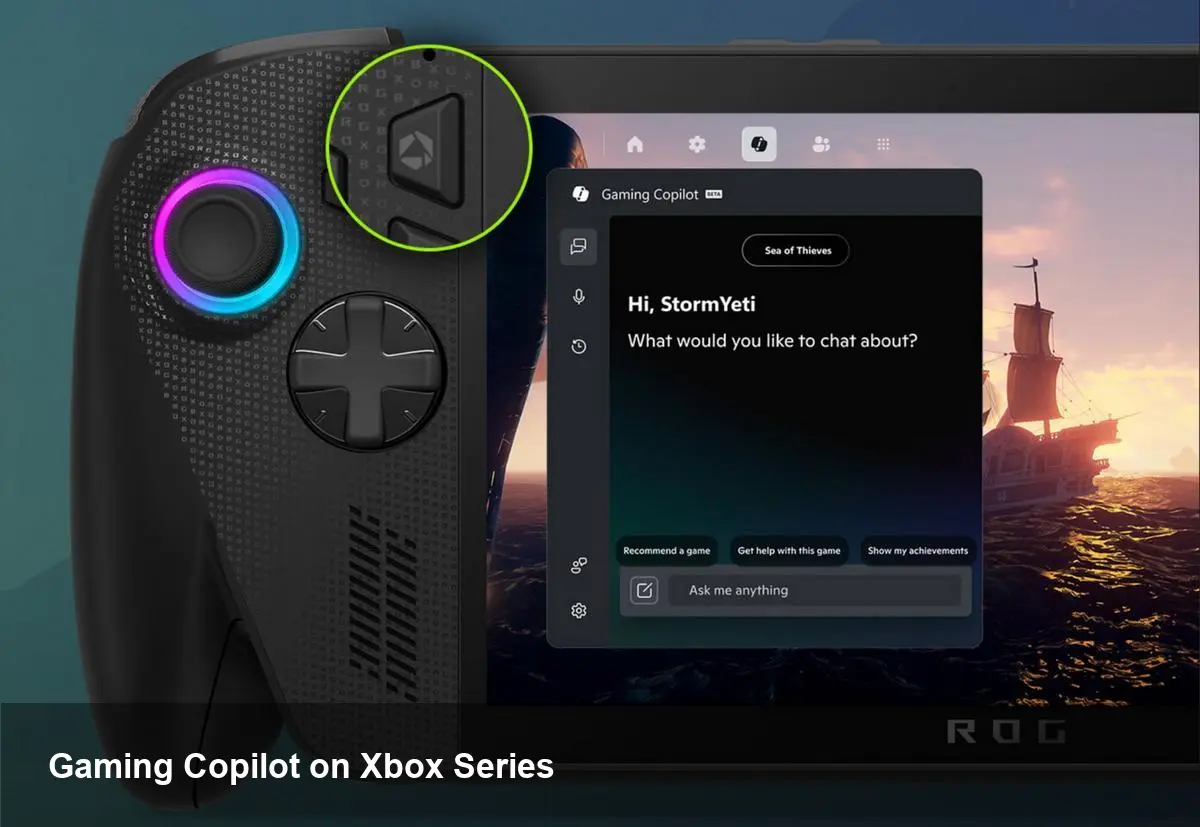
Microsoft announced that its Gaming Copilot — an AI-powered assistant that’s been in beta on PC, mobile and devices like the ROG Xbox Ally since October 2025 — will reach Xbox Series X and Series S consoles in 2026. The move shifts the experience from optional companion apps and handheld compatibility toward being a first-class, platform-level feature on living-room hardware.
This isn’t just a novelty overlay. By placing an AI assistant on the console, Microsoft is making contextual help, accessibility features, and developer hooks part of the default gaming experience. For players this can mean faster problem solving and more approachable games; for developers and studios it introduces new design surfaces and operational considerations.
How Gaming Copilot will feel on an Xbox Series console
Expect a contextual, summonable assistant that sits alongside or above gameplay — much like a smart overlay. Functionality likely includes:
- Real-time guidance: hints, walkthroughs, or strategy tips without taking players out of the game.
- Accessibility support: on-demand text-to-speech or descriptive assistance for players with vision or motor impairments.
- Session summarization: generate quick recaps of recent missions or objectives for players who jump back in after a break.
- Social and streaming tools: clips, highlights and sanitized chat summaries for sharing or moderation.
While Microsoft hasn’t published a full feature list, the experience will probably blend local UI with cloud AI. The Xbox Series hardware will handle rendering and low-latency input while heavy LLM work runs in the cloud — the same pattern used for other console clouds services.
A few practical examples
- Stuck on a boss? Instead of pausing and searching forums, a player can ask Copilot for frame-perfect parry windows, suggested builds, or a step-by-step tactic tailored to their current loadout.
- Speedrunner practice: Copilot can create targeted drills (e.g., optimizing a particular boss phase), suggest segmented splits, or simulate predictable enemy behavior for practice.
- Accessibility scenario: a visually impaired player asks for a room description and receives an audio summary of interactable items and exits.
- Developer QA helper: a studio uses Copilot in pre-release to generate reproducible bug reports from telemetry and create test cases, reducing manual triage.
What developers and studios should plan for
Gaming Copilot arriving on Xbox Series moves AI from a nice-to-have add-on to a platform expectation. Practical implications:
- Integration model: Studios will likely need to opt in and expose controlled game-state hooks for contextual help (e.g., current objective, inventory, world location). Microsoft will probably provide SDKs or APIs for safe, limited access.
- Design for ambiguity: Copilot answers will be probabilistic. Teams must craft in-game UI that presents suggestions as optional guidance rather than hard facts, and avoid breaking immersion.
- Telemetry and privacy: Passing game-state to cloud models raises consent and data minimization questions. Studios should ensure they can filter player-identifying data and respect platform privacy controls.
- Monetization and retention strategies: Designers can use Copilot to improve onboarding and retention (better in-game help reduces churn). But offering paid, competitive advantages via AI hints will be contentious and may draw scrutiny.
Business and ecosystem effects
Bringing Gaming Copilot to Xbox Series strengthens Microsoft’s platform play in several ways:
- Player retention: Faster help and better onboarding reduces friction, which is especially valuable for Game Pass subscribers exploring many titles.
- Accessibility leadership: Platform-level AI aids can set new standards for inclusive design and attract players with accessibility needs.
- Developer tooling: Lowering QA and support costs by automating debugging and player support could be a visible operational win for studios.
On the downside, there are hot-button issues. Competitive fairness will be a concern in multiplayer titles — studios and Microsoft will need to define when AI assistance is allowed and how it’s surfaced. There’s also potential regulatory scrutiny around transparency if AI impacts in-game outcomes or purchases.
Risks and limitations to consider
- Cloud dependency and latency: While Xbox Series consoles are powerful, most LLM inference is cloud-based. This can create latency, require robust connectivity, and add ongoing service costs.
- Spoilers and gating: An assistant that reveals solutions risks spoiling narrative games or undermining intended difficulty curves.
- Abuse and cheating: If Copilot can read live game state, there’s a risk it could be weaponized for exploits or to coordinate unfair advantage in multiplayer.
- Accuracy and hallucinations: Like all LLMs, Copilot will sometimes give incorrect or misleading answers. Studios must present AI outputs with clear affordances so players treat them as guidance, not gospel.
How studios can prepare now
- Start small: identify a single, high-impact surface (onboarding, boss hints, accessibility) and prototype how Copilot interactions would surface in-game.
- Define data contracts: decide what game-state you will expose and how you will sanitize or anonymize it before sending to cloud models.
- Build guardrails: craft UI patterns that let players control spoilers, turn assistance off, or limit assistance in competitive contexts.
- Measure outcomes: track onboarding completion, churn rates, and support ticket volume to quantify Copilot’s effect.
Broader implications and what to watch
- Platform AI expectations: Once a major platform ships an AI assistant, players will expect similar services elsewhere. Console features like built-in help could pressure other platform holders to follow suit.
- New content types: AI can accelerate procedural narrative, dynamic hints, and personalized tutorials — an opportunity for studios to experiment with modular content that adapts to player skill.
- Regulation and standards: Expect conversations around transparency, data use, and competitive fairness to intensify. Microsoft, platform partners and studios will likely develop norms and technical standards over the next 12–24 months.
Microsoft’s Gaming Copilot on Xbox Series is an important step in integrating cloud AI into mainstream console gaming. It promises to make games more approachable and give developers new tooling — but it also raises questions about privacy, fairness and how AI assistance should be designed. For studios and players alike, the next year will be about experimentation, sensible guardrails, and learning where AI genuinely improves play rather than replacing core design challenges.