How Unity's AI Could Let Anyone Prompt Casual Games

A quick primer: Unity's AI ambition
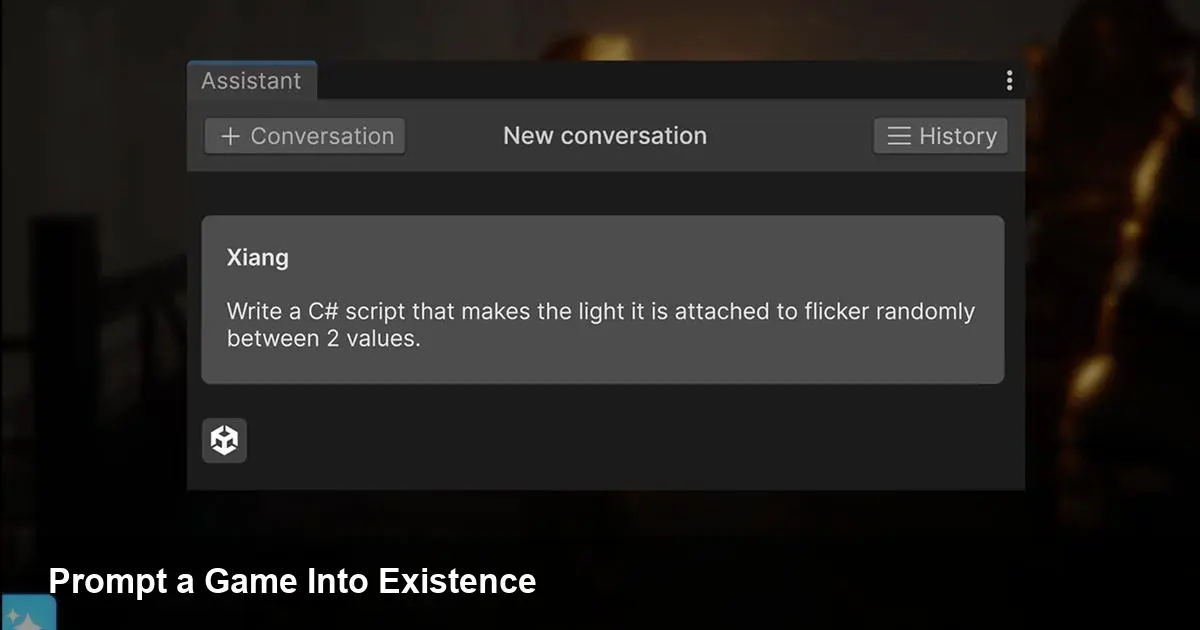
Unity — led by CEO Matt Bromberg — recently signaled a future where AI can generate entire casual games from text prompts. The idea is simple on its face: instead of building a prototype with code and art over weeks, a creator writes a short prompt and receives a playable casual experience. That claim is headline-grabbing, but the real value is in how it could change workflows, distribution and business models across studios large and small.
What “prompting a full casual game” actually means
Saying an AI can "prompt a game into existence" condenses multiple technical steps. Practically, a prompt-based pipeline would need to:
- Translate high-level design intent (genre, core loop, monetization) into mechanics.
- Generate or fetch art and audio assets compatible with Unity scenes.
- Create game logic and scene wiring (movement, collisions, UI flows).
- Produce parameters for difficulty, progression and monetization points (ads, IAP).
- Output a project bundle that can be tested, iterated and published.
That bundle won't be a polished AAA title. Think hyper-casual or casual mobile mini-games — quick loops, a handful of assets, simple rules. Those are the low-hanging fruit for prompt-driven generation.
Three concrete scenarios where this matters
1) Indie developer rapid prototyping
- Scenario: An indie studio wants to test 10 casual concepts in a month.
- With prompt-based generation they describe each concept (“single-button endless runner with swipe-to-dodge, pastel art, and rewarded video ads at death”). AI spits out playable prototypes. The team plays, iterates prompts to tune feel, then converts promising prototypes into higher-fidelity releases.
- Business impact: Faster ideation, lower prototyping burn, and broader hypothesis testing.
2) Marketing or brand promotions
- Scenario: A consumer brand needs an interactive campaign: a simple branded mini-game to run in a banner or as a microsite.
- A marketer provides brand assets and a prompt, receives a lightweight Unity project that runs in WebGL or mobile wrapper, and can be deployed with analytics hooks.
- Business impact: Campaigns ship faster, costs drop, and A/B tests on creative concepts scale.
3) Live-ops and seasonal content creation
- Scenario: A live-ops team needs 20 fresh levels, seasonal skins and short events every month.
- AI can generate level variations and asset reskins from prompt templates, while designers approve and tweak critical moments.
- Business impact: More content with fewer manual hours; designers focus on curation and tuning rather than repetitive creation.
How developer workflows will shift
- From code-first to prompt-first prototyping: Early design becomes a mix of prompts and small scripts rather than full builds.
- Human-in-the-loop validation is essential: AI outputs will need playtests, designer adjustments, and QA for edge cases.
- Asset pipelines will standardize: Studios will build validation layers that check AI-generated art and audio for brand compliance, performance budgets, and legal safety.
- Tooling integration: Expect plugins and editor tools that translate prompts into editable scenes, letting developers inspect and refine generated nodes and scripts instead of starting from scratch.
A practical prompt workflow might be: write a short concept -> generate project -> run automated smoke tests -> iterate prompt for feel -> swap to custom assets and polish -> integrate analytics/ads -> publish.
Business upside (and fast wins)
- Lower cost to prototype and ship: Reduced need for large early teams and external contractors for every small idea.
- Increased experimentation velocity: More A/B tests, faster hit discovery, and more efficient UA spend.
- New service products: Agencies or middleware vendors could offer prompt templates, asset packs, and moderation tools tuned for Unity’s pipeline.
For publishers and ad networks, this could unlock more supply of playable ads and lightweight titles suited to short attention spans.
Risks and limitations to watch
- Quality and original creativity: AI tends to generate generic outcomes unless carefully guided. Breakout hits still require a strong design voice.
- IP and licensing: Asset provenance and model training data remain legal landmines. Studios must verify that generated art and music are free of problematic echoes of existing IP.
- Platform and performance constraints: Mobile targets have strict memory, CPU and package-size budgets. Generated projects will need automatic optimization steps.
- Jobs and skill shifts: Roles will evolve rather than vanish — artists and designers will spend more time curating, editing and teaching models than hand-crafting every pixel.
What studios and founders should do now
- Start building prompt playbooks: capture the kinds of prompts that yield acceptable prototypes for your genre and audience.
- Create validation and QA gates: automated tests for crashes, performance, and basic playability before human review.
- Invest in asset governance: pipelines that verify licensing, quality and brand safety for generated assets.
- Think about monetization hooks from day one: AI should produce not just gameplay but consent points for ads, IAP and analytics.
Broader implications and three forward-looking insights
1) Hybrid creation becomes the norm AI will augment ideation and repetitive tasks. The most successful teams will pair human creativity with AI speed — using models to generate volume and humans to craft differentiation.
2) A new economy for micro-games As the cost and time to create lightweight games drops, we’ll likely see marketplaces for short games, branded experiences and playable ads — similar to stock assets today but for playable content.
3) Regulation and provenance will matter Expect tighter scrutiny over model training and asset provenance. Companies that provide transparent tracing and licensing for generated assets will win trust from larger publishers.
The headline that AI can "prompt full casual games into existence" is less about magic and more about applied automation. For creators and businesses, the immediate opportunity is in surfacing more ideas, shipping prototypes faster, and shifting human effort toward curation, polish and business strategy. If Unity’s roadmap delivers usable tooling, the next few years could be a major productivity boost — so long as studios pair speed with governance and creative direction.