How to Win ARC Raiders' 'Storm Stories' Community Contest

Why the 'Storm Stories' contest matters
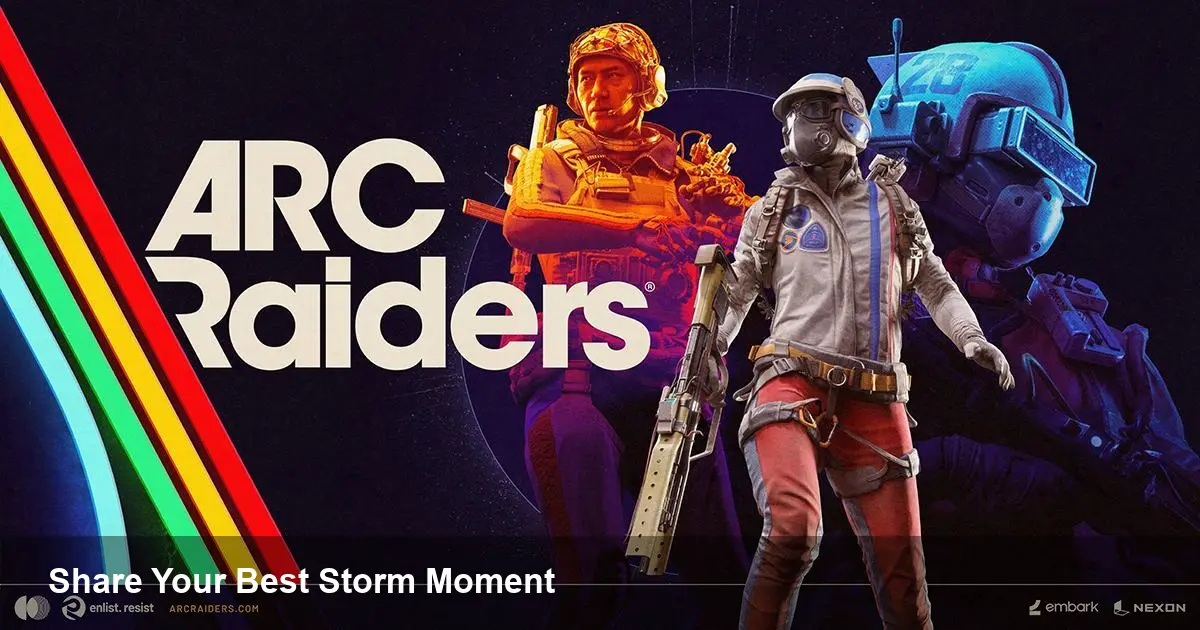
ARC Raiders is built around emergent, team-driven moments in a hostile, mechanized world. A community competition like “Storm Stories” does more than reward dramatic clips — it amplifies player-driven narratives, helps creators grow, and gives developers raw feedback about what moments resonate.
If you’re a player, streamer, or community manager, this is a chance to turn your best extractions, fails, and clutch plays into visibility. Treat submissions like short-form storytelling: the gameplay is the footage, but editing, context, and hook make the piece memorable.
What counts as a great Storm Story
The contest is about moments that emphasize the setting and mechanics: high-stakes extractions, clever use of gear, team coordination against mechanized ARC units, or unusual improvisation under pressure. Strong entries often share these traits:
- A clear conflict and resolution: a firefight that leads to extraction, a daring escape, or a creative takedown of a superior enemy.
- Emotional beats: panic, relief, triumph, or humor that make viewers care.
- Distinctive use of game systems: using traversal, gadgets, or the environment in ways that feel uniquely ARC Raiders.
- Visual clarity: good framing, readable UI (or deliberate removal), and steady pacing.
Example scenarios you can film:
- A three-player squad pushing through a salvage field while a massive ARC Unit hammers down from above, then improvising a diversion to secure the objective.
- A solo extraction where resource scarcity forces risky decisions — a last-second sprint to the extraction point with enemy drones on your tail.
- A coordinated revive and counterattack after a teammate is downed inside a storm-wracked zone.
Practical tips for capturing and editing
You don’t need a Hollywood rig to create a winning clip, but follow these practical guidelines to make your submission competitive.
Recording
- Use native capture features first (console or built-in PC recorders) to preserve quality and avoid sync issues.
- If you stream, save local recordings rather than relying on archive clips. Local files are higher bitrate and easier to edit.
- Capture at least one minute before and after the moment. Editors often want the lead-in to set context and the aftermath to land the payoff.
Editing
- Hook the audience within the first 3–5 seconds: quick cut or title card that signals stakes (e.g., “Extraction: 30s left”).
- Keep the core story to 30–90 seconds. Brevity helps social sharing and judges’ attention.
- Use light color grading and simple motion stabilization if needed. Avoid over-processing; clarity beats flashiness.
- Add minimal captions or commentary to highlight choices — e.g., call out why a tactic worked or failed.
Audio
- Keep game audio prominent for immersion, then layer a subtle music bed for tension. Reduce music during important voice lines or comms.
- If possible, include team voice comms. Live reaction is often the emotional hook that elevates a clip.
Submission format
- Export to common codecs (H.264 MP4) at 1080p or higher. Check contest rules for size and length limits.
- Include a short written caption (1–3 sentences) that explains the context and why the moment matters.
How to present the story for judges and audiences
Think like a storyteller as well as a gamer. A simple structure works well:
- Setup (5–15s): Show the stakes — mission objective, team state, time left.
- Confrontation (15–45s): The core fight or decision where players react to ARC threats.
- Resolution (5–20s): Extraction, escape, or a twist. Leave viewers with a clear payoff.
If your clip relies on an unusual mechanic, add a short caption explaining it. Judges appreciate when players highlight emergent interactions that showcase the game’s systems.
Benefits for creators and for the game community
For creators
- Reach: Contest features or reposts can drive subscribers and followers.
- Portfolio: High-quality clips demonstrate editing and storytelling skills for potential collaborators.
For the game and studio
- Free, authentic marketing material showcasing real player experiences.
- Design feedback: Which mechanics and encounters produce the stickiest moments.
- Community building: Competitions foster friendly rivalry and collaboration among players.
Brands and streamers can treat Storm Stories as content hooks — compile montages, run live reaction shows, or make tutorial breakdowns that dissect winning clips.
Common pitfalls and how to avoid them
- Noise without context: A flashy fight that lacks setup can confuse judges. Always include brief context.
- Over-editing: Effects can distract from the gameplay. Use them sparingly to enhance clarity.
- Missing deadlines or wrong formats: Read rules carefully. Submissions rejected for technicalities lose opportunities.
What this means for the future of community-driven games
1) Design feedback loop: Well-run contests help studios see what emergent systems players value, which can influence balance and future content. 2) Creator economy synergy: Competitions lower the barrier for creators to produce shareable content tied to a game’s identity, increasing organic reach. 3) Community literacy: As players get better at capturing and editing, the average quality of user-generated content rises, creating a richer signal for studios on which experiences to amplify.
Quick checklist before you hit submit
- Is the story clear in 90 seconds or less?
- Is audio balanced (game, comms, music)?
- Did you include a short caption explaining context or tactics?
- Is the file format and resolution compliant with the rules?
- Have you saved a backup of the original recording?
Competitions like Storm Stories are a chance to turn a chaotic extraction into a narrative that others can enjoy. Whether you’re a competitive squad, a solo grinder, or a streamer hunting a viral clip, think in terms of storytelling, polish, and context — and you’ll turn your best in-game survival moments into shareable, career-building content.