How Indie Games Are Rewriting Genre Rules

Why small studios are mixing mechanics
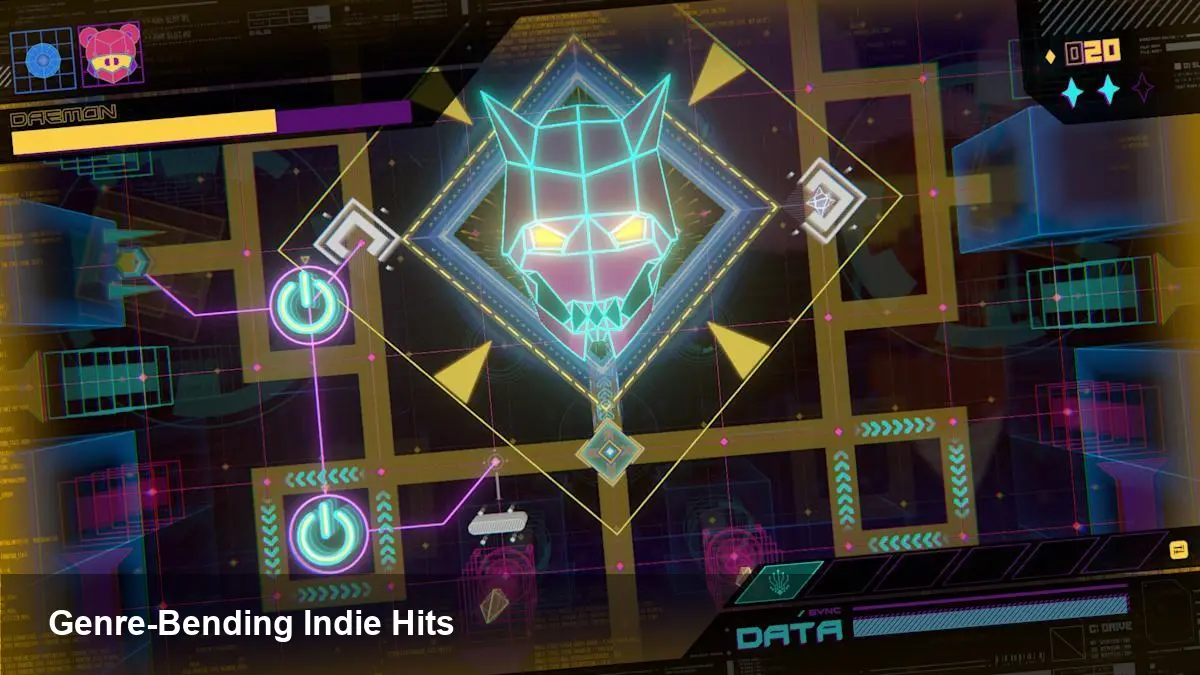
Indie teams are increasingly taking two or three familiar systems and welding them together into something that feels fresh. Instead of chasing photoreal graphics, many developers focus on mechanical novelty: a dungeon crawler that uses musical timing to resolve combat, or a soccer sim where set pieces and strategy are handled with a deck of cards. These hybrids are cheaper to prototype, easier to iterate, and tend to attract passionate niche audiences.
For players and founders, the practical takeaway is clear: hybrid mechanics lower the marketing burden. A unique twist gives press and creators something to explain in a headline, and that helps small teams cut through the noise.
Example: beat-driven dungeon crawling
Imagine a roguelike where every attack, dodge and ability must be performed on the beat. Combat becomes less about stat min-maxing and more about rhythm and flow. Rooms are laid out like short musical bars—clear a corridor with a bass-heavy wave, then time a dodge to an offbeat snare to avoid an ambush. Procedural generation provides variety while hand-authored musical cues keep sequences satisfying.
Player experience: tight windows for timing increase tension and reward mastery. On the developer side, you need a reliable audio engine, deterministic timing for multiplayer (if supported), and tools to map enemies and obstacles to beats. Unity and FMOD/Wwise are common tech stacks here, but lighter engines like Godot are now capable of similar results for small teams.
Example: card-battling soccer sim
Take the sport and abstract its tactics into a card system. Teams are decks, cards represent plays, formations, and stamina-management choices. Each possession becomes a micro-game of hand management mixed with probabilistic outcomes. A well-balanced deck captures a team’s identity: a high-press deck sacrifices stamina for turnover chances; a possession deck minimizes risk but costs tempo.
Play scenario: late in the match, your star forward is exhausted. Do you play a risky long-ball card (high success, high injury chance) or a conservative pass-card to run down the clock? That tension translates real sport emotions into a compact strategic layer that fits mobile and PC audiences alike.
Technical note: balancing cards requires robust telemetry. Track win-rates, play frequency, and decision latency per card. Iterative patches and season updates can refresh meta without massive content creation.
A modern indie take on team-versus-team multiplayer (in the spirit of Factions)
The Last of Us’ Factions popularized tense, small-team engagements with resource scarcity and high-stakes stealth. Indie studios have adapted that DNA into modes that emphasize asymmetric objectives and emergent player-driven narratives. Instead of focusing on AAA polish, these indies double down on emergent systems: scavenging, base upgrades between rounds, and meaningful player-permadeath.
From a development perspective, small-team multiplayer is a different beast. Netcode needs to be optimized for close-quarters, unpredictable encounters. Server-authoritative designs reduce cheating but increase server costs. Many indies adopt asynchronous or turn-based elements (e.g., resolve raids offline) to reduce persistent server load while keeping social tension high.
Business and distribution realities
Indie hybrid games usually target one or two platforms at launch: Steam, Nintendo Switch, and mobile are popular options. Pricing strategies vary—premium one-time purchases tend to work for narrative-driven hybrids, while card-based systems sometimes opt for seasonal passes or cosmetic microtransactions.
Marketing is often community-led: let creators show the unique mechanic. A single viral streamer demonstrating a beat-clearing combo or a clutch card play can move thousands of units overnight. Devs should instrument the game for shareable moments—replay exports, short clip sharing, and spectator-friendly UI help.
Costs and monetization trade-offs include:
- Server cost vs. retention: persistent multiplayer increases player retention but accelerates operational costs.
- Live content cadence: card and meta games benefit from regular seasonal updates; rhythm-based singleplayer modes can succeed without constant live ops.
- Audience size: niche hybrids might never reach AAA sales but can achieve sustainable profitability with modest unit sales and good retention.
Development workflow tips
- Prototype the core loop in a week. For a rhythm crawler, ship a single room with timing mechanics; for a card-soccer sim, make a one-minute possession prototype. If the core loop isn’t fun fast, stop.
- Use telemetry from day one. Capture basic metrics (engagement, failure points, most-used cards/abilities) to inform balance.
- Design for clipability. Short, dramatic interactions travel well on social platforms.
- Prioritize deterministic systems if you plan multiplayer; reproducibility simplifies cheating prevention and debugging.
Limitations and design trade-offs
Blending genres creates novelty but introduces complexity in onboarding. Players must learn multiple systems at once, so clear tutorials, progressive difficulty, and contextual UI cues are essential. Procedural systems that feel too random can thwart the skill expression that makes rhythm or card games satisfying, so hybrid designs often need a calibrated mix of randomness and player agency.
Multiplayer variants mirror these trade-offs: persistent economies or permadeath create emotional stakes but can alienate casual players if sessions are too punishing.
Three implications for the next few years
- Genre fusion will keep being a sandbox for indie innovation. Small teams will continue to experiment because hybrid mechanics can create disproportionate buzz for limited development budgets.
- Tools will democratize rhythm and card mechanics. Middleware like audio engines, card-balance libraries, and low-latency networking stacks will reduce engineering lift, letting designers iterate more.
- Social-first features will determine winners. Games that bake in clip exports, live spectating, and creator-friendly sharing will outperform mechanically similar titles that treat social reach as an afterthought.
Whether you’re a player, an indie founder, or a small publisher, these genre-blending indies are worth watching. They’re not just fun experiments—they’re practical case studies in how constrained teams can deliver deep, memorable experiences by recombining proven systems.