How Google Play Is Becoming a Full-Fledged Gaming Hub

The shift in what a mobile app store can be
Google Play has long been the default marketplace for Android apps and mobile games. Recently, Google broadened its ambitions: the store is no longer just a place to download free-to-play mobile titles and utilities. It’s evolving into a multi-dimensional gaming destination that supports paid games, distributes PC releases, offers short trials, and adds native community features.
This isn’t a cosmetic update. For players, developers, and companies that build services around distribution and discovery, it changes how products are marketed, monetized, and supported.
Quick background: why this matters
Historically, mobile stores emphasized free-to-play models with in-app purchases and ads. That made sense for smartphone-first players and studios optimized for acquisition funnels. But gamers and developers have wanted more: an easy way to sell premium games, desktop distribution without separate storefront overhead, and better social tools for engagement.
By adding paid games and PC support into the same storefront, along with time-limited trials and community posts, Google is attempting to reduce friction across the entire game lifecycle — from discovery to purchase to post-launch engagement.
What’s actually changing — practical features and examples
Here’s a compact rundown of the features and how they might be used in real projects.
- Paid game listings: Developers can publish premium titles with one-time purchases directly in Play. Example: an indie studio releases a premium puzzle-adventure for Android and also lists it as a paid title for desktop buyers, keeping a single product page and analytics pipeline.
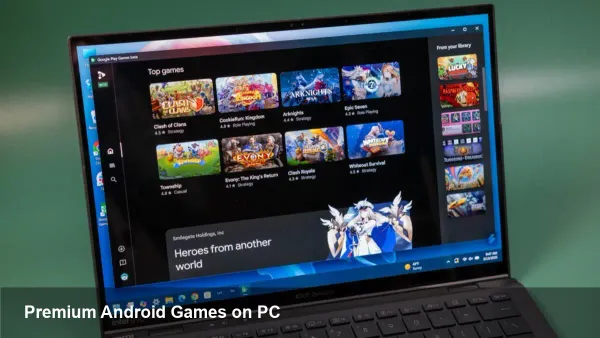
- PC distribution: Play’s storefront will host native PC (Windows) game downloads or installers, letting developers reach users who prefer keyboard-and-mouse play without listing on multiple stores. Example: a mid-sized studio ports its game to Windows and pushes updates through Play’s console instead of managing separate Steam and standalone distribution.
- Game trials: Time-limited demos or trial sessions let players test a game before paying. Example: a player downloads a 2-hour trial of a narrative RPG, experiences a complete story prologue, and decides whether to unlock the full game from the same listing.
- Community posts and in-store engagement: Developers and creators can publish updates, screenshots, developer notes or event announcements directly on their Play product pages. Example: an MMORPG team posts patch notes and event teasers to bring players back without forcing them to leave the store or rely solely on social media.
Each of these makes the store a more powerful piece of the product experience rather than just a download gate.
What this means for developers and businesses
There are practical workflow and business implications:
- Simpler cross-platform distribution: Keeping mobile and PC product management within one console reduces administrative overhead, simplifies analytics, and helps with unified pricing and promotions.
- Lower friction for premium sales: Trials reduce purchase hesitation and can increase paid-conversion rates for premium titles—especially useful for narrative or single-player games that have historically struggled with free-to-play economics.
- Community-led retention: In-store posts and announcements can serve as a discovery booster for live events or updates, reducing reliance on external channels and improving retention through targeted notifications.
- Competition with existing PC storefronts: Developers will weigh whether to list on Play for Windows on top of or instead of Steam, Epic or GOG. The decision will hinge on revenue share, user reach, platform features (achievements, cloud saves), and perceived discoverability.
- Operational trade-offs: Offering PC builds means adding QA for different hardware and OS versions, patch distribution workflows, and possibly new DRM or anti-cheat integrations.
Concrete adoption scenarios
Scenario 1 — Indie studio: An indie team launches a premium puzzle-platformer priced at $9.99. They publish Android and Windows builds under the same Play product. Using a two-hour trial, players who love the demo convert at a higher rate. The developer uses in-store posts to announce a free weekend and gain editorial visibility.
Scenario 2 — Mid-sized studio with live service ambitions: A multiplayer game uses Play’s community posts to highlight seasonal events and link to patch notes. They distribute a PC client via Play so players on both phone and PC get unified authentication and crossplay.
Scenario 3 — Port shop: A porting company offers to adapt mobile hits to PC and helps developers get their titles listed on Play’s Windows channel, reducing the cost of entering desktop distribution for casual and mid-core brands.
Risks, limitations, and what to watch
- Discoverability still matters: Adding paid and PC titles won’t help if search and recommendation engines favor free-to-play or big releases. Developers should pair store listings with marketing.
- Platform fees and policies: Revenue share, refund rules, and content policies will shape whether studios choose Play as a primary PC storefront. Watch for clarifications from Google about fees and dispute processes.
- Quality control and QA burden: Developers need proper testing across Windows PCs. Smaller teams may face additional costs to support a desktop platform.
- Regional rollout and ecosystem integration: Expect staggered availability and changes as Google iterates — features like a cloud save sync or achievement services will be major adoption drivers if implemented smoothly.
Three practical implications for the next 12–24 months
- Greater hybrid strategies: More developers will pursue hybrid monetization — premium pricing on PC with optional in-app content on mobile — using Play as the single distribution hub.
- New discovery models: Play’s editorial and community tools could evolve into a feed-driven discovery layer, where timely posts, developer activity, and trials increase a game’s algorithmic visibility.
- Pressure on competing stores: If Google offers competitive fees and tight OS integrations (cloud saves, controller support), smaller stores may need to improve developer tooling and promotional programs to stay attractive.
How founders and developers should prepare
- Plan for multi-platform QA early; performance expectations differ sharply between mobile and PC.
- Design trial content that highlights your game’s core loop without spoiling narrative beats or endgame content.
- Use in-store community posts strategically: schedule update annoucements, highlight user-generated content, and promote events to drive re-engagement.
Google Play’s broadened focus on paid games, PC distribution, trials, and community features won’t instantly upend the PC storefront landscape, but it lowers barriers to multi-platform launches and tightens the link between discovery, purchase, and ongoing engagement. For teams that adapt their release strategies and test these features deliberately, there’s a meaningful opportunity to reach new segments of players with less distribution overhead than usual.