GDC Festival of Gaming: What 20,000 Attendees Mean for Developers

A new chapter for a familiar conference
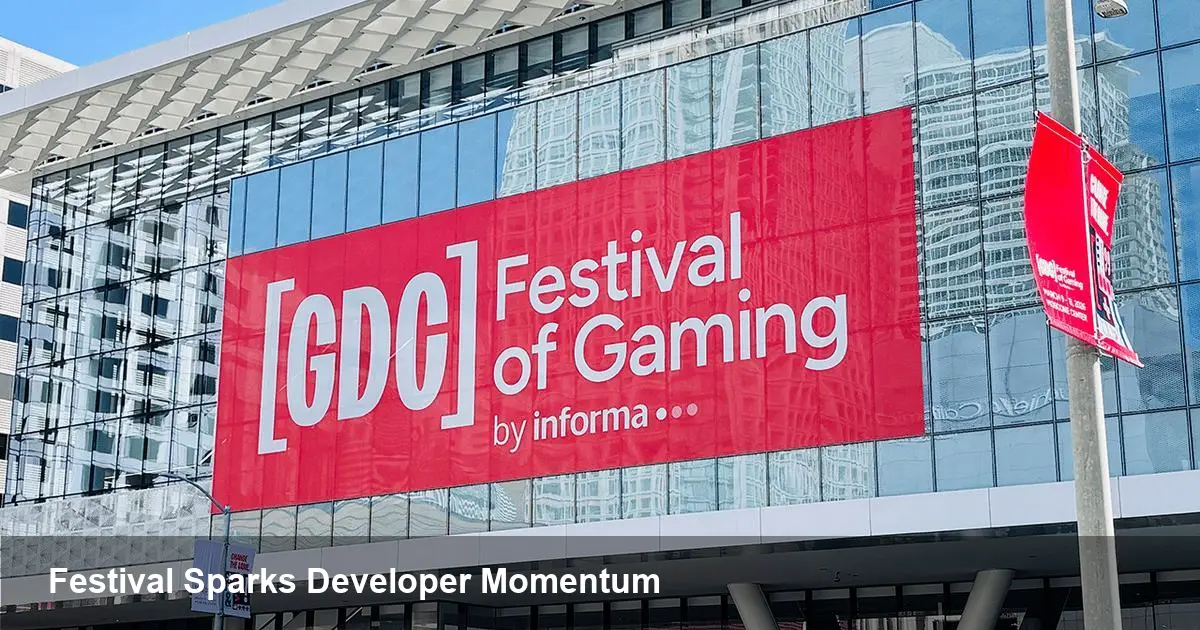
This year the Game Developers Conference (GDC) rolled its week-long showcase into a rebranded event called the GDC Festival of Gaming. Running from March 9 to March 13, the festival attracted roughly 20,000 attendees — a clear sign that in-person industry gatherings remain valuable even as digital alternatives mature.
Rebranding wasn’t just cosmetic. The Festival label signals a broader mix of activities: public-facing showcases, developer-focused talks, hands-on demos, and networking formats designed to blur the line between discovery (players, press) and professional development (devs, publishers, service providers).
Why the change matters for developers and studios
For many studios, trade shows are where traction is made. A single well-timed demo booth or a panel appearance can accelerate discoverability, bring in pre-orders or publisher interest, and yield direct feedback that shapes the roadmap. The Festival model emphasizes experiences: live playtests, larger demo floors, and more visible indie zones — all of which increase the chances of serendipitous connections.
From a tactical standpoint, that matters in three ways:
- Discoverability: Festivals make it easier for non-industry audiences, influencers, and press to encounter games that otherwise would be hidden in developer-centric sessions.
- Real-world user feedback: Running structured playtests during a festival can deliver concentrated qualitative data on first impressions, onboarding friction, and retention hooks.
- Business acceleration: The density of stakeholders — publishers, investors, platform reps — means business conversations that would normally take months can start on the floor and turn into partnerships quickly.
What the week looked like (concrete scenarios)
Imagine an indie studio with a six-person team and a build polished enough for 20-minute sessions. Over five days they run scheduled demos in a communal indie area, field organic player reactions, and host two short talks on their post-launch plan. By day three, a mid-size publisher approaches them to discuss UA funding and a potential revenue share agreement; a streamer offers to premiere a demo on their channel; and several players sign up for a closed beta.
Contrast that with a live-ops team from an existing live service that uses the festival to demo a new cross-play event system to partners. They gather feedback from platform engineers, secure an integration slot with a middleware vendor, and recruit three studios for a pilot collaboration — all conversations that would be more fragmented in a purely digital setting.
Practical implications for workflow and product development
Attending an event like the GDC Festival of Gaming affects how teams plan product cycles:
- Prioritize first-run polish. Festivals reward momentum and the ability to convey a complete concept quickly; make your vertical slice tell the story in five minutes.
- Build a playtest protocol. Capture consistent metrics and qualitative notes during sessions so feedback is actionable once you return to the office.
- Use the festival as a milestone in your roadmap. Time feature drops, marketing pushes, or fundraising goals around the event to maximize exposure.
These tactics turn the festival from a marketing opportunity into a meaningful part of a development cadence.
Business and market signals from the attendance number
Twenty thousand attendees is not just a crowd figure — it’s a proxy for industry appetite. Higher foot traffic increases competition for attention, which pushes teams and publishers to experiment with experience design (hands-on demos, compelling trailers, influencer activations) and to invest in better booth presence and analytics.
For service providers — analytics, live-ops tooling, middleware — the festival is a marketplace. Demonstrations and integrations negotiated at the event are often early indicators of which tooling ecosystems will grow in the next 12–18 months.
Advice for startups and indie teams planning to attend
If you’re considering taking part at future Festivals, here are practical priorities:
- Define a single measurable objective. Is it press mentions, beta sign-ups, publisher leads, or user testing? Funnel all activities toward that metric.
- Prep a 90-second demo loop. People have short attention spans on the show floor — make the core hook clear fast.
- Capture consented contact data efficiently. A small kiosk for sign-ups and a follow-up cadence will convert interest into actionable leads.
- Bring visuals and motion. Strong trailers, playable builds, and one-line value propositions on signage cut through noise.
- Schedule outreach before and after the event. Don’t rely on serendipity; arrange meetings and follow-ups to turn conversations into commitments.
Where this points next for the industry
Three trends the Festival format highlights:
- Hybridization: Expect more events that mix developer-focused sessions with fan-facing showcases. That cross-pollination accelerates discovery and broadens revenue paths for small teams.
- Experience-first marketing: As discoverability gets harder online, live, tactile experiences — playable demos, immersive booths, exclusive streams — become higher-ROI for many projects.
- Service consolidation: Vendors who can prove quick integrations and measurable outcomes at festivals are likely to scale faster. Events serve as an on-ramp for tool adoption.
These shifts nudge studios to think beyond just code and art: investing in product presentation, analytics, and partnership strategies is increasingly part of shipping a successful game.
A practical takeaway
GDC’s Festival of Gaming and its roughly 20,000 attendees show that in-person industry events remain strategic moments for product validation, business development, and discoverability. For teams, the lesson is straightforward: treat festival appearances as product milestones and design them for measurable outcomes rather than just exposure.
Whether you’re an indie studio prepping your first demo loop or a live-ops team scouting partner integrations, the Festival format creates concentrated opportunities — but only if you plan to capture them.