Could Crimson Desert Come to Nintendo Switch 2?

Why this matters
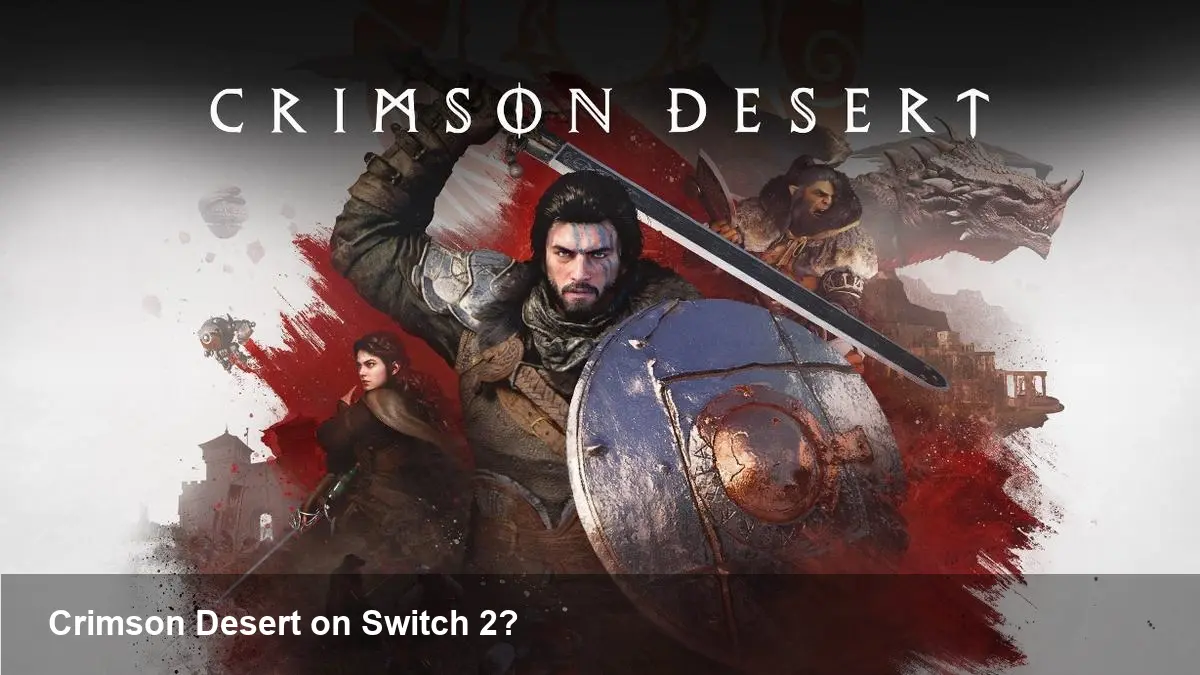
Pearl Abyss—the studio behind Black Desert and the upcoming open-world title Crimson Desert—has reportedly kicked off research and development for a Nintendo Switch 2 version. If that work progresses to a full port, it would be another sign that the next Nintendo console is being taken seriously as a platform for console-scale AAA games, not just lighter or Nintendo-first exclusives.
For players, a Switch 2 release would mean taking a big-budget, narrative-driven action-adventure into portable form. For developers and business leaders, it raises questions about engineering effort, platform economics, and how much a studio is willing to trade off visual fidelity or systems complexity to expand reach.
What Pearl Abyss brings to the table
Pearl Abyss has a track record with large, technically ambitious titles and in-house development tools. That experience matters when assessing a potential port of Crimson Desert to new hardware: they already understand open-world streaming, multiplayer back-ends, and how to optimize high-resolution assets. Starting R&D is a realistic step—evaluating whether their engine, performance budget, and art pipeline can be adapted to the Switch 2’s expected constraints.
Technical hurdles to expect
Porting an open-world AAA game to a handheld-focused console isn’t a straight lift-and-ship process. Here are the main engineering challenges Pearl Abyss will likely encounter:
- Memory and storage budgets: Handheld consoles typically have less RAM and slower internal storage than PCs and current-generation consoles. Expect an aggressive LOD (level-of-detail) strategy, texture compression (ASTC or similar), and streaming-chunk redesign to keep memory usage safe.
- GPU and CPU scaling: Without confirmed Switch 2 specs, studios usually plan for a range of scenarios. Common strategies include dynamic resolution scaling, lower shader complexity on portable mode, and optional quality presets (TV vs handheld).
- Asset and systems simplification: Dense NPC simulations, advanced physics, and cinematics may need to be trimmed or converted to pre-baked sequences. That requires toolchain work to swap out expensive runtime systems for cheaper alternatives on the platform.
- Input and UI changes: Adapting controls for Joy-Con-like controllers, touch input (if present), and smaller-screen UI redesigns are non-trivial. Mapping complex skill/UI schemes to fewer buttons requires design iteration.
- Performance parity vs. user expectations: Players expect the core gameplay and narrative intact. Delivering those while lowering shaders, particle counts, and draw distances is an art—successful ports preserve the feel even when visuals change.
- Certification and power management: Handheld thermals and battery life mean the team must test sustained performance and stay within Nintendo’s certification requirements.
Concrete scenarios: what a Switch 2 release could look like
- TV mode vs Handheld mode: Pearl Abyss could ship a dual-profile build—higher-res textures and frame targets for docked/TV mode, with a battery-friendly, slightly downgraded handheld experience.
- Hybrid streaming-assisted release: If Nintendo continues to invest in cloud or streaming features on Switch 2, a hybrid model where heavier assets or NPC sims run on cloud servers could let the local device handle rendering and inputs while preserving fidelity.
- Optional visual presets: Allow players to choose performance (60 fps) vs. fidelity (30 fps) trade-offs. Many modern AAA ports to lightweight hardware ship with this toggled option.
Business and community implications
From a business perspective, supporting the Switch 2 broadens the market reach for Pearl Abyss and Crimson Desert. Switch and its successor attract audiences that prioritize portability and accessibility; being on that platform could boost installs and long-term revenue, especially if paired with cross-play, cross-progression, or a companion mobile presence.
However, the costs are real. R&D time diverts engineering and QA resources. If the port requires heavy gameplay compromises, there’s reputational risk—players expect a coherent experience tuned for the platform, not a visibly crippled version.
For the community, a Switch 2 version could lower the entry barrier to the Crimson Desert experience. That may expand the multiplayer ecosystem and extend the live-service lifecycle if Pearl Abyss opts for cross-platform servers.
What this means for other developers
Pearl Abyss’s move is a signal: studios should treat Switch 2 as a credible platform for serious, graphically ambitious games. Practical takeaways:
- Inventory your engine and middleware: Port-friendly architectures and middleware (e.g., cross-platform renderers, flexible asset pipelines) shorten time-to-market.
- Plan for modular systems: Make high-cost subsystems like physics, AI, and cinematics replaceable or decomposable so cheaper fallbacks can be swapped for constrained platforms.
- Invest in upscaling and post-processing tech: Temporal upscalers, FSR-like solutions, and efficient post-processing chains can deliver good perceived fidelity on weaker hardware.
- Early prototyping wins: A short prototype on representative hardware prevents late-stage rewrites and gives realistic performance targets early.
Risks and trade-offs
Porting to a new console generation always involves trade-offs. Expect compromises in graphical fidelity, potentially reduced open-world density, or altered mission designs to fit streaming constraints. Monetization strategies also need adjustment; what works on PC or PS may underperform on Nintendo’s audience without cultural and pricing tweaks.
Two trends to watch next
1) Cross-generation AAA normalization: If more studios begin serious Switch 2 R&D, we’ll see the next console generation treated as multi-form-factor from day one—developers plan for TVs and handhelds rather than retrofit ports.
2) Cloud-assisted fidelity: Hybrid cloud rendering or server-side simulation could make it practical to ship flagship experiences on portable devices without sacrificing everything; this will depend heavily on Nintendo’s infrastructure and partner programs.
A practical recommendation
For studios: start small and prototype. Validate core gameplay and streaming budgets before committing to full production. For players: temper expectations early—a Switch 2 build will likely look different from PC/PS/Xbox versions, but it can still deliver the essential play loop.
Whether Pearl Abyss moves from R&D into a full public release remains to be seen, but the very act of exploring Switch 2 ports is a useful data point: the next Nintendo machine will matter to big studios, and the industry is already thinking about how to shrink big-world games without breaking them.