Avatar Legends Fighting Game Adds Zaheer, Launching in July

A quick refresher on the fighter everyone's watching
The Avatar universe—spanning Avatar: The Last Airbender and The Legend of Korra—has been a rich source of characters, elemental combat, and fan devotion for nearly two decades. The upcoming Avatar Legends: The Fighting Game takes that world into a 1v1/2v2 arena, pulling protagonists and villains from across eras into a single competitive framework. A new trailer dropped during the Evo Awards 2026, confirming three additional playable fighters and firming up a July release window.
Roster momentum: who’s in (and why it matters)
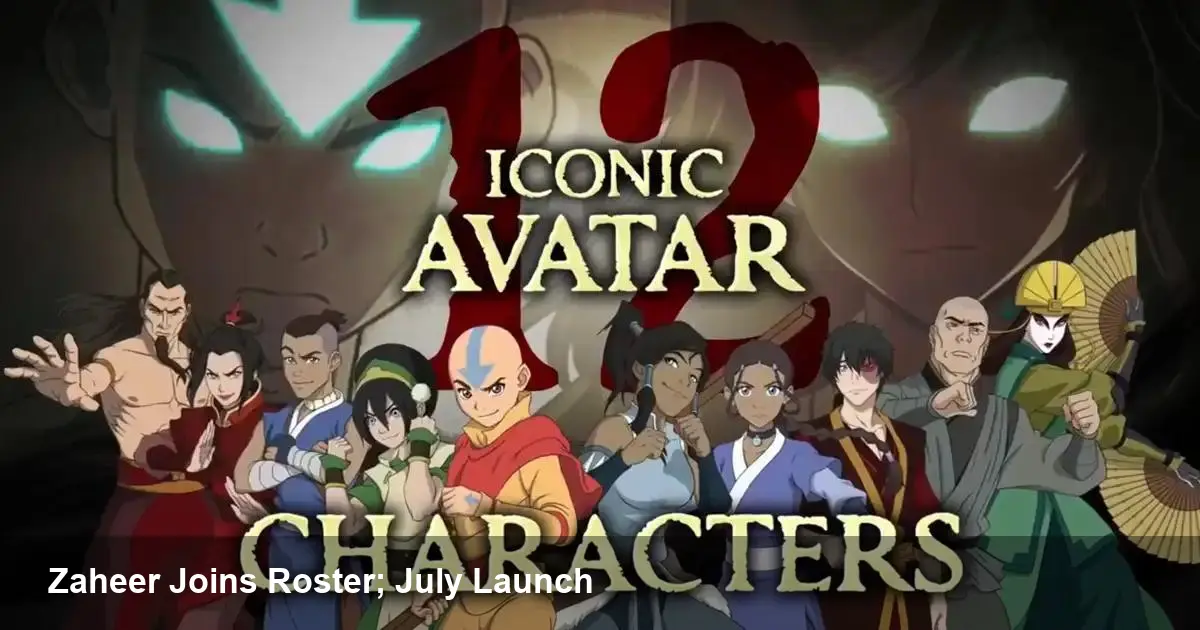
Before the Evo trailer, the roster already included franchise heavyweights: Aang, Korra, Zuko, Katara, Toph, Sokka, and Azula. The Evo reveal added three more faces—most notably Zaheer—bringing fresh playstyles and narrative hooks into the mix. Expanding a roster like this does more than increase variety; it reshapes matchup charts, training priorities, and the kinds of tournaments players will organize.
Practical implications for players:
- Matchup diversity: With benders and non-benders from different eras, players must learn transitions between ranged zoning, grappling, and mobility-heavy kits.
- Learning curve: New entries such as Zaheer introduce air-mobility and aggressive zoning that will force shifts in neutral play and defense.
- Meta formation: Early-release reveals accelerate theorycrafting. Expect community guides, tier lists, and highlight reels within days of the trailer.
What the Evo Awards reveal signals
Revealing characters at Evo is a deliberate move. Evo is the beating heart of fighting-game culture; dropping new fighters there does three things:
- Immediately targets competitive players and streamers who amplify a game’s profile.
- Frames the title as eSport-ready, encouraging organizers to test-run events soon after release.
- Creates a narrative buzz—fans debate balance, speculate on DLC, and generate free publicity.
For a licensed IP like Avatar, the Evo spotlight also signals confidence from stakeholders—publishers and IP holders are positioning the game to be taken seriously by both casual fans and the competitive scene.
How different characters will affect gameplay (concrete scenarios)
- Aang vs Zaheer: Expect high-skill air exchanges. Aang’s evasive movement and bending combos will be tested against Zaheer’s aerial control and pressure, creating matchups that reward dexterity and timing.
- Korra vs Toph: These two favor close-range dominance. Toph’s ground control and earth-based traps will clash with Korra’s raw power and stance-shifting offense, making stage positioning critical.
- Zuko or Azula vs Sokka: Firebender matchups against non-benders like Sokka will spotlight tool-usage and zoning. Sokka’s gadgets and spacing game will need to neutralize raw elemental burst.
These hypothetical matchups show how varied mechanics—air mobility, traps, zoning, gadget play—can live in the same game while creating distinct competitive identities.
For developers and designers: balancing a cross-era roster
Licensed, multi-era rosters present a balancing challenge. Developers must preserve each character’s thematic identity (e.g., Zaheer’s aerial mastery) while ensuring no archetype dominates. Key considerations:
- Telemetry-driven patches: Collect match data from early access and tournaments to prioritize nerfs/buffs quickly.
- Tools for learning: Robust training modes, frame data viewers, and tutorial vignettes for each hero reduce onboarding friction.
- Post-launch cadence: Plan a predictable roll-out of new characters and balance updates to maintain momentum without fragmenting the player base.
Monetization should be handled carefully—paid skins and optional fighter bundles are standard, but pay-to-win mechanics would damage competitive credibility.
Business and community impact
- Esports pipeline: With Evo-level marketing, expect grassroots tournaments to form quickly. Publishers might partner with organizers to seed prize pools or integrate the game into existing circuits.
- Cross-media opportunities: The Avatar brand attracts non-traditional fighting-game fans. That expands sponsorship and streaming demographics—good for both viewership and merchandise sales.
- Community-driven content: The Avatar fanbase has a history of creative expression (fanart, lore deep-dives, mods). The developer can lean on that energy with mod-friendly tools or sanctioned creator programs.
Risks to watch
- Balance backlash: Fast rises in popularity can expose balancing faults. Be prepared for vocal backlash if early tournament play reveals overpowered options.
- Fragmentation: Multiple editions, platform-exclusive fighters, or expensive DLC at launch can split the user base.
- Competitive burnout: If post-launch support is slow, the initial tournament interest may fizzle.
Three forward-looking takeaways
- Evo reveals are a strategic shortcut to competitive legitimacy. Expect the community to react fast—both in creating content and in exposing mechanical depth.
- Cross-era rosters unlock novel design space but demand aggressive, data-driven balancing and educational tools to keep the player base healthy.
- For the Avatar IP, the fighting game is an opportunity to move beyond casual fandom into sustained esports viewership—if the publisher invests in events, developer support, and fair monetization.
Whether you’re a fan who’s played every episode or a fighting-game competitor chasing new tech, the Evo reveal and the July launch set a clear timeline: get ready to learn matchups, join the discourse, and test whether the game can translate the lore’s elemental drama into a balanced, exciting competitive title. If Zaheer’s aerial tricks are anything to go by, there will be plenty to study—and debate—once the servers go live.