Asha Sharma Takes the Helm of Microsoft's Gaming Unit

A major handoff in Microsoft gaming
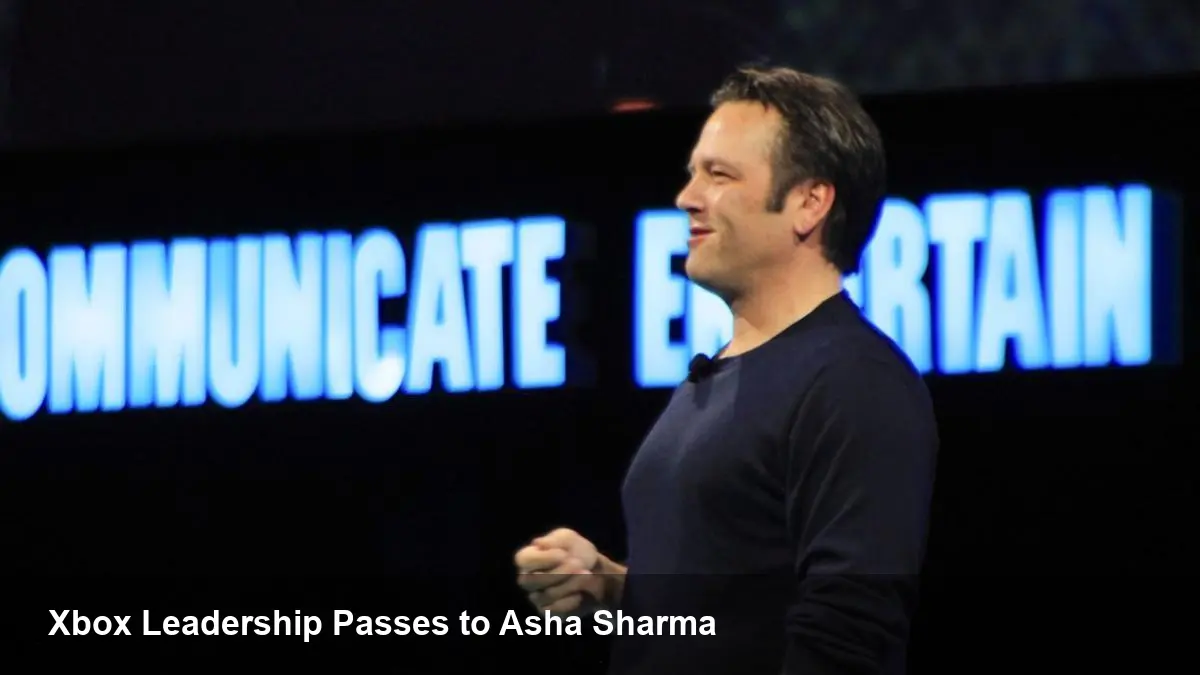
Phil Spencer, synonymous with Xbox for decades, has stepped down after 38 years at Microsoft. He hands leadership of the company's gaming business to Asha Sharma, an executive from Microsoft’s CoreAI organization. The transition marks a clear inflection point for Microsoft: gaming leadership is moving from a console-and-studio-focused era to one where AI and cloud strategy will likely play a central role.
Quick background: where Xbox and Microsoft gaming stood
Under Spencer’s stewardship, Xbox evolved from a hardware-first console business into a broader platform play. Microsoft expanded beyond consoles into subscription services, cloud streaming, and multiple first-party studio acquisitions. Game Pass became a major strategic lever: a subscription model that bundles first-party titles and third-party catalogues, used to drive player engagement across console, PC, and cloud.
That transformation reshaped how Microsoft competes with other platform holders. But the company is also part of a wider industry trend: the convergence of cloud infrastructure and AI with game development, distribution, and live services.
Why a CoreAI executive matters for gaming
Asha Sharma joins the gaming organization from Microsoft’s CoreAI team. That background signals a different set of priorities than a traditional gaming-industry hire. Expect an emphasis on three overlapping areas:
- Productizing AI inside games: AI can augment everything from NPC behavior and dynamic storytelling to procedural content and personalization. A leader with CoreAI experience is likely to accelerate investments in systems that make those capabilities easier for studios to adopt.
- Tightening cloud-to-game pipelines: Microsoft already owns Azure, a major cloud business. Combining Azure’s compute and CoreAI tooling with Xbox’s development and distribution channels opens practical paths to new services — for example, AI-assisted cloud rendering, large-scale live ops analytics, or server-side content generation.
- Developer tooling and workflow: AI promises to reduce repetitive tasks in art, code testing, QA, and localization. Leadership fluent in enterprise AI will push for toolchains that integrate these productivity gains into studios large and small.
Real-world scenarios: what could change next
Here are concrete ways players, developers, and partners might see Asha Sharma’s influence.
- Smarter personalization in Game Pass: Recommendation systems could evolve into on-platform discovery that adapts to playstyle, skill, or time availability. That increases value for subscribers and can lift engagement metrics.
- AI-assisted content pipelines for studios: Expect tighter, officially supported tooling that helps studios prototype levels, generate assets, or automate QA. This helps studios iterate faster and lowers the barrier for smaller teams to ship ambitious projects.
- New cloud-native multiplayer or single-player features: With CoreAI know-how, Microsoft could offer services that handle latency-sensitive prediction, dynamic difficulty balancing, or live narrative branches generated in real time by AI models running in Azure.
- Enhanced moderation and anti-cheat: AI systems can improve real-time detection of disruptive behavior, voice/text moderation, and cheat detection, helping protect live communities at scale.
What developers should watch for
Developers should monitor policy and product signals from Microsoft closely. Key items to track:
- SDKs and APIs: Will Microsoft merge AI primitives directly into Xbox and Azure game SDKs, or will third-party middleware remain necessary?
- Pricing and compute: AI-driven features can be compute-heavy. How Microsoft prices cloud inference and tooling for game studios will affect adoption, especially among indie teams.
- Studio autonomy: First-party studios will want clarity on how central AI services integrate with their pipelines and creative control.
Business implications and competitive dynamics
Microsoft’s strengths — Azure, a large first-party portfolio, and Game Pass distribution — make a CoreAI-led strategy competitive. If executed well, Microsoft could solidify Game Pass as not only a distribution channel but also a platform for intelligent, adaptive experiences that are costly for rivals to replicate at scale.
However, that strategy carries trade-offs: heavy reliance on cloud and AI could raise costs, introduce new technical debt, and heighten regulatory scrutiny around data and competitive behavior. Rivals like Sony and Nintendo will likely double down on their own differentiators: exclusive creative IP, console-first experiences, or alternative subscription models.
Risks and limitations to be mindful of
AI hype can outpace practical results. Procedural content and generative systems still need significant human oversight to meet quality standards and avoid repetitive or low-value output. There are also social risks: AI-driven personalization can inadvertently fragment communities or bias matchmaking.
Regulatory challenges could increase if Microsoft bundles AI-powered services into exclusivity arrangements or uses subscription data in ways that invite antitrust attention. The company will need transparent policies on data usage, monetization, and content provenance to maintain player trust.
Three forward-looking implications
- Gaming will become an increasingly strategic front for general-purpose AI deployment. Microsoft can use games as both an R&D playground for large-scale interactive AI and as a channel to productize those advances.
- The line between platform, studio, and cloud provider will blur further. Organizations that control both the cloud and distribution will have levers to optimize for their ecosystems — a dynamic that will reshape partnerships and deal structures.
- Studio tooling and workflows will evolve fastest in teams that embrace composable AI services. For indies and mid-sized studios, access to high-quality, cost-effective AI tooling will determine how ambitious they can be without ballooning budgets.
What to expect in the coming months
Change at the top tends to accelerate roadmap shifts and public announcements. Watch for new developer initiatives, integrations between Azure AI offerings and Xbox dev tools, and incremental feature rollouts in Game Pass and cloud gaming. The tone of communication — whether Microsoft emphasizes openness, studio choice, and clear pricing — will be an early indicator of how this leadership change will play out.
Phil Spencer’s legacy reshaped Microsoft’s gaming posture; Asha Sharma’s arrival suggests the next phase will center on marrying that platform strength with AI-first capabilities. For players and developers, the transition promises opportunity — and a need for careful, pragmatic evaluation as new AI-enabled systems arrive.