Akali and Senna Join 2XKO — What the Changes Mean

What just happened
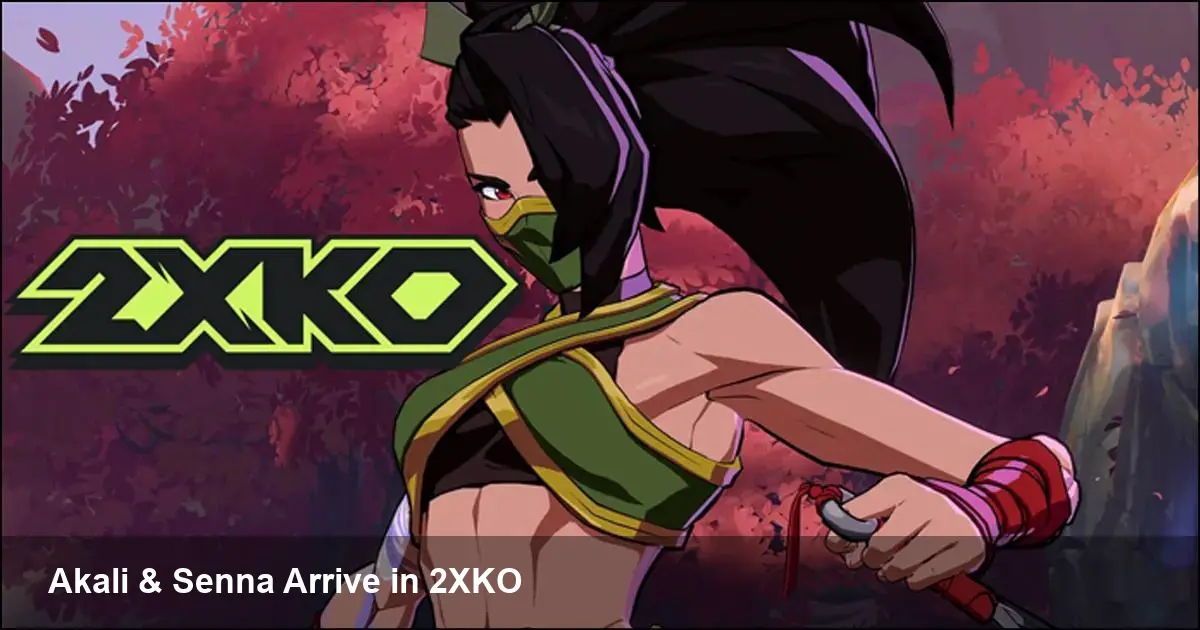
Riot Games has announced that Akali and Senna are the next playable champions coming to 2XKO. The reveal landed alongside difficult news: roughly half of the original development team working on the fighting game has been let go. The studio’s director has since spoken with the community about how the project will continue, promising ongoing content while acknowledging a need to refocus priorities.
That pairing — adding two iconic League of Legends characters to a Riot-developed fighting game while shrinking the team behind it — creates an unusual mix of opportunity and risk. Below I break down what this means for players, developers, and Riot as a business.
Quick background: 2XKO and Riot’s fighting-game project
2XKO is Riot’s attempt to bring League’s characters into a competitive, arena-style fighting game. The title leans on familiar champions and lore while translating them into a gameplay loop built around one-on-one and small-team matches. For Riot, 2XKO represents both an extension of its flagship IP and a bet on competitive genre expansion.
Because it’s a live service product tied to League’s roster, champion reveals are treated as major content events — they attract players, drive cosmetics sales, and shape the competitive meta.
How Akali and Senna change the playing field
While the exact move lists and frame data for these ports will come later, we can infer the kind of shifts each champion will introduce based on their League identities:
- Akali: Traditionally an agile assassin, Akali’s translation into a fighting game typically emphasizes high mobility, evasive tools, and burst damage. In 2XKO she will likely accelerate fast-paced matchups, reward off-stage aggression and precise execution, and pressure zoning characters who can’t punish quick in-and-out play.
- Senna: As a marksman/support hybrid in League, Senna often brings long-range poke and utility. In a fighting game, she’s apt to create space-control playstyles, force opponents to engage under pressure, and supply team-oriented support in small-team modes. Her presence can slow match tempo and reward patient positioning.
Concrete example: a player who prefers rushdown strategies may switch to Akali for her mobility, while players who enjoy controlling distance and shaping the battlefield might gravitate toward Senna. That naturally rebalances matchups and will require new counter-strategies.
What the layoffs mean for development and cadence
Cutting roughly half a development team inevitably changes how a live game ships updates:
- Slower feature velocity: Fewer hands on deck means longer lead times for champion kits, modes, and UI improvements.
- Prioritization of fundamentals: The remaining team is likely to focus on core systems — netcode stability, matchmaking, balance — rather than simultaneous feature expansion.
- Fewer simultaneous projects: Cross-functional teams will be leaner. Expect Riot to stagger major content drops more conservatively and concentrate on higher-impact releases like new champions and balance patches.
For players, that translates to more deliberate roadmaps and potentially longer waits between major updates. For competitive organizers, it raises questions about long-term support, tournament tooling, and anti-cheat investment.
Business and community implications
For Riot the decision balances cost management against reputation and revenue:
- Short-term revenue focus: Champion reveals and associated cosmetic drops are reliable monetization levers. Akali and Senna can generate sales and keep the player base engaged while the team reshapes.
- Reputation risk: Layoffs can erode trust in the community. Players who perceive instability may scale back investment in the game (both time and money), which undermines long-term live-service economics.
- Partnership opportunity: With a smaller in-house team, Riot might collaborate with external studios or shift certain responsibilities to internal shared services to keep the pipeline moving.
From the community side, transparency from the director helps, but long-term confidence will hinge on consistent patches, visible QA improvements, and a predictable release cadence.
Developer and studio takeaways
If you work on live-service or fighting games, a few practical lessons emerge:
- Build resilient pipelines: Modular systems for champion integration (animation rigs, VFX, balance data) let smaller teams ship efficiently.
- Prioritize telemetry: With fewer devs, actionable analytics become essential for deciding where to invest resources to maintain retention.
- Communicate roadmap trade-offs: Players tolerate slower updates if the studio explains what’s being deprioritized and why.
Those are tactical shifts that can preserve product momentum even when headcount drops.
Risks and limitations to watch
There are real pitfalls ahead:
- Meta stagnation: If balance updates slow down, dominant strategies can ossify and reduce competitive variety.
- Esports uncertainty: Tournament organizers need guarantees about rules, patches, and support; without them, grassroots scenes may fragment.
- Loss of feature ambition: Ambitious modes or experimental systems are often the first to be shelved when teams shrink.
But these are risks, not inevitabilities — focused leadership can mitigate many of them.
Three implications for the next 12–18 months
- Leaner content cadence, but higher polish: Expect fewer releases, each with more QA and refinement.
- Community-driven longevity: Player-created events, mods (where supported), and third-party tournament organizers will become more important to sustain engagement.
- Strategic partnerships or internal consolidation: Riot may hand off non-core engineering work to partner studios or centralize services across teams to maintain feature flow.
What players can do now
- Try both champions when they arrive and share detailed feedback on matchups and bugs.
- Support grassroots tournaments and community hubs to keep competitive scenes healthy.
- Watch official roadmap updates closely; when the studio is lean, community input has outsized influence on priorities.
Akali and Senna arriving in 2XKO keeps the game’s core promise — familiar League characters in a new competitive context — alive. The development shake-up introduces uncertainty, but it also forces a clearer focus on fundamentals that could benefit competitive integrity if the team executes carefully. For players and organizers, engagement and feedback will be the clearest signal to Riot about what to preserve next.