Why Tim Cook Thinks the iPhone's Best Years Are Ahead

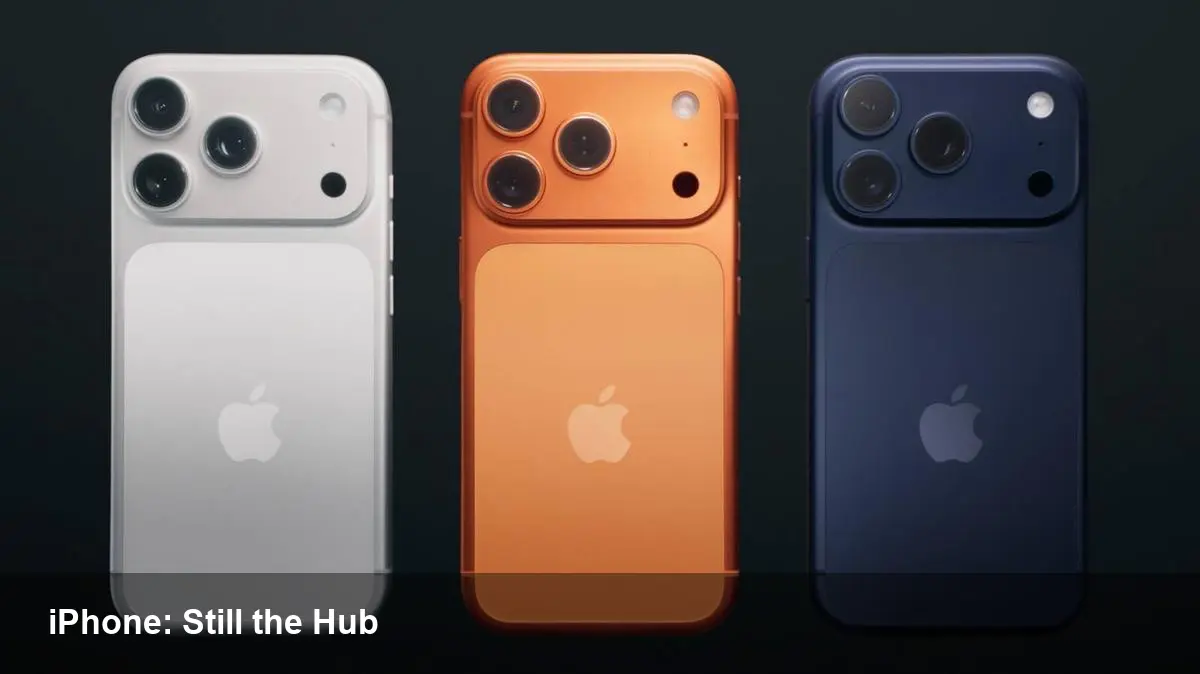
A quick scene: Tim Cook in Grand Central
Last week Apple CEO Tim Cook spoke briefly with a reporter at New York’s Grand Central Terminal and reiterated a point that has become core to Apple’s strategy: the iPhone is far from finished. He framed it not as a device that’s peaked, but as a platform with a runway—one that will keep anchoring people’s digital lives.
That remark matters beyond PR: it signals how Apple sees product roadmaps, developer opportunities, and business models for the next several years.
Where Apple stands today
Since the original iPhone’s launch in 2007, Apple has turned a single device into a sprawling ecosystem. Hardware advances (faster chips, better cameras, new radios), software evolution (iOS features, privacy controls), and services (App Store, Wallet, iCloud, Fitness+, Apple Pay) have shifted revenue away from pure device sales toward recurring income.
But Apple also faces a new landscape: on-device machine learning, mixed-reality experiments, global regulatory pressure, and competitors closing the gap on hardware parity. Saying the iPhone still has room to grow is both a promise to customers and a clue to developers and businesses about where to invest.
What Cook’s message means for everyday users
If you’re a consumer, the implication is straightforward: expect deeper integration and smarter personalization without surrendering privacy. Practically, that will look like:
- Smarter on-device intelligence. Routine tasks—photo organization, messaging suggestions, battery and performance optimization—will rely more on local machine learning models rather than cloud-only processing.
- More sensors and tighter system integration. Incremental improvements in camera, location, and proximity technologies will enable new experiences like more robust AR, improved accessibility features, and advanced health monitoring.
- Services that tie hardware and software together. Apple will continue pairing device capabilities with subscription-style services that unlock ongoing value for users.
Concrete example: imagine a third-party travel app that uses an iPhone’s on-device language model for instant offline translations, combines Camera and UWB (ultra wideband) data to find luggage in a crowded terminal, and securely stores travel passes in Wallet for seamless boarding—all while keeping personal data primarily on the device.
What developers and startups should be mapping out now
For app teams and startups, Apple’s stance suggests several tactical areas to prioritize:
- On-device ML-first design. Frameworks like Core ML and on-device inference will be the path to low-latency, privacy-friendly experiences. Developers should prototype models that fit within device constraints rather than assuming unlimited cloud resources.
- Deep integration with system services. Apps that leverage Wallet, HealthKit, Siri Shortcuts, and background processing will feel more native and resilient. Startups that architect products to play nicely with those services will unlock adoption advantages.
- Prepare for cross-device continuity. The iPhone is increasingly the identity and interaction hub; apps should plan for seamless handoff between iPhone, Mac, iPad, wearables, and Apple’s spatial computing efforts.
Example developer scenario: a home-improvement startup builds an AR measuring tool that uses iPhone LiDAR for depth capture, Core ML for object detection, and a secure Wallet ticket for in-home appointment verification—reducing friction for both customers and field technicians.
Business and enterprise implications
Enterprises should read Cook’s comment as a signal that the iPhone will remain central to mobile strategies. That affects procurement, security, and the design of customer-facing services:
- Device-first identity: With Passkeys, Face ID, and tight OS controls, the iPhone can become a secure primary credential for employees and customers.
- New customer touchpoints: Apple Wallet, Tap to Pay, and rich notifications let companies create lower-friction payment and loyalty experiences tied directly to the handset.
- Managed mobility: Expect stronger MDM features and corporate APIs that allow firms to balance security and user privacy while deploying apps at scale.
Retail example: a chain could replace paper loyalty cards with an iPhone-native experience that pushes personalized offers using on-device signals, while analytics remain aggregate in the cloud—preserving privacy but improving conversion.
Trade-offs and practical limits
Optimism about the iPhone’s future isn’t blind. There are real constraints and trade-offs:
- Hardware ceilings: Battery life, thermal limits, and the laws of physics mean not every compute-heavy use case can move fully on-device—at least not yet.
- Regulatory scrutiny: Antitrust and privacy regulators are watching app-distribution, default services, and data policies. Changes to the ecosystem may be driven by compliance as much as by engineering.
- Market saturation: In mature markets many users replace phones less frequently; growth will increasingly depend on services and trade-ins rather than new device buyers.
For developers, that means balancing ambitious feature sets with pragmatic fallbacks (server-side augmentation, graceful degradation on older devices, careful permission/consent flows).
Three strategic implications for the next five years
- The iPhone as the identity and privacy hub. Expect Apple to continue emphasizing local data processing, passkeys, and device-bound credentials—shifting the way companies design authentication and personalization.
- AR and spatial computing will reframe user interfaces. Whether through improved cameras, depth sensors, or Apple’s other hardware efforts, the iPhone will likely remain the on-ramp to richer mixed-reality experiences before headsets become mainstream.
- Services will out-earn hardware for value creation. For businesses, the safest route to growth is building services that extend hardware capabilities: subscription models, integrated payments, and tied experiences that lock in customer value.
Where that leaves product leaders and builders
Take Cook’s comments as permission to invest in deeper, device-first experiences. Prototype with the constraints of current iPhones in mind, focus on privacy-forward value, and aim for tight integration with system-level APIs. Companies that treat the iPhone as more than a screen—but as a secure sensor-rich hub—will be best positioned to capture the next wave of mobile innovation.
If you’re planning product priorities for the next 12–36 months, ask: how can we move latency-sensitive features on-device, how will we leverage Wallet and device identity, and what graceful degradation path do we have for older phones? Those answers will map directly to the kind of value Tim Cook says Apple still intends to unlock.