Why Sonos Play and Era 100 SL Matter for Home Audio

What Sonos did and why it matters
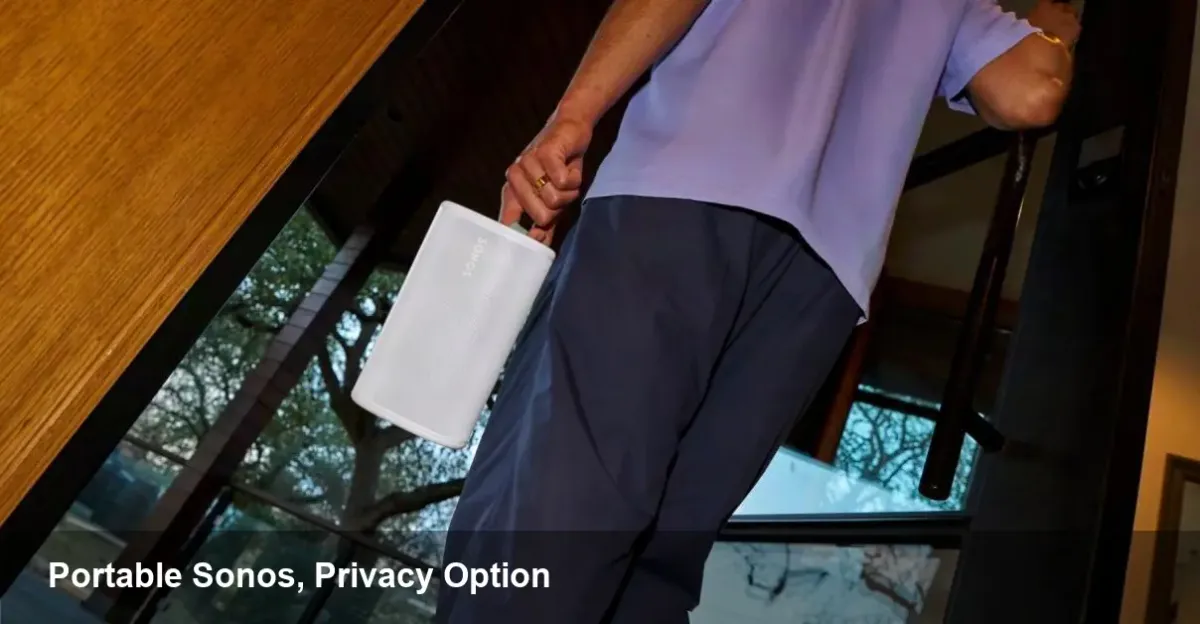
Sonos just expanded its speaker lineup with two notable additions: the Play, a new portable speaker priced at $299, and the Era 100 SL, a version of the Era 100 that removes the onboard microphone. These moves are more than incremental product updates — they sharpen Sonos’s positioning in the portable, privacy-conscious, and multi-room markets while giving developers and integrators clearer options.
If you follow smart home audio, the Play represents Sonos doubling down on a portable strategy that balances battery-powered convenience with the Sonos software stack and ecosystem. The Era 100 SL signals an explicit response to users and businesses that want full Sonos sound without voice capture hardware.
A brief background on Sonos’s approach
Sonos built its reputation on consistent, room-filling sound and a software-first model (Sonos S2) that ties devices together across Wi‑Fi. Historically focused on in-home multi-room setups, Sonos moved into truly portable speakers with products like the Roam and the Move. The Play appears designed to sit squarely in that portable category while leveraging Sonos’s strengths: reliable streaming, group playback, and integration with music services.
The Era 100 SL is essentially the Era 100 platform minus the microphone array. For consumers and organizations worried about always-on listening or regulatory constraints in public spaces, the SL variant offers the same audio profile without any voice-activation hardware.
Real-world scenarios and how these devices change workflows
- Weekend trips and hybrid work: The Play gives users a Sonos-branded option to tote to a backyard barbecue, a weekend rental, or even a home office. Unlike many Bluetooth-only portables, you get the Sonos app’s group playback and streaming credentials tied to your account when on Wi‑Fi, then local Bluetooth when you’re off-network.
- Privacy-first living rooms and offices: The Era 100 SL is an obvious pick for bedrooms, corporate meeting rooms, small retail stores, and hospitality venues where voice capture is unwanted or restricted. You get Sonos tuning and grouping without any microphone hardware to worry about.
- Staged audio for events and pop-ups: Small event producers and retail pop-ups can mix Play units with static Sonos speakers for flexible audio zones. Battery operation lets technicians set up temporary audio areas with a familiar control surface and no extra amplifiers.
What this means for developers and integrators
- Clearer product choices for service integrations: Streaming services and apps that integrate with Sonos can better target use cases — recommend micless hardware for private environments and portable units for mobile listening. The Play’s inclusion in Sonos’s ecosystem means the same S2 APIs, casting protocol behavior, and service hooks apply.
- Opportunity for location-based and offline UX: Portable Sonos speakers open possibilities for apps that adapt playback when a device is off the home network. Developers can design handoff flows (Wi‑Fi → Bluetooth) that preserve queue context or provide a graceful degraded experience when the speaker is disconnected from S2 services.
- Enterprise deployment and compliance: For integrators working with hospitality, retail, or public institutions, the Era 100 SL removes a common legal/PR friction point. You can deploy Sonos in spaces where microphones might be a liability and still maintain centralized control via Sonos management tools.
How to think about buying the Play vs. other Sonos options
- If portability and occasional outdoor use matter, Play at $299 is competitive. It’s a mid-point between ultra-portable Bluetooth speakers and large Wi‑Fi-only Sonos models.
- If you need voice assistants and hands-free control, choose the original Era 100 or another mic-equipped model. If privacy, compliance, or regulatory concerns rule, Era 100 SL is a smarter match.
- For buyers who want a single ecosystem device that can serve in multiple roles, mixing one Play with stationary Sonos speakers creates a flexible, account-linked multi-room setup that can travel with you when needed.
Limitations and pragmatic caveats
- Battery runtime and durability: Any portable speaker involves trade-offs. If your use case is frequent day-long outdoor events, pay attention to runtime and charging behavior. The Play is convenient for short to medium outings, but heavy-duty use will still favor larger, plugged-in systems.
- Feature parity in offline mode: Expect Sonos features that depend on the S2 cloud (service discovery, multi-user streaming profiles, some voice services) to be limited when the speaker is operating purely over Bluetooth.
- Price vs. Bluetooth rivals: $299 puts the Play against premium Bluetooth and hybrid options from established rivals. If you don’t need Sonos’s multi-room or app-based ecosystem, pure Bluetooth competitors may offer better raw value for portable-only use.
Business implications and strategic angles
- A clearer product segmentation helps Sonos compete on both privacy and portability fronts. The micless Era 100 SL can be marketed directly to business customers and privacy-conscious consumers rather than shoehorning settings choices into a single SKU.
- For music services and app makers, Sonos’s portable entry widens the window for adaptive experiences that bridge home and mobile listening, creating potential incremental engagement.
- Retailers and integrators gain a simpler conversation: recommend a micless SL model where listening privacy is a selling point, and add Play units when customers want Sonos portability without sacrificing ecosystem benefits.
Three future-facing takeaways
- Audio ecosystems will split by intent: Expect more manufacturers to sell parallel SKUs — one with microphones for voice-first convenience, another mic-free for privacy-first contexts. Sonos’s SL move makes that trend more mainstream.
- Portable devices will become extensions of home ecosystems: Developers should design playback experiences that gracefully move between Wi‑Fi and local modes, preserving context and personalization where possible.
- Business audio deployments will favor software-defined control: Microphone-free hardware reduces compliance friction, but centralized management and updates will be the differentiator for large-scale Sonos deployments.
Whether you’re a consumer choosing between better privacy or voice convenience, a developer building streaming experiences, or an integrator deploying systems at scale, Sonos’s Play and Era 100 SL sharpen the options. They’re modest but strategic additions that reflect evolving buyer preferences around mobility, privacy, and ecosystem continuity.