Why Samsung’s Dual-Layer Glass Matters for Foldables

A quieter crease and a bolder fold
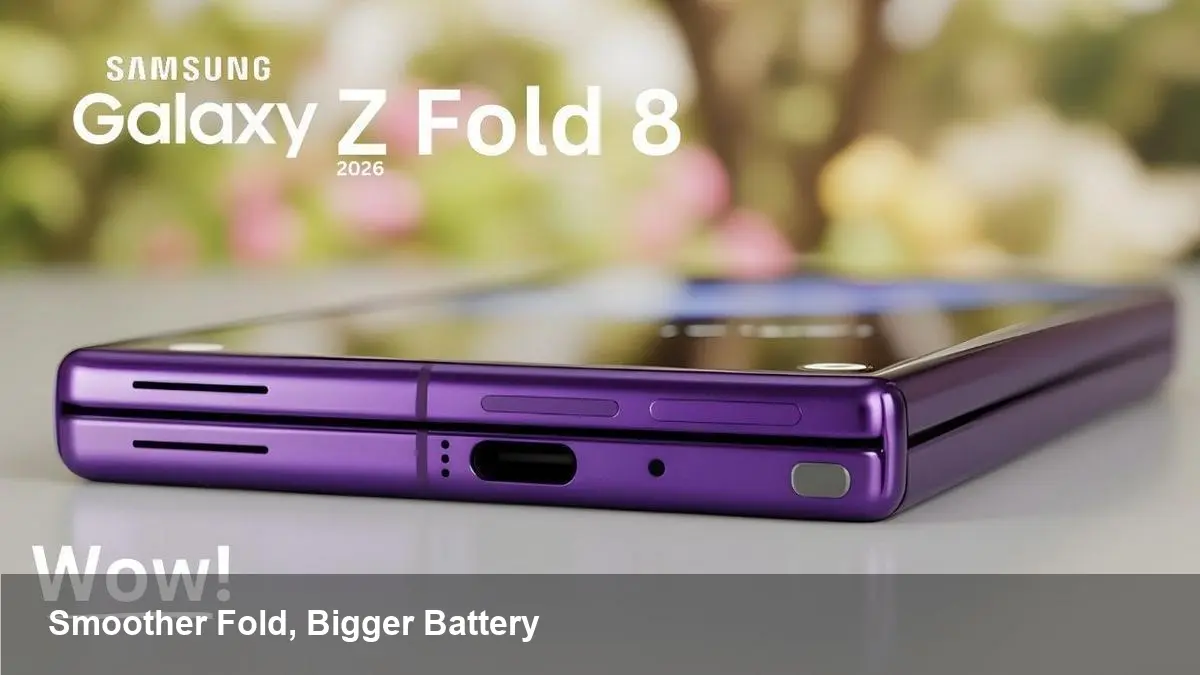
Samsung appears to be taking a big step toward making foldables feel more like traditional phones. New reports around the Galaxy Z Fold 8 point to a “dual-layer” glass construction that’s meant to drastically reduce the visible crease where the screen folds. Paired with a wider inner display aspect ratio and a larger 5,000mAh battery, this redesign is as much about user experience as it is about raw specs.
Below I unpack what the dual-layer approach is likely doing, how it changes day-to-day use, what developers should prepare for, and why businesses selling or supporting foldables need to pay attention.
What is dual-layer glass (in practical terms)?
The short version: instead of a single ultra-thin glass (UTG) or a thin plastic top layer, the new approach stacks two complementary layers to manage flex and stress. One layer provides a rigid, scratch-resistant surface while the other absorbs folding tension and hides the crease by evening out the bending radius.
Why this matters: the visible crease and the tactile ridge when swiping across it are the two biggest complaints from potential buyers. A successful dual-layer design makes that line much less obvious and improves perceived build quality without sacrificing flexibility.
Real-world user improvements
- Better media consumption: A reduced crease is less distracting when reading ebooks or watching videos on the inner screen. Lighting reflections that accentuate the fold will be minimized.
- Smoother touch and gestures: If the tactile ridge is softened, swiping, drawing, and drag-and-drop across the hinge feel more natural — important for pen users and creative apps.
- Confidence and resale value: A foldable that looks and behaves closer to a rigid device persuades conservative buyers and could lower return rates.
Add the wider aspect ratio and a 5,000mAh battery into the mix and you have a device designed to spend more time open and in tablet-like workflows — longer sessions for multitasking, creative work, and streaming.
Developer implications — design for polish
For app developers the change is less about new APIs and more about optimizing across a broader, smoother canvas.
- Multi-window UX will become more mainstream: Think about edge-to-edge layouts where app regions straddle the fold. With a less intrusive crease, designers can place critical UI slightly closer to the center.
- Gesture mapping and touch targets: With fewer physical interruptions in the surface, reassess where you put drag handles and long-swipe gestures. Increase detect areas near the fold if you previously avoided them.
- Visual continuity: Use subtle adaptive backgrounds and shadowing to hide seams and make transitions feel natural when the device toggles between folded and unfolded states.
Concrete scenario: a productivity app that supports a split view could now offer a persistent middle toolbar for drag-and-drop between panes because users are less likely to be annoyed by a central ridge.
Hardware trade-offs and serviceability
Dual-layer glass isn't magic — it changes trade-offs.
- Thickness and weight: Stacking layers increases material and potentially hinge complexity. Expect a slightly different weight balance compared to previous models.
- Repair complexity: Any multi-layer, laminated assembly is tougher to repair, and repair costs may rise. For enterprises deploying fleets, factor this into total cost of ownership and insurance policies.
- Durability under repeated cycles: The success metric is how the system handles 100k+ open/close cycles without delamination or micro-cracks. Early engineering wins need full lifecycle validation.
Use cases that benefit most
- Mobile creatives and stylus users: A smoother fold is a game-changer for illustrators who pan across the seam.
- Field teams and road warriors: The 5,000mAh battery supports longer uptime for data collection, mapping, and split-screen document editing.
- Executives and power users: A wider inner display plus reduced crease makes presentations, spreadsheets, and multi-app workflows more practical on one device.
Business and market implications
If Samsung ships a noticeably crease-free Fold 8, it lowers the barrier for mainstream adoption. Retail perception shifts from “neat prototype” to “practical tool.” Phone makers, carriers, and enterprises could treat foldables as primary devices rather than novelty backups.
For accessory makers, expect new demand for cases and screen protectors tuned to a slightly different glass stack. Repair networks will need updated training for laminated assemblies. And OEMs that can quiet the crease while keeping price reasonable will gain market share.
What to watch next
- Durability reports and teardown analyses. These will reveal whether the dual-layer stack is serviceable and how it affects repairability scores.
- Battery endurance in real-world mixed-use tests. A larger 5,000mAh cell looks good on paper, but how it holds up under heavy multitasking matters most.
- App store behavior and UX trends. If developers start optimizing specifically for a wider, smoother fold surface, we’ll see new interaction patterns emerge.
A few forward-looking takeaways
- Foldables are moving from novelty to workhorse. Improving the physical feel addresses the emotional barrier many buyers had — once people stop noticing, adoption accelerates.
- Design standards will evolve. Expect best practices for foldable layout to shift inward toward the center as hardware reduces the penalty of placing UI there.
- Service ecosystems must adapt. Higher repair complexity and new material stacks will create opportunities for specialized repair services and extended warranty products.
If the leaked specs hold true, the Galaxy Z Fold 8’s dual-layer glass and 5,000mAh battery aren’t just iterative improvements — they’re the kind of hardware refinements that enable real changes in how people use foldables day-to-day. For developers and businesses, the practical move is to treat foldables as primary productivity hardware and start designing workflows and support plans accordingly.