Why Samsung Stopped Selling the $2,899 Galaxy Z TriFold

A brief recap
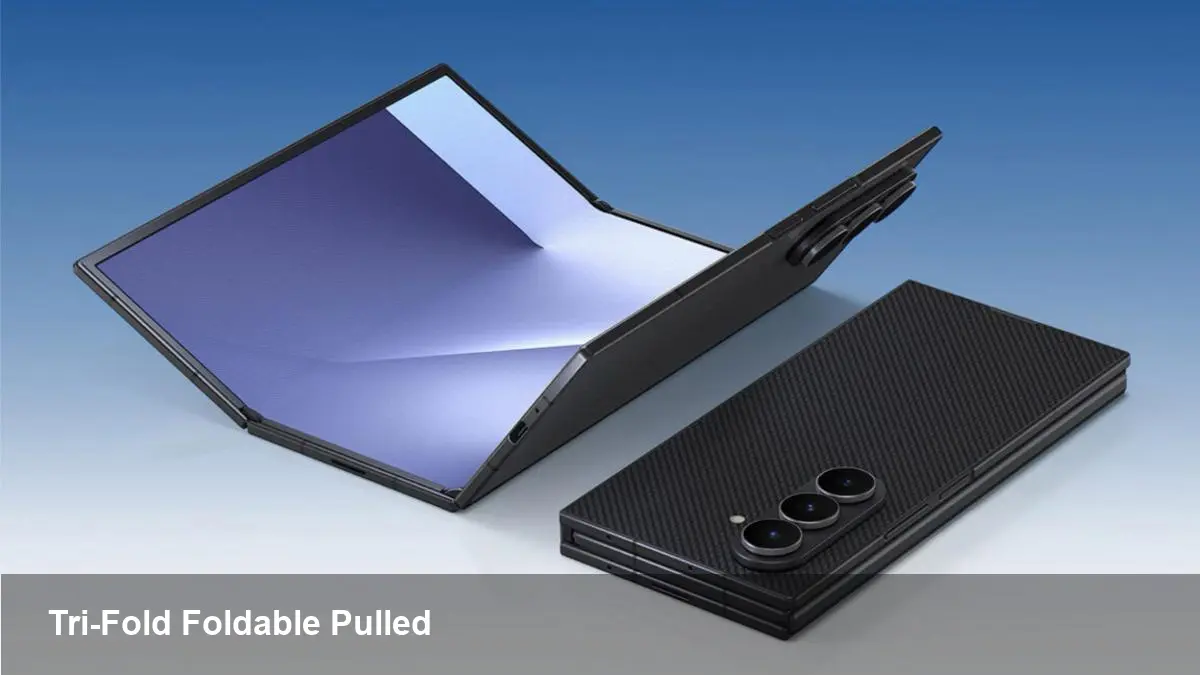
Samsung launched the Galaxy Z TriFold as one of the boldest entries in the foldable market: a three-panel device positioned at the high end of the phone tier with a $2,899 price tag. Fewer than four months after it arrived on store shelves, Samsung quietly removed the TriFold from sale. The company gave no long-form public rationale, leaving questions around demand, positioning, and the product’s long-term role in the lineup.
What this move actually means for buyers
If you bought a TriFold in the first wave, it’s still physically yours — but the commercial lifecycle has shifted. With the product no longer actively sold by Samsung:
- Resale value may decline faster than for mainstream Galaxy models because the device was produced in limited quantities.
- Availability of replacement parts and accessories could become unpredictable if Samsung scales back production to zero; independent repair shops may be the main source for fixes and parts in the medium term.
- Warranty terms purchased at point of sale should remain intact, but prospective buyers should confirm service options and parts availability with Samsung or authorized service centers.
Practical example: a sales team that purchased TriFold units for demos may find it harder to replace lost demo phones or buy additional units for scale. For high-end retail and enterprise demos, switching to a more widely available foldable or tablet will be necessary.
How developers and designers should react
A tri-fold screen introduces unique UX challenges: three distinct panels, flexible continuity, and transitions that can vary based on hinge mechanics. For mobile developers and designers building apps that adapt across foldables, Samsung’s withdrawal is a signal to rethink priorities:
- Focus on responsive layouts. Instead of targeting form-factor-specific flows, build flexible UI components that adapt to a continuum of sizes and aspect ratios. That reduces rework when a new hardware design appears.
- Test on diverse simulators and physical devices. Relying on a single exotic device for QA is a risk; add emulators that mimic multi-hinge behaviors and test on common single-fold devices as well.
- Use platform-agnostic APIs. Android’s window management and support libraries aim to minimize device-specific code. Lean on those to handle folding states rather than hard-coding tri-fold rules.
Concrete scenario: a reading app that once used three-pane layouts for newspapers should keep that UX as an enhancement rather than a dependency. If a user switches to a standard fold or a large tablet, the app should gracefully scale back to a single-scroll or two-column view.
Business and channel implications
From a product strategy standpoint, discontinuing an experimental high-ticket device after a short run can be interpreted in several ways:
- It may reflect demand-side realities. At nearly $2,900, the TriFold targeted a narrow premium slice of customers — early adopters, collectors, and enterprises with very specific needs. Those segments might not justify continued production volume.
- It can be a deliberate market test. Launching an experimental form factor for a limited run gives the company real-world telemetry on usage, repair costs, and customer sentiment without a long-term commitment.
- Retail partners and carriers must recalibrate promotions and demo inventory. For stores that invested in TriFold displays, there’s a practical shift toward returning floor space to more mainstream Galaxy Z models or tablets.
Example: an enterprise evaluating foldables for mobile workflows will prefer a model with clear long-term availability and corporate support. The TriFold’s short retail life weakens its case as a procurement option for fleets or BYOD programs.
Engineering and supply-chain perspective
Manufacturing a tri-fold device requires more complex hinges, custom glass, and specific assembly tolerances. Those elements can increase production risk and unit cost. If Samsung scaled down tooling or components tied specifically to the TriFold, suppliers may pivot prioritized parts to more popular products.
This change could influence repair turnaround and spare inventory. Repair shops that stocked hinge assemblies or TriFold-specific screens may now face shortages or higher prices. Conversely, if the device served as a learning platform, some mechanical improvements developed for the TriFold might flow into future foldables.
What competitors and the market should watch
Samsung’s pause on the TriFold doesn’t mean the end of multi-pane devices. It signals the company is prioritizing product-market fit and sustainable economics. For competitors and partners:
- Watch for design learnings to appear in later devices — stronger hinges, streamlined software continuity, or modular accessory systems may migrate from the TriFold to other models.
- Expect a focus on mainstream single-fold devices with incremental innovation rather than radical new form factors until supply-chain and demand align.
Three implications for the next two years
- Faster consolidation around a few sustainable foldable formats. The market will likely coalesce around single- and dual-fold models that hit a better mix of price, durability, and consumer demand.
- Software-first adaptation wins. Apps that adapt fluidly across screen sizes will be more future-proof than those tailored to one-off hardware quirks.
- Experimentation continues, but behind the scenes. Manufacturers may prototype bold ideas in limited runs, then selectively roll successful mechanics and software features into mass-market models.
What buyers and builders should do now
- If you own a TriFold: document your serials, confirm warranty coverage, and consider extended-care plans if you rely on the device for work.
- If you were planning to buy one: reassess use cases. If multi-pane productivity is essential, a small tablet plus phone combo or large foldable might be a more supported choice.
- If you build apps: invest in layout resilience and test broadly. Avoid hard dependencies on exotic hinge states.
Samsung’s removal of the TriFold from its sales channels is a reminder that hardware experiments have short windows to prove value. The lessons — mechanical, supply-chain, and software-related — will shape the next wave of foldables even if this particular product had a limited run.