Why OLED TVs Cost So Much — Manufacturing & Features

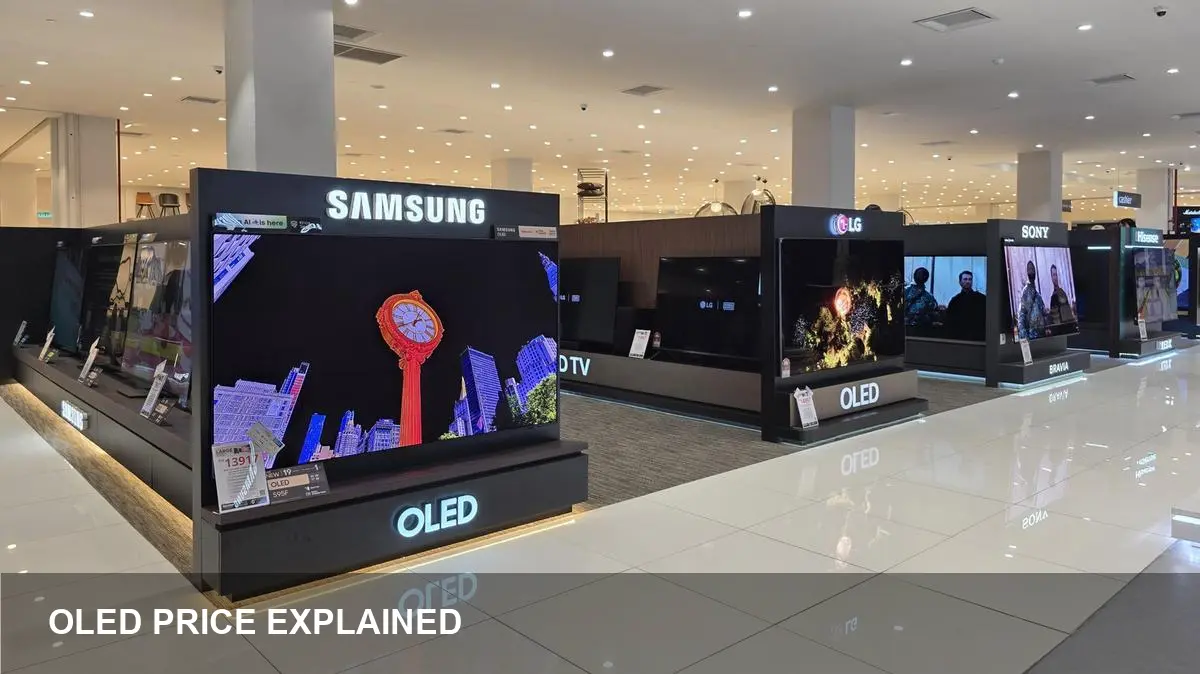
- OLED panels are pricier because of how they’re made, the specialized materials involved, and the typical sizes they come in.
- Production complexity and lower usable yields increase unit costs compared with conventional LED/LCD panels.
- Larger panel sizes and optional premium features (HDR, higher refresh rates, advanced audio) further push retail prices up.
- For buyers, size and feature choices matter most when balancing price versus picture quality.
Why OLED panels cost more to produce
OLED TVs are more expensive primarily because the production process is more complex than for typical LED/LCD displays. Making OLED panels requires precise manufacturing steps, specialized equipment and tight quality control, which raise factory costs per unit.
Because those processes are demanding, manufacturers invest more in production lines and workforce training to deliver consistent results. Those investments are reflected in the final retail price consumers pay.
The role of materials and components
OLED technology relies on specialized materials and layered components that emit light on their own, eliminating the need for a separate backlight. These materials are generally costlier than the conventional components used in LED/LCD panels.
Using premium materials contributes to better contrast and thinner displays, but it also increases the bill of materials for each TV, which manufacturers pass on to consumers.
Panel size and yield effects
OLED TVs are often sold in larger screen sizes, and larger panels require more material and more careful handling during production. That increases per-unit costs compared with smaller displays.
In addition, larger and more complex panels can result in a lower proportion of perfectly functioning units from a production batch. When fewer panels meet quality standards, manufacturers must spread fixed production costs across fewer sellable units, which pushes prices up.
Additional features that raise price
Beyond the panel itself, many OLED sets include higher-end features such as advanced HDR processing, faster motion handling, improved smart-TV platforms and upgraded speakers. Each of these features adds components or software development costs.
Retail pricing also factors in branding, warranty, and distribution costs. Flagship OLED models from well-known brands often carry a premium for design, warranty length, and after-sales support.
What buyers should consider
If price is a concern, consider smaller OLED models, wait for seasonal discounts, or compare high-end LED/LCD alternatives that can offer very good picture quality at lower cost. If absolute picture quality, contrast, and form factor matter most, OLED remains one of the best, albeit pricier, choices.