What the iPhone Fold Means for Users and Developers

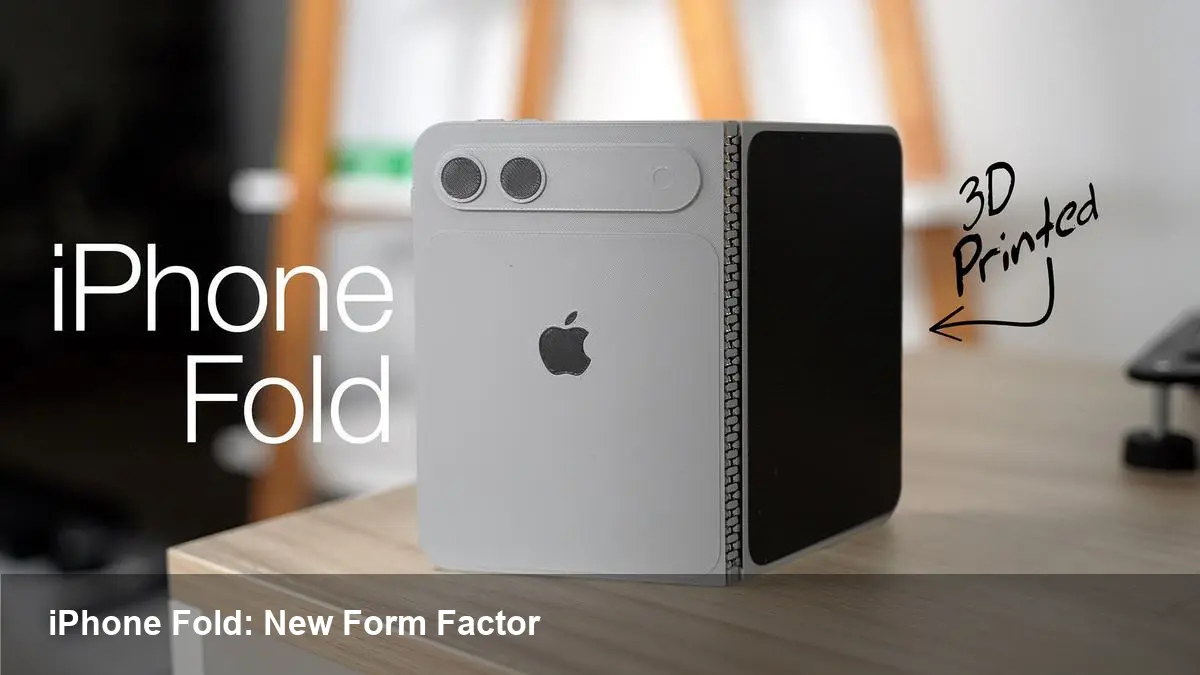
Why Apple folding a phone matters
Apple is widely reported to be preparing a foldable iPhone, with an anticipated launch this September. If these reports are accurate, the iPhone Fold will be Apple’s first step into a form factor that already exists in the Android ecosystem but presents unique hardware and software trade-offs. For consumers, developers and businesses, a foldable iPhone is less about novelty and more about new interaction models, product positioning, and a shift in how apps are built and marketed.
A brief context on Apple and foldables
Apple hasn’t released a foldable device before; its product strategy historically emphasizes a small number of carefully controlled hardware form factors. A foldable iPhone forces that approach to adapt: there are hinge mechanics, bendable displays, and new size classes. It also requires Apple to extend iOS (or choose to subsume foldable functionality into the current iOS model) to support seamless transitions between folded and unfolded states.
What users should expect day-to-day
Here are practical ways a foldable iPhone could change everyday use:
- Multitasking become more natural. Unfolded, a larger interior display could allow two or more apps side by side without relying on iPad-sized interfaces. That’s useful for email + document editing, video calls while taking notes, or split-view browsing.
- Media and creative workflows improve. A bigger canvas helps photo editing, sketching or spreadsheet work without carrying an iPad.
- Pocketability with larger screen real estate. The device folds down to a phone-size shell but opens into a tablet-like surface for reading, maps or games.
- New ways to use the external display. When partially folded, apps might provide secondary controls or contextual information on the outer screen—think camera controls, music playback, or a compact mail preview.
Real example: imagine a field-sales rep who lands in a cafe and needs to present a 10-slide deck. With a foldable iPhone they can open the device for a larger in-hand view, run the slides in split-screen with notes, and fold it for compact transit between meetings.
What developers must plan for now
A platform shift like this demands changes in how mobile apps are designed and tested. Practical developer tasks include:
- Treat the hinge as a UI constraint. The central seam will break large canvases; treat it like a system-level safe area and avoid placing critical controls or content where a crease may interrupt usability.
- Support multiple size classes and window states. Apps must gracefully resize between folded and unfolded screens and handle mid-use transitions (for example, a user unfolding during video playback). Use responsive layouts, adaptable navigation, and persistent state restoration.
- Embrace multi-window and split interactions. Earlier generations of iPad apps provide a good template: apps should function in half-screen or full-screen modes and cooperate with others via drag-and-drop and shared multitasking APIs.
- Test for performance and battery. Larger displays and more complex UI arrangements require careful profiling—rendering, GPU use, and background tasks all impact battery life, which will be a major user complaint if poorly managed.
Concretely, if you maintain a productivity app: add a two-pane layout that exposes a document list on one side and an editable view on the other, use autosave aggressively to avoid data loss during folding transitions, and treat unfolded mode as a premium layout rather than an afterthought.
Business implications and go-to-market considerations
A foldable iPhone will be a premium product at launch. That has several business implications:
- Price and positioning. Apple will likely price the foldable above standard iPhones, targeting power users and early adopters. Expect it to act as a prestige SKU that helps protect margins.
- Accessory and repair ecosystem. New cases, screen protectors, and hinge repairs will be a fresh revenue area for third parties and Apple’s service business.
- iPad cannibalization risk. A large foldable could overlap with entry-level iPads for some users. Apple can mitigate this by differentiating capabilities—camera systems, battery life—or by encouraging distinct use patterns.
- Enterprise and BYOD. IT teams will need to update device management policies to accommodate different form-factor behavior and enterprise applications should be validated for the new screen sizes.
For startups building productivity tools, a foldable iPhone presents an early-opportunity market: ship targeted UIs that are fold-aware and market them as optimized for the new form factor.
Limitations and practical trade-offs
No device is perfect. Expect early foldable iPhones to surface familiar issues:
- Durability concerns. Hinges and flexible displays add mechanical complexity; consumers will watch for fold-cycle ratings and repairability.
- Visible crease and viewing angles. A crease across the interior display is common in current flexible OLEDs and may affect reading or drawing.
- Battery and thickness. The mechanics and two-display design will likely make the device thicker and could shorten battery life compared with non-folding counterparts.
- App gaps at launch. Not every app will be optimized immediately; users may encounter inconsistent experiences until developers update their UIs.
Three forward-looking implications
- Platform UX standards will evolve. Apple’s human interface guidelines will expand to include hinge-aware layouts and new edge cases—this will standardize good behaviors and speed developer adoption.
- New software categories will emerge. Expect niche apps designed specifically for partial-fold use (e.g., creative controls when half-folded), and possibly enterprise vertical apps that exploit the dual-screen real-estate for workflows like inspections or point-of-sale.
- Component supply chains will adapt. Suppliers of flexible OLEDs, hinges, and thin batteries will scale, and repair services will mature, which will lower prices and improve reliability over successive generations.
Preparing now: practical checklist
- Designers: prototype two-pane and hinge-safe layouts.
- Engineers: add responsive breakpoints and handle mid-transition state persistence.
- Product teams: decide whether a fold-optimized UI is a premium feature and prepare marketing and support materials.
A foldable iPhone arriving this September would not just be another SKU—it’s the start of a new hardware class in Apple’s lineup. For developers and businesses, the pragmatic move is to design flexibly now: support multiple size classes, plan for the hinge, and treat unfolded screens as opportunities for deeper, richer experiences rather than simply bigger canvases.