What ASUS’s New Strix OLED Monitors Mean for Gamers and Creators

Quick take
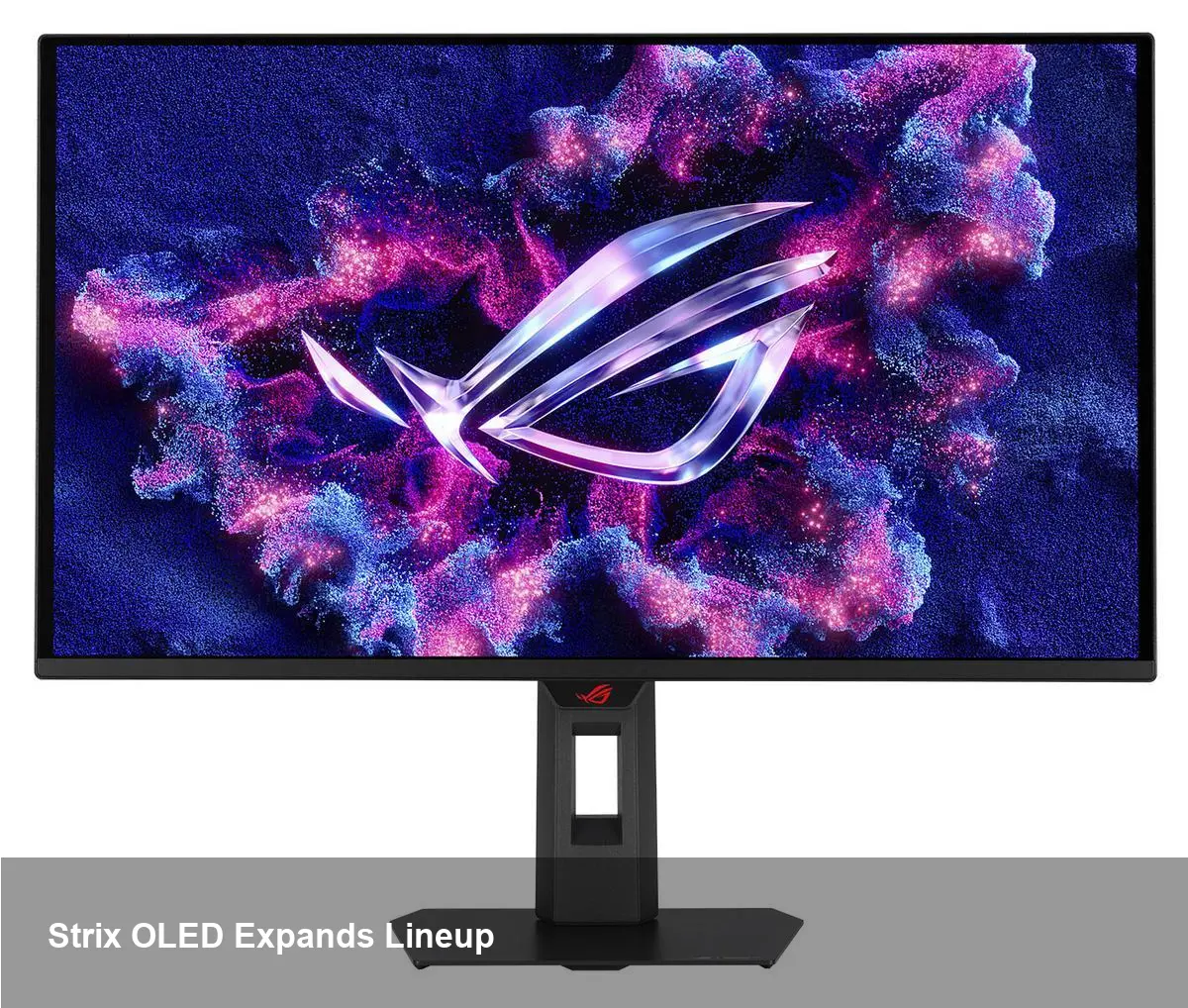
ASUS Republic of Gamers has added three entries to its Strix OLED family: XG27AQDMG Gen2 (also referenced as XG27AQDMGR), XG27ACDMS, and XG27AQDMES. These are positioned as the next wave of OLED displays from ROG, bringing the brand’s premium panel technology to more buyers and use cases.
Why this matters now
OLED has moved from niche TV applications into desktop monitors over the last few years because of its deep blacks, excellent contrast, and fast pixel response. ROG’s Strix line has been one of the higher-profile pushes to pair OLED panel benefits with gaming-grade features and ergonomics. Adding new Strix OLED models broadens the choice for gamers, streamers, and creative professionals who want OLED image quality without always paying flagship prices.
Where these new monitors fit
ROG’s newest Strix additions appear aimed at three practical goals:
- Expand the OLED portfolio so buyers can match a monitor to their needs (competitive gaming, mixed-use, or creator-focused workflows).
- Make premium panel characteristics more accessible across price and feature tiers.
- Keep ROG’s gaming-first feature set (ergonomics, software, and ecosystem) aligned with modern panel tech.
That means you should expect a mix of performance, color fidelity, and usability features—rather than a single “ultimate” model that tries to be everything.
Real world scenarios
- Competitive FPS player: A player who prioritizes low input lag and fast pixel transitions benefits from OLED’s near-instant pixel response. Even without specific hardware numbers, OLED’s rapid transitions can reduce perceived blur and make fast motion look cleaner than many LCDs.
- Streamer or content creator: Someone producing HDR content or color-sensitive material will find value in the deeper blacks and high contrast of OLED for review and grading. Combined with ROG’s gaming features, a creator can game and produce content on the same display without swapping equipment.
- Hybrid workstation setup: Designers who also play casually at night get a lot from OLED’s contrast and visual clarity. This is useful for UI work or photo editing where local contrast and subtle shadow detail matter.
- eSports venue or café (with caveats): OLED’s image quality can elevate presentation in communal gaming spaces. However, venues must weigh long-term usage patterns against OLED durability considerations (see next section).
Practical considerations before buying
- Burn-in and long-term use: OLED panels can show image retention over long periods when static UI elements are displayed constantly. For most daily gamers and creators who vary content, modern OLED monitors include mitigation measures (pixel-shifting, screen savers, and panel conditioning). Still, buyers who run static dashboards, edit timelines with persistent UI, or operate 24/7 displays should evaluate the warranty, burn-in protections, and usage guidance.
- Brightness and HDR: OLEDs typically excel at contrast but can differ in peak brightness versus high-end HDR LCDs with local dimming. If you work in brightly lit rooms or rely on extreme HDR peak luminance, compare measured brightness and HDR implementation before deciding.
- Size and ergonomics: The Strix family historically centers on sizes and stands that suit desktop gaming setups. Make sure the monitor’s physical footprint, mounting options, and adjustability match your desk and posture needs.
- Connectivity and ecosystem: ROG monitors often include features like onboard controls, OSD profiles, and software integration with GPU utilities. If you use a multi-monitor setup or mixed console/PC gaming, check supported ports and VRR/variable refresh standards.
For developers and studios
Game developers and QA teams should take note of OLED as an increasingly common display target. Two immediate implications:
- Visual QA needs to account for OLED-specific artifacts: color shifts, deep blacks, and bloom differences should be validated on OLED hardware in addition to LCDs. Scenes with long static HUD elements might appear differently.
- Performance tuning for variable refresh technologies: OLED monitors in the Strix family typically sit in ecosystems that support VRR and high refresh rates. Developers should test frame pacing and variable refresh interactions to avoid micro-stuttering or tearing on hardware that players might use.
Business value for smaller studios and cafes
For small game studios or content houses, integrating OLED deskside monitors can improve the accuracy of creative passes and give demo stations a striking visual feel for clients. However, the investment should be balanced against potential replacement cycles and burn-in risks in public-facing displays.
Pros, trade-offs, and limitations
Pros:
- Outstanding contrast and perceived image quality for games and media.
- Fast pixel response that benefits motion clarity and competitive gameplay.
- Strong appeal for streaming and demos—visually striking content looks better.
Trade-offs:
- Potential for image retention with static elements; requires management.
- Peak brightness can vary across OLED models versus high-end HDR LCDs.
- Premium features sometimes increase price relative to mid-range LCDs.
Limitations:
- OLED suitability depends on use pattern. For heavy 24/7 signage or dashboards, an LCD might be a better long-term choice.
- Not every software title or engine renders identically on OLED vs LCD; testing is recommended when color fidelity and shadow detail are critical.
What this rollout signals about the market
- Wider OLED adoption in gaming monitors is becoming mainstream, not boutique. Major gaming brands are expanding model ranges rather than limiting OLED to one halo product.
- Manufacturers are increasingly balancing gaming features with content-creation needs, reflecting how many users mix work and play on one machine.
- Expect incremental improvements in burn-in mitigation and panel longevity as more units ship and display makers gather real-world telemetry.
Practical recommendation
If you’re a gamer who values image quality and often plays varied titles (not a static-HUD-only use case), watching ROG’s Strix OLED additions is a sensible move. Content creators who need improved contrast and accurate shadow detail will also gain value—provided they follow best practices for static element management.
If you manage a public gaming space or expect constant static content, investigate warranty details and consider hybrid deployments (OLED for demo stations, LCD for 24/7 signage).
Two quick future-facing insights:
- OLED will become a standard consideration for both gamers and creators as prices and model availability expand.
- The next meaningful differentiator will be software and warranty ecosystems that address OLED longevity and content workflows.
How you use a monitor matters as much as its raw specs. These new Strix OLED models add more choices for people who want OLED picture quality backed by a gaming-oriented feature set—just match the display to how you actually work and play.