What Apple's 'Ultra' Expansion Means After MacBook Neo

A new premium tier for Apple hardware
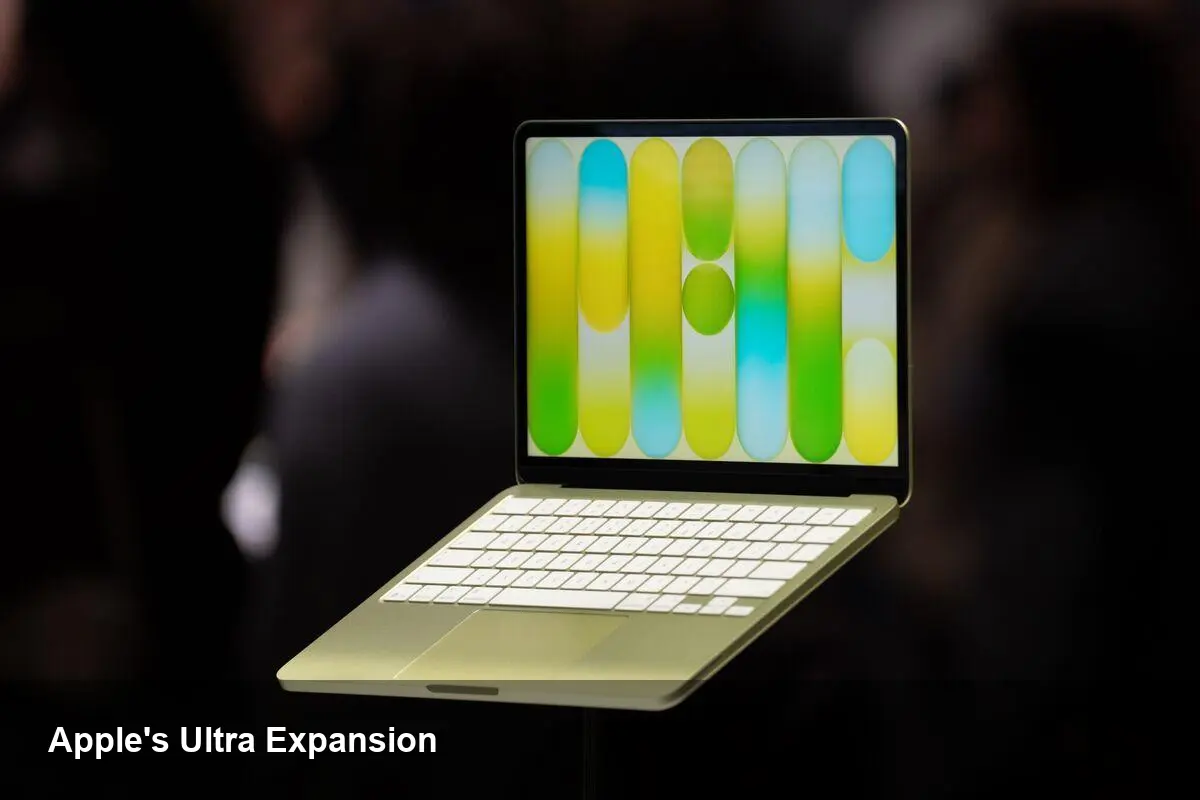
Apple recently launched the MacBook Neo, and signals now point to a wider deployment of Apple’s "Ultra" label across its product lines — including refreshed iMacs and possibly other pro-focused devices. The "Ultra" name is no longer confined to the Watch: it’s evolving into a potential umbrella for the company’s highest-end hardware, aimed at creative professionals, studios, and enterprises that need top-tier performance and features.
This article looks at what that positioning means in practical terms: for buyers, for developers, and for businesses that plan hardware refresh cycles or build services on Apple platforms.
Why Apple would double down on 'Ultra'
There are several strategic reasons Apple might expand the "Ultra" designation beyond wearables and a single laptop model:
- Product tier clarity: "Pro" and "Air" represent well-known tradeoffs between mobility and performance. "Ultra" signals a deliberate top-of-the-line option above "Pro," removing ambiguity for buyers who need peak performance and are willing to pay for it.
- Brand premiuming: Apple can use the label to justify higher margins on devices with more cores, expanded thermal designs, and specialized I/O.
- Differentiation for creative workflows: Video, 3D, and large-scale machine learning tasks increasingly demand hardware that doesn't throttle under sustained loads. An "Ultra" class could prioritize continuous throughput over thinness.
- Enterprise and vertical market targeting: Industries like film, AR/VR development, and scientific research often need certifiable, predictable hardware. An "Ultra" SKU provides a clearer product to certify against.
What to expect from iMacs branded 'Ultra'
If Apple brings "Ultra" to the iMac line, expect changes that emphasize sustained compute and expandability more than the current all-in-one designs. Possible practical upgrades:
- Improved cooling and performance sustainment for video encoding, rendering, and compiles.
- More onboard ports and expansion options tailored for pro workflows (fast networking, multiple high-bandwidth Thunderbolt lanes, pro-grade storage configurations).
- Display targeting: higher brightness, wider color gamut, or larger panel sizes aimed at color-critical workflows.
For creative teams choosing hardware, that maps to faster turnaround on render farms, lower latency in compositing timelines, and fewer forced cloud roundtrips for heavy work.
Concrete scenarios: who benefits and how
- Post-production house: An iMac Ultra with sustained GPU throughput reduces the need for offsite rendering. Projects that once required batching to cloud render farms may be completed locally, lowering cost and accelerating review cycles.
- Software team building macOS-native tools: A MacBook Neo for travel and an iMac Ultra in-office could form a performance continuum — developers compile locally on the Ultra for CI-level builds and use Neo for demos or travel.
- Small studio or freelancer: Higher upfront cost for an Ultra device can be amortized by time saved on projects with tight deadlines; faster exports and previews turn into more billable work.
Developer and platform impacts
Expanding an "Ultra" tier affects developers in subtle but important ways:
- Optimization temptation: With a high-performance baseline, some teams may deprioritize optimization for lower-spec devices, resulting in apps that perform poorly on older Macs.
- Testing surface widens: Developers must validate performance across more divergent hardware classes — from ultralight laptops to thermal-rich Ultra desktops.
- Native acceleration: Apps that use GPU compute, Metal, or Apple’s ML libraries will see bigger headroom on Ultra hardware, incentivizing richer features but also raising the bar for compatibility testing.
Practical advice: add Ultra-class hardware to your continuous integration (CI) and QA matrix if your user base includes pro creatives, and keep a testing policy for lower-tier devices to avoid regressions.
Business implications: pricing, supply chain, and channel strategy
Introducing a higher premium tier has ripple effects across Apple’s business model:
- Margin expansion: Ultra SKUs can carry higher ASPs (average selling prices), improving profit per unit if Apple captures pro buyers.
- Channel segmentation: Apple may sell Ultra devices preferentially via professional channels or offer configuration-only sales through business channels and rep partners.
- Supply chain complexity: Ultra devices with advanced displays, higher power thermal solutions, or specialized components may require new suppliers and manufacturing tweaks, which could affect lead times.
For companies planning fleet purchases, expect higher TCO for Ultra devices but lower time-to-complete for compute-heavy tasks. Budget decisions should weigh the cost of hardware against recurring cloud spend for compute-heavy workloads.
Risks, trade-offs, and potential downsides
- Cannibalization: Ultra models could poach sales from existing Pro products, complicating Apple’s product mix and inventory planning.
- Fragmentation for developers: A wider performance spread increases testing and support costs.
- Price sensitivity: Not all buyers will accept a steep premium. If Ultra is seen as overkill, uptake could be limited to a small professional segment.
Signals about the future and what to watch
- Ecosystem tooling will follow hardware: Expect Apple and third parties to ship developer tools and software updates that highlight Ultra-class capabilities for video, ML, and graphics workloads.
- Hybrid workflows: Companies will balance on-prem Ultra hardware with cloud burst capacity. The presence of powerful desktop Ultra devices doesn’t eliminate cloud use but shifts its role toward episodic scaling rather than baseline throughput.
- Service and subscription tie-ins: Apple could pair Ultra devices with enterprise services (extended support, high-capacity iCloud tiers, or prioritized repair) to increase recurring revenue and lock-in.
Practical recommendations
- Buyers: Audit workloads. If your team spends significant time on rendering, large dataset training, or complex builds, an Ultra device may pay back quickly. For general office use, standard Pro or Neo models remain more cost-effective.
- Developers: Add Ultra-class hardware to your test matrix and avoid assuming uniform performance across your user base.
- IT and procurement: Model total cost of ownership including power, repair, and potential cloud savings. Negotiate business-channel deals for predictable refresh cycles.
Apple’s move to broaden "Ultra" is a signal that it sees continued demand for differentiated, premium compute on the desktop and for pros. For organizations and developers, the key is to decide which workloads truly need Ultra-class gear — and to structure procurement and testing around that reality.