What Apple’s Surprise AirPods Max Refresh Means

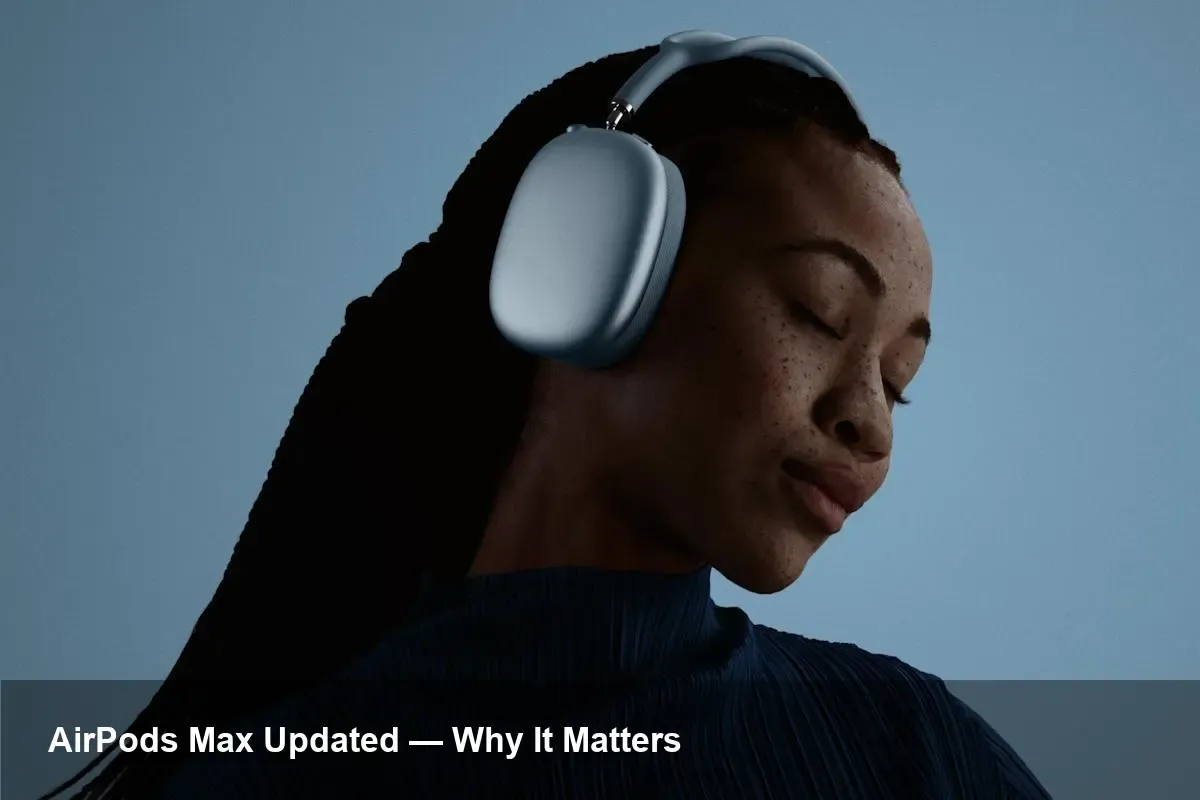
Why a quiet AirPods Max update matters
Apple recently refreshed the AirPods Max with a surprise announcement. It wasn’t a blockbuster Apple event moment, but this kind of low-key update matters: the AirPods Max sit at the premium end of the headphone market and changes to their hardware or software ripple across prosumers, developers building immersive audio experiences, and enterprises equipping hybrid teams.
Below I walk through the context, real-world scenarios, developer and business implications, plus practical advice for buyers and audio-focused teams.
Quick background: the product and the market
The AirPods Max are Apple’s flagship over-ear headphones, aimed at listeners who want high-end audio, active noise cancellation, and tight integration with Apple’s ecosystem. Since the original model’s debut, Apple has positioned the Max as a luxury, convenience-focused option rather than a studio-reference headphone.
A surprise refresh typically signals one or more of the following: incremental hardware upgrades (chipset, battery, ports), new colorways or materials, updated software features (spatial audio refinements, battery management), or price/packaging changes. Each of those moves has different downstream impacts for users and third-party developers.
Three real-world scenarios where the refresh matters
1) Commuters and frequent travelers
- Better ANC, improved battery life, or reduced weight translate directly to a better commute experience. Even small gains in comfort or noise suppression reduce travel fatigue and make premium headphones a justifiable daily carry.
2) Creators and audio professionals
- For podcasters, video editors, and music creators, the Max is often part of a hybrid workflow: comfortable for long listening sessions and portable enough to take on location. Software upgrades to spatial audio or head-tracking can change how creators mix or author Atmos content on Macs and iPads.
3) Enterprise and hybrid teams
- Companies buying headphones for executives or hybrid employees care less about color and more about call quality, long battery life, and cross-device handoff. Improvements in microphone processing or latency for video conferencing can reduce friction in distributed work.
What developers need to consider
- Spatial audio and head-tracking: If Apple improves spatial audio or updates head-tracking behavior in the Max, developers building immersive audio experiences (games, AR apps, music players) should test for consistency across devices. Expect tweaks to APIs, latency characteristics, and behavioral edge cases when switching between original Max units and refreshed models.
- Codec and connectivity behavior: Any change to Bluetooth stack, support for newer codecs (for example low-energy audio or LC3), or a move to USB-C wired modes affects how developers test streaming quality, latency, and fallback logic in low-bandwidth scenarios.
- Battery and thermal profiles: A new SoC or power optimizations will change battery drain and thermal throttling characteristics under heavy workloads. Developers of always-on audio agents, background processing, or low-latency communication should validate power usage on the refreshed hardware.
- Integration with iOS and macOS: Apple tends to roll audio-focused OS features together with hardware. Keep an eye on updates to AVFoundation and related frameworks and prioritize testing with the new AirPods Max when they appear in your device lab.
Business value and procurement lens
- Resale and refresh cycles: A refresh creates a resale window for companies looking to upgrade. Organizations can leverage trade-in programs or depreciation cycles to phase older units out and negotiate volume pricing for new ones.
- Standardization trade-offs: Standardizing on a single premium headphone model makes support easier (one charging cable, one set of troubleshooting steps), but it also locks you into a vendor ecosystem. If your workforce uses mixed device platforms, check for parity in features on non-Apple platforms.
- Cost vs. benefit: Premium headphones are expensive; decision-makers should weigh improved ANC and call quality against alternatives from Sony, Bose, and Sennheiser, which sometimes offer better repairability or neutral sound suited for studio use.
Pros, cons, and limitations of a stealth refresh
Pros
- Immediate uplift for users who value ergonomics and integrated features.
- Encourages developers to optimize for Apple’s audio stack and spatial experiences.
- Can reset the product’s market perception without a major marketing cycle.
Cons
- Early adopters who bought shortly before the refresh may feel frustrated.
- Small updates can fragment testing matrices for developers and QA teams.
- Apple’s integrated approach can lock features behind platform-specific APIs, limiting cross-platform parity.
Limitations to watch
- Repairability and modularity: Apple’s premium devices often prioritize design over serviceability. If the refresh continues that trend, long-term repair costs will matter for both consumers and businesses.
- Ecosystem dependence: Many of the Max’s best features are strongest when used with Apple devices. Cross-platform parity for features like spatial audio or device switching remains an open question for mixed-device environments.
Practical recommendations
For consumers
- If you already own the previous AirPods Max and the refresh is incremental, wait for hands-on reviews and trade-in offers before upgrading.
- If you care about the best possible ANC, call performance, or Apple-specific features like seamless device switching, evaluate how the upgrade maps to your daily needs.
For developers and audio teams
- Add the refreshed Max to your device lab and run regression tests for spatial audio, latency, and battery drain.
- If you develop cross-platform audio apps, verify feature parity and have graceful fallbacks when Apple-specific features aren’t available.
For buying teams and IT
- Consider pilot deployments to a subset of users (executives, audio teams) before a company-wide refresh. Factor in warranty, trade-in programs, and potential accessory changes (cables, cases).
Where this nudges the industry next
- Expect more frequent, targeted hardware updates from Apple rather than bundled event-driven launches — a strategy that keeps device lineups fresh and competitors off-balance.
- Spatial and immersive audio will grow from novelty to a platform expectation; developers who optimize now will have an advantage as more devices support head-tracking and object-based audio.
- USB-C, energy efficiency, and low-energy Bluetooth audio standards will increasingly shape compatibility decisions across ecosystems.
A surprise AirPods Max refresh is more than a color swap. It’s a nudge that premium audio remains strategic for Apple, and the practical consequences show up across buyers, developers, and businesses. If audio quality or integrated features matter to you, this is a good time to re-evaluate hardware, test workflows, and plan upgrades thoughtfully.