What an OLED MacBook Pro Means for Creators

Why an OLED MacBook Pro matters now
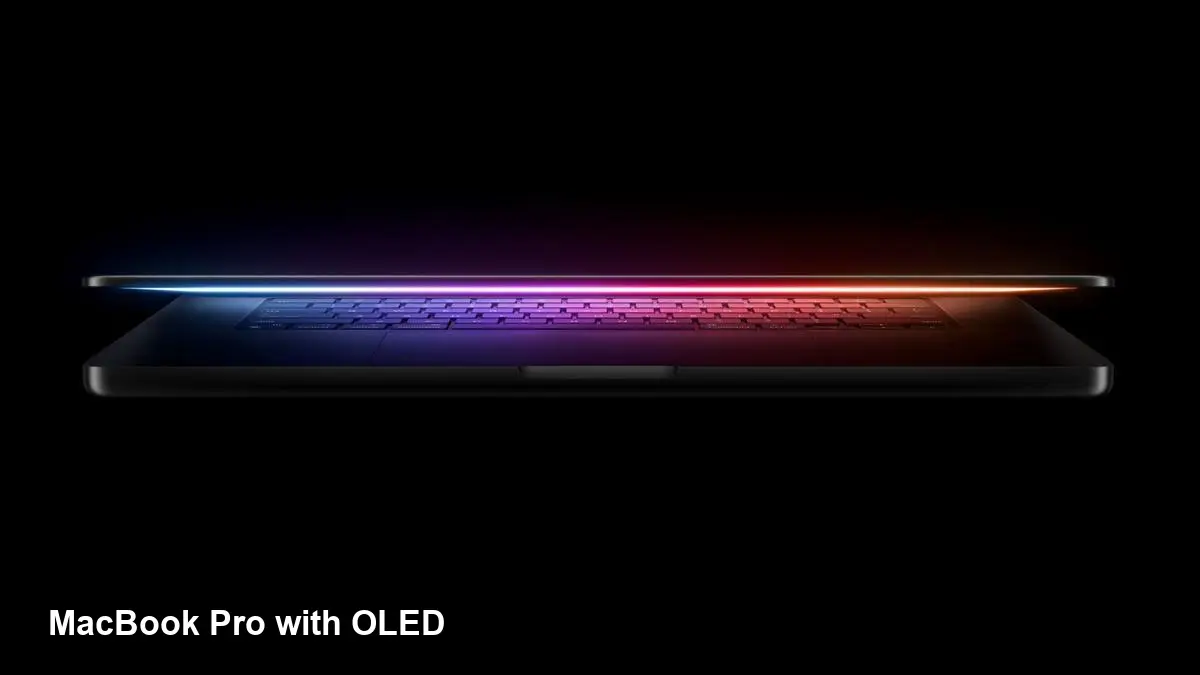
Apple's MacBook Pro line has been a workhorse for designers, video editors, and developers for years. If the latest industry forecasts hold true, Apple will ship the first MacBook Pro with an OLED panel between late 2026 and early 2027. That single change—moving from mini‑LED backlit LCD to self‑emissive OLED—could shift how pros use laptops for color work, HDR content, and mobile productivity.
Short history: Apple displays and the jump to mini‑LED
For context, Apple moved its high‑end MacBook Pros to mini‑LED a few years ago to push peak brightness and localized contrast without the complexity of OLED. Mini‑LED gave remarkable HDR highlights and excellent viewing angles, but it still relies on a backlight and local dimming zones. OLED removes the need for a backlight entirely: each pixel emits its own light, enabling true blacks and much higher contrast ratios.
Real, practical upgrades you’ll notice
- Contrast and blacks: Deep blacks are more consistent on OLED because pixels turn fully off. For photographers and filmmakers, that means better shadow detail and more convincing HDR previews.
- Color and tone mapping: OLED panels typically offer wider color gamuts and smoother gradations, improving color grading and retouching accuracy on the go.
- Thinness and weight: Removing the backlight allows slightly thinner displays. For road warriors this can shave grams and millimeters from the enclosure over time.
- Power profile: In certain workloads (mostly darker UI or HDR where many pixels are black), OLED can improve battery life. But bright full‑screen white pages or static UI elements may consume more power than mini‑LED.
- Refresh and responsiveness: OLED makes it easier to implement variable refresh (ProMotion) and low persistence modes, which help UI fluidity and scrolling—useful for developers testing animations or designers working with motion timelines.
Use cases where OLED transforms workflows
- Color‑critical grading: A colorist reviewing HDR dailies on the move will see deeper blacks and truer specular highlights without relying on external monitors.
- Photo editing with deep shadows: Portrait and landscape retouchers can catch clipped shadow detail and banding issues earlier in the session.
- Film editors and VFX artists: When checking composite passes, OLED makes it easier to judge matte edges and light wrap against true black backgrounds.
- Developers building visual apps: Front‑end engineers working on color themes, UI transitions, or high‑fidelity prototypes will appreciate consistent contrast and smoother refresh rates.
Concrete scenario: a freelance colorist traveling between client sites can use an OLED MacBook Pro for an initial grade on location, trusting the display more than previous laptop panels. They’ll still finalize on a calibrated reference monitor, but the initial creative decisions are more reliable.
Business and competitive implications
Apple moving to OLED on the MacBook Pro is a product differentiator against Windows rivals that already offer OLED options in flagship models. For Apple, it’s about preserving a leadership position in creative markets where display accuracy is part of the purchase decision. For businesses that supply creatives, adopting OLED MacBook Pros may reduce costly external monitor time for early review stages.
From a pricing perspective, OLED will likely keep the MacBook Pro at the premium end. Expect Apple to position it as a pro feature—initial rollout may be restricted to the 14” and 16” Pro models. That segmentation helps manage costs and positions OLED as a professional upgrade rather than a baseline expectation.
Technical caveats and limitations to watch
- Burn‑in: OLED burn‑in remains a risk for static UI elements that stay on screen for long periods. Apple will need to combine hardware durability and software mitigations (pixel shifting, dimming of static UI elements) to make this acceptable for pro users.
- Peak brightness and HDR: OLED panels can struggle to match mini‑LED in sustained peak luminance, which affects specular highlights in HDR grading. Apple might use hybrid approaches or tuned HDR workflows to compensate.
- Supply and yields: Large OLED panels for laptops are harder to produce at scale than smartphone displays. Early production will likely be constrained by supplier capacity and yields, which can influence availability and price.
What developers and IT teams should prepare for
- Color management: Organizations should revisit color workflows and calibration procedures. Expect Apple to update macOS color management and HDR handling; IT teams should plan for new calibration targets and possibly updated external monitor requirements.
- App testing: Apps that assume a uniformly bright display should be tested on darker themes and HDR content. Also test for static UI elements to avoid prolonged burn‑in risk for kiosk or retail deployments.
- Power profiles: Benchmark battery life across typical workloads. Some apps (e.g., code editors with many white screens) might show different battery characteristics on OLED versus mini‑LED.
Broader implications for the industry
1) OLED adoption may cascade: If the MacBook Pro proves successful with creatives, expect Apple to expand OLED into other Mac models over the following product cycles. 2) Software ecosystems will adapt: More macOS apps will add native HDR previews and per‑window tone mapping to take advantage of OLED’s dynamic range. 3) Supply chain pressure: Display suppliers that can scale high‑quality laptop OLED panels will be high-value partners. Expect Apple to invest in capacity or secure priority allocations.
Risks worth considering before upgrading
If you heavily use static toolbars and UI elements for long hours (e.g., trading platforms, point‑of‑sale terminals), OLED may not be ideal without strong mitigations. Also, for users whose workflows are dominated by very bright, full‑screen work (spreadsheets, static documents), the battery tradeoffs may not be clear cut until we see real device measurements.
Moving to OLED on MacBook Pro is a significant generational shift for Apple’s portable pro hardware. Creatives and developers should start planning for the change: evaluate current color pipelines, test apps on OLED when review units appear, and weigh whether the improved contrast and HDR fidelity will change your workflow. If the timelines hold, expect to see the first OLED MacBook Pros in the market around late 2026 into early 2027—enough time to prepare, but not long to wait for a noticeable leap in display quality.