Samsung’s 13″ color e‑paper uses phytoplankton

- Key Takeaways:
- Samsung introduced a 13-inch color e‑paper built with UL-verified phytoplankton bio-resin, a world-first material use for displays.
- The panel targets ultra-low-power use cases and supports local and remote management via the Samsung E‑Paper App and Samsung VXT.
- The move highlights sustainability and could broaden e‑paper adoption for signage, education, and battery-powered devices.
What Samsung announced
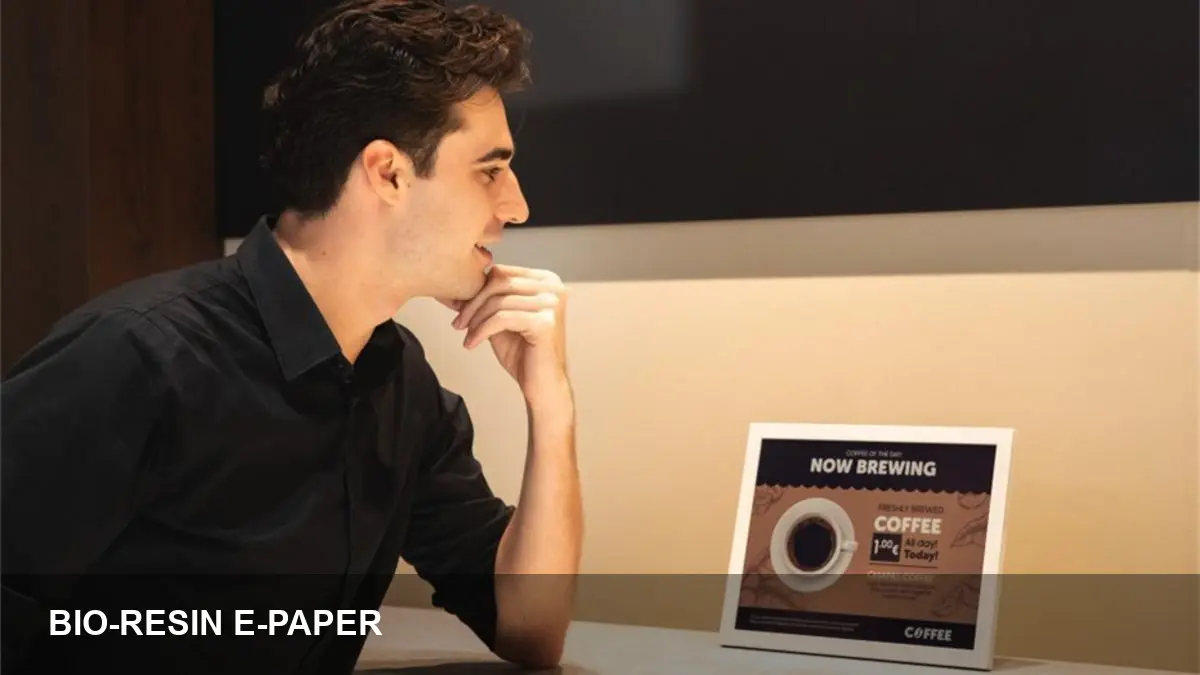
Samsung has unveiled a 13-inch color e‑paper display that is the first to use bio-resin derived from phytoplankton. The company positions the material as UL-verified, signaling third-party assessment of the bio-resin's properties.
The new panel combines color e‑paper technology with an environmentally sourced resin, and Samsung highlights ultra-low-power performance as a primary benefit.
Why the phytoplankton bio-resin matters
Using phytoplankton-derived bio-resin replaces or reduces reliance on conventional plastics and petrochemical-derived resins in display substrates. UL verification suggests Samsung sought external validation of safety or sustainability claims.
For manufacturers and buyers, the material could be meaningful when sustainability or supply‑chain transparency is a purchasing criterion. It also gives Samsung a differentiator in the growing e‑paper and low-power display market.
Use cases and power implications
Color e‑paper is typically chosen for always-on signage, shelf labels, e-readers, and low-energy information displays. Samsung says the 13-inch panel delivers ultra-low-power performance, which would extend runtime for battery-powered devices and reduce energy costs for large-scale deployments.
While Samsung hasn’t published detailed metrics in the available briefing, the combination of color e‑paper and low-power materials points to potential deployments in retail signage, education tools, and portable devices where color and long battery life matter.
Management and integration
The display supports local and remote management through the Samsung E‑Paper App and Samsung VXT. Those options make it easier for IT teams and facility managers to update content, monitor device status, and apply configurations without physically accessing each display.
Remote management is particularly relevant for digital signage networks and distributed installations where hands‑on maintenance is costly.
What to watch next
Key questions remaining are commercial availability, pricing, durability compared with conventional panels, and quantified power savings. Samsung’s move could prompt other manufacturers to explore bio-based materials if the phytoplankton resin proves scalable and robust.
For now, the announcement signals a blend of sustainability and low-power innovation in display technology—an area likely to attract interest from retailers, educators, and device makers searching for greener, energy-efficient screens.