Pokémon Center’s Game Boy Jukebox: Why it matters beyond nostalgia

A tiny jukebox with big nostalgia
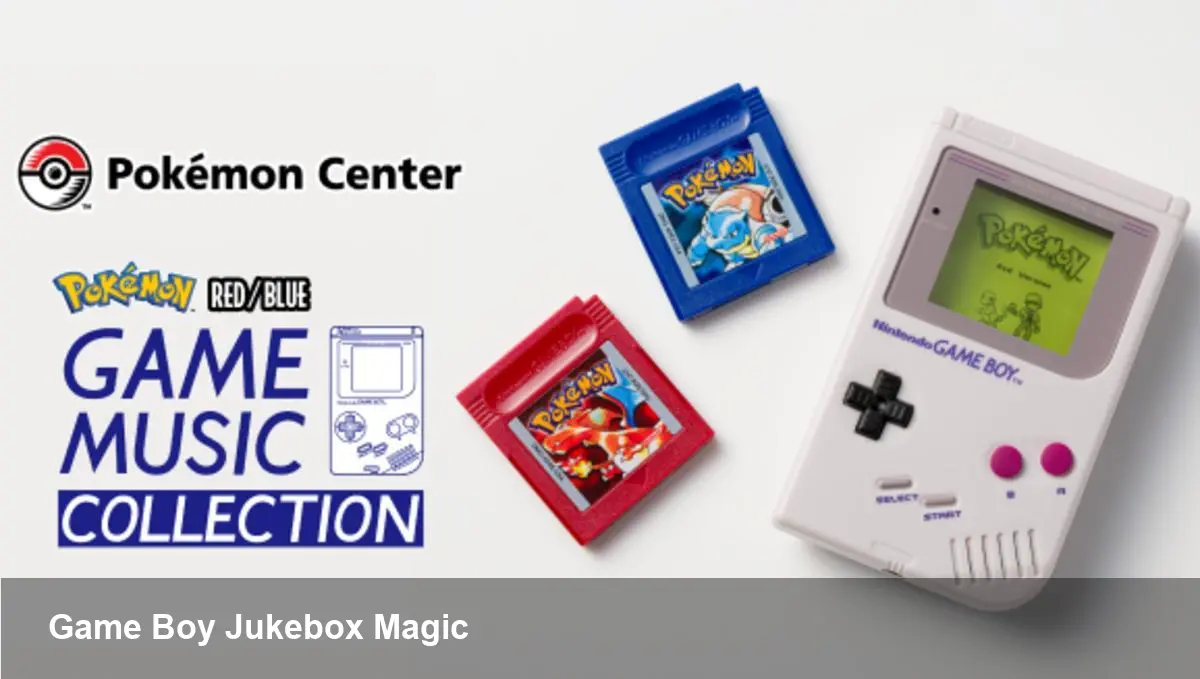
The Pokémon Center’s Game Boy Jukebox repurposes one of gaming’s most iconic silhouettes into a desktop music player. It ships with 45 cartridge-shaped inserts that unlock short, instantly recognizable Game Boy-era tracks — including staples like the Pallet Town theme. For collectors and anyone who grew up with handheld chiptune soundtracks, it’s an object that converts memories into something tactile and audible.
But this product is more than a novelty. It highlights several trends that matter to designers, developers, and small businesses: physical modularity as a product feature, the commercial value of vintage game audio, and ways nostalgia can be married to modern convenience.
What the product does (and who it’s for)
At a glance the Jukebox is straightforward: a Game Boy–style unit with slots for 45 cartridge-like modules, each representing a distinct track or medley of Game Boy music. Users swap cartridges to select music — a satisfying, physical action that’s part of the appeal. The device is a desktop conversation piece, a collectible display item, and a practical background-music player for small spaces.
Primary audiences:
- Collectors and fans of Pokémon and retro Nintendo hardware.
- Content creators and streamers looking for low-fuss, recognizable background music.
- Small retailers, cafés, and themed pop-ups that want a retro audio touch without a complicated setup.
Why the cartridge idea matters
Digital playlists are convenient, but physical media still sells on emotional value. The cartridge format taps into three benefits:
- Tactile engagement: Swapping cartridges is a micro-interaction with nostalgic resonance.
- Modularity: You can curate a physical set — gifting a limited set of cartridges or selling add-ons becomes a straightforward business model.
- Collectibility: Limited-run cartridges or region-exclusive tracks create scarcity and demand.
For companies, that modularity opens recurring revenue opportunities. The base Jukebox is a hardware purchase; additional cartridge packs, special edition soundpacks, or artist collaborations provide predictable, high-margin add-ons.
Practical scenarios — how people will use it
- A game store places the jukebox near retro consoles, using themed cartridges alongside product displays to increase dwell time and sales.
- An indie developer uses the device on livestreams when discussing chiptune composition, physically changing cartridges when they switch topics.
- A small anime café rotates cartridges by week: ‘90s Pokémon week, soundtrack composers week, and so on — each rotation gives customers something to talk about and share on social media.
These are low-effort activations that turn ambient music into a marketing tool.
Developer and maker implications
Even if the Jukebox itself doesn’t expose a developer SDK, the product points to a few technical and design possibilities:
- Cartridge as data module: A standardized physical cartridge format could be used for new content distribution — think boutique releases for chiptune artists or limited-run remixes.
- Hybrid integration: Future iterations could combine physical cartridges with an app that lets users create playlists, buy digital upgrades, or manage firmware updates.
- Local-first design: For privacy-conscious users and events, the device’s self-contained playback avoids cloud streaming and licensing telemetry concerns.
For developers building products that celebrate retro tech, the lesson is clear: combine authentic form factors with modern connectivity on users’ terms.
Licensing, rights and curation challenges
Behind the nostalgia is a non-trivial licensing stack. Classic game soundtracks often have multiple rights holders: composers, publishers, and sometimes original developers. Curating 45 tracks for a commercial product requires negotiating those rights — an effort that pays off by enabling official merchandise that fans trust.
For businesses aiming to replicate this model, plan for:
- Clear licensing agreements covering mechanical rights and distribution formats.
- Metadata and track provenance that respect composer credits — collectors care about authenticity.
- Roadmaps for expansions and collaborations that keep the catalogue fresh without inflating licensing costs.
Limitations and trade-offs
No product is perfect. The Jukebox’s physical cartridge design means:
- Limited adaptability: Users can’t quickly swap in arbitrary tracks unless a sanctioned cartridge format or SDK is released.
- Catalog size constraints: 45 tracks is a meaningful but finite set; digital streaming still holds the edge for breadth.
- Price sensitivity: The combination of hardware and licensed music means the unit could be premium-priced relative to Bluetooth speakers.
Designers should balance novelty with utility: if most buyers use it purely as decorative audio, ensure sound quality and build justify the spend.
What this signals for the future
- Nostalgia-driven hardware will keep selling, but only if it offers a useful experience beyond visual appeal. Products that pair form, function, and a clear upgrade path (cartridge add-ons, official expansions) will win.
- Physical modularity is a powerful product differentiator. Companies can monetize tangibly collectible formats that digital-first brands can’t easily replicate.
- Official licensing matters: fans prefer authenticated releases. The success of official chiptune hardware will encourage more publishers to package classic game audio as standalone merchandise.
Where this could go next
Imagine an open cartridge standard for boutique composers, or a companion app that scans cartridge QR codes to unlock higher-fidelity downloads or visualizers. There’s also room for collaborative drops — artist remixes sold as limited cartridges — and for third-party tabletop integrations (lamp controllers or LED displays that sync to the active cartridge).
For early-stage founders and product teams, the Jukebox is a reminder: subtle physical interactions — a click, a swap, a slot — can be the core experience, not just decoration. If you can combine that with a sustainable content model and a clear path for community creation, you’ve got more than merch: you’ve got a platform.
Whether you’re a collector placing it on a shelf, a streamer using it to set a retro tone, or a product designer taking notes, the Game Boy Jukebox is a case study in turning nostalgia into a repeatable product strategy.