Pixel’s Now Playing becomes a Play Store app — what changes

What’s happening
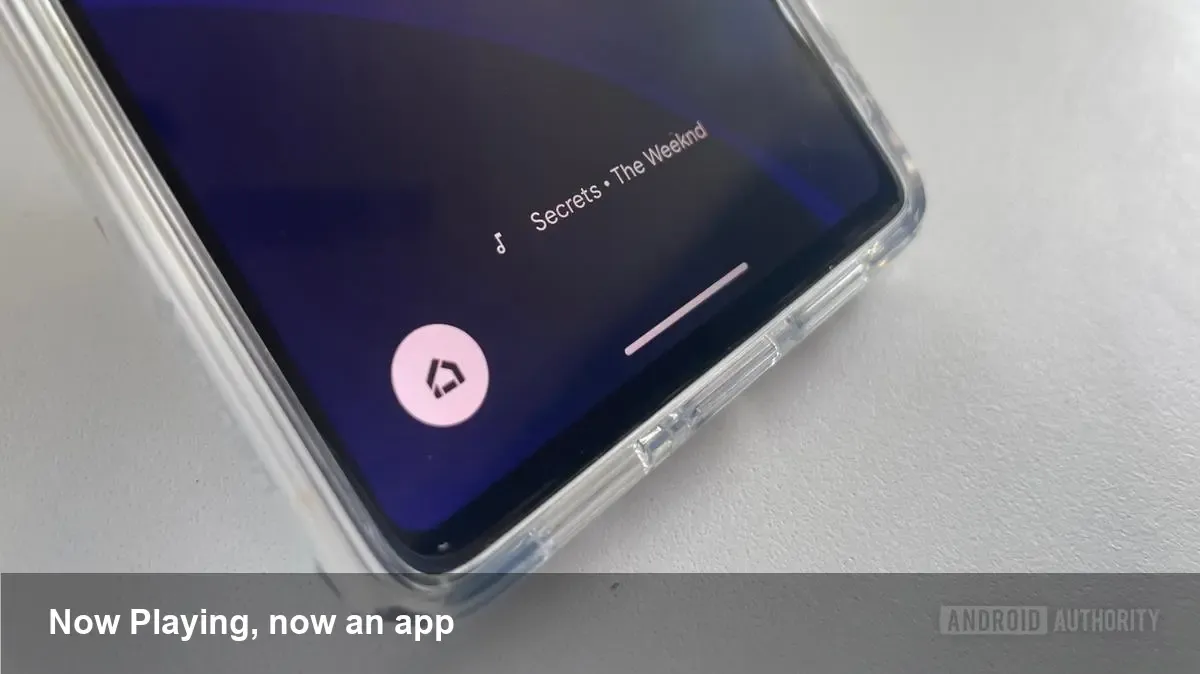
Google is packaging the Pixel phone feature "Now Playing" as a standalone app on the Play Store. Historically, Now Playing has been an on-device background feature that identifies songs automatically and stores a local history on Pixel phones. Moving it into a distributable app changes how the feature is delivered, updated, and possibly extended — but it won’t be available to every Android phone or every Pixel model immediately.
A quick refresher on Now Playing
Now Playing debuted as a quietly useful capability on Pixel devices: your phone listens for ambient music, matches snippets against a local fingerprint database, and surfaces the song title without sending audio to Google servers. That on-device matching is the reason the feature has been pitched as privacy-friendly — recognition happens locally and users control whether the history is saved.
Why make it a Play Store app?
Shipping Now Playing as an app instead of baking it into system software has several practical benefits:
- Faster updates: Google can push improvements to the recognition model, UI, or bug fixes through the Play Store without waiting for a full OS update.
- Wider testing: A Play Store listing lets Google target the rollout to specific Pixel models, regions, or testing channels and iterate faster.
- Modularization: Separating the feature reduces OS complexity and allows Google to iterate on features independently from Android releases.
But it comes with a catch: not every phone — and possibly not every Pixel — will be able to install it. Expect rollout restrictions based on hardware (DSP/ML acceleration), Android version, and regional regulations.
How it works for users today
For current Pixel owners, the experience should look familiar: Now Playing passively identifies songs and stores a searchable history in the app. In the Play Store form you may see:
- An opt-in toggle for continuous recognition to preserve battery.
- A local, searchable history of identified tracks with timestamps.
- Quick links to play the discovered track in a music service.
If Google maintains the on-device-first architecture, audio snippets won’t be uploaded to the cloud unless the user explicitly requests more info. That keeps the privacy model intact but also limits richer cloud-powered features unless Google offers opt-in cloud improvements.
Developer and partner implications
For app makers, the Play Store release is interesting but not transformational — at least not immediately:
- No public API yet: Historically, Now Playing has not provided a public API for third-party developers. Unless Google opens up an intent or API, other apps can’t rely on the same recognition service.
- Possible integrations: If Google offers an API or share intents, music apps, smart home apps, or automation tools could respond when a song is recognized. Think auto-populating smart playlists or tagging music mentions in a journal app.
- Marketplace strategy: Bringing Now Playing to the Play Store hints Google could pivot it from a Pixel-only convenience feature to a broader platform capability — but that would require addressing hardware and privacy constraints across devices.
Practical examples
- Casual listener: You’re in a café and hear an unfamiliar song. Now Playing quietly logs the track; later you open the app, tap to play the song in your preferred streaming service, and add it to a playlist.
- Night shift worker: You’re playing background music in an office. The app flags repeated tracks so you can remove duplicates from a playlist the next day.
- Developer automation: If an API appears, a personal-dataset app could automatically tag covered songs in notes or update a “discovered music” collection.
Trade-offs and limitations
Moving to an app doesn’t solve every constraint:
- Device compatibility: Older Pixels or non-Pixel devices may lack the hardware acceleration or OS hooks Now Playing needs.
- Battery vs. accuracy: Continuous listening consumes resources; Google must balance a low-power pipeline with accurate recognition.
- Privacy debates: Even local recognition invites scrutiny — how the app requests microphone access, stores history, and offers opt-out matters.
Business and competitive angle
For Google, Now Playing as an app is a low-friction way to iterate and test business models:
- It’s a value-add for Pixel owners, improving lock-screen engagement without large OS pushes.
- If Google ever opts to tie recognition more closely to commercial partners (streaming services, music retailers), modular apps make those experiments easier.
- Competitors like Apple and smaller audio recognition services already offer similar capabilities; the Play Store move keeps Google flexible.
Future implications — three things to watch
- API availability: If Google exposes a developer API or broadcast intents, third-party apps could integrate recognition into productivity and media workflows, expanding the feature beyond personal discovery.
- Expansion of sound recognition: Now Playing could evolve to identify more than songs — TV shows, ads, or environmental sounds — bringing new use cases (accessibility, analytics, brand monitoring) but also more regulatory attention.
- On-device ML as a differentiator: Packaging on-device intelligence in modular apps showcases a broader strategy: build powerful local ML features that respect privacy while remaining upgradeable. That approach may influence how other handset features are delivered.
What users should do now
If you own a Pixel, check the Play Store for availability rather than waiting for a system update. Read permissions carefully: allow only what you’re comfortable with (continuous listening can be toggled off). If you’re a developer, monitor Google’s docs for any published APIs or intents — the Play Store listing is the first step if Google plans to open integration points.
The move to a Play Store app is a quiet but meaningful shift. It’s not just about convenience; it’s a signal that Google wants its device-level ML features to be more nimble, testable, and possibly extensible. Whether that leads to a broader platform or stays a Pixel convenience will depend on how Google handles APIs, privacy, and device compatibility in the months ahead.