Pixel 10a: The midrange test for Google's Tensor chips

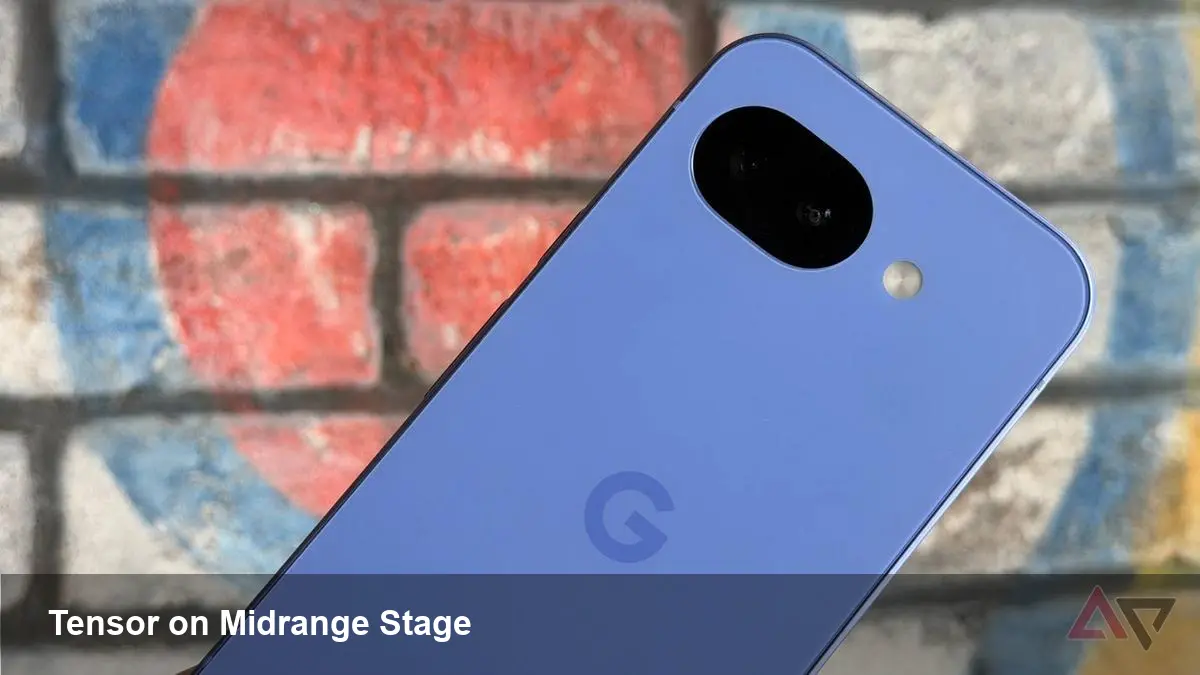
Why the Pixel 10a matters
Google's Tensor silicon has been a talking point since it first appeared in Pixel flagships. Designed to accelerate on-device AI features — think real-time voice transcription, smarter photography processing, and immediate language models — Tensor represents Google's bet that custom SoCs are worth the engineering cost. The Pixel "a" line, traditionally the brand's midrange offering, is where the company can make that wager visible to a much larger volume of buyers.
If Google ships a Pixel 10a with a Tensor chip that delivers flagship-like AI experiences at a midrange price, it won't just be a product win — it'll be proof that bespoke silicon can scale across price tiers and use cases.
What's at stake: performance, battery, and features
The Tensor conversation tends to collapse into three questions:
- Does the chip provide materially better on-device AI than commodity Android SoCs?
- Is performance/battery tradeoff acceptable in everyday use?
- Can developers actually leverage these capabilities, or are they locked behind Google's software?
For Pixel 10a the answers matter to three audiences:
- Consumers: they want snappy apps, long battery life, and standout camera/assistant features.
- Developers: they need predictable hardware primitives to offload compute-intensive ML tasks locally.
- Google: it needs to justify the cost of designing and iterating silicon by growing margins or building ecosystem lock-in.
Real-world scenarios that will reveal Tensor's value
1) Offline, private transcription for field teams Imagine a healthcare startup building a patient intake app that must record conversations in environments with poor connectivity. Running robust speech-to-text on-device keeps data private and usable offline. If a Pixel 10a with Tensor decodes more accurately and with lower latency than equivalent Snapdragon-based midrangers, that’s a clear, tangible advantage.
2) Computational photography in everyday conditions Pixel phones are known for producing great images from modest sensors. Computational tricks — HDR, multi-frame stacking, subject-aware sharpening — are compute-heavy. On a 10a, users expect flagship-like photos without long processing delays. Performance that matches previous Tensor flagships would let Google extend its camera differentiation to a much larger audience.
3) On-device generative features for messaging apps Local models that generate smart replies, summarize threads, or draft answers are bandwidth-friendly and privacy-conscious. A Tensor-enabled 10a could run lightweight generative models locally, improving responsiveness and reducing cloud costs for services built on top.
Developer impact: opportunity and friction
For developers, the attraction of Tensor is access to consistent, documented TPU-like accelerators across a range of devices. Practical implications:
- Lower latency and reduced server costs for ML-driven features if models can be executed locally.
- Need for toolchain support: accessible SDKs, portable formats (e.g., TensorFlow Lite with delegate support), and good debugging tools are essential.
- Risk of fragmentation: if Tensor-only features are locked to Google APIs, developers targeting the broader Android market may avoid depending on them.
If the Pixel 10a provides an affordable, performant platform and Google backs it with SDKs that make porting easy, we'll likely see a surge of apps that default to local inference first and cloud fallback second.
Business and strategic implications for Google
Shipping Tensor across price tiers is not only a technical decision — it's a strategy play:
- Revenue and margin: control of silicon can reduce dependency on third-party chipmakers and potentially improve margins over time.
- Data & services: better on-device AI helps surface features that tie users into Google services (assistant, photos, messaging), increasing engagement and potential subscription revenue.
- Ecosystem leadership: if Google demonstrates that custom silicon materially improves everyday experiences at lower price points, other OEMs may be pushed to accelerate their own custom SoC plans, reshaping the Android hardware landscape.
But it's not risk-free. Higher engineering costs, slower component iteration cycles, and the challenge of competing with highly optimized third-party chips (Qualcomm, MediaTek) mean Google must show compelling user-perceivable wins to justify the investment.
Trade-offs and limitations to watch
- Thermal and battery behavior: midrange phones often have smaller batteries or less robust cooling. Tensor's efficiency needs to be suitable for sustained loads without causing throttling.
- Developer accessibility: on-device AI only pays off if developers can readily package, optimize, and test models across devices.
- Price sensitivity: the 10a's audience is value-driven. If Tensor adds cost without clear consumer-facing benefits, uptake could be limited.
What this means for startups and product teams
If you're building an app that benefits from local ML, the Pixel 10a era could be a turning point. Practical next steps:
- Start benchmarking: test models on device via emulators or early-access hardware, focusing on latency and power profiles.
- Architect fallbacks: design apps to use local inference when available and cloud inference when not, to maximize compatibility.
- Watch SDKs closely: Google's tooling will determine how easy it is to take advantage of Tensor-specific accelerators.
Future signals to watch
1) SDK maturity and cross-device support: widespread developer adoption needs reliable tooling rather than ad-hoc APIs. 2) Pricing and upgrade cadence: if Google keeps Tensor in the 'a' line consistently, it signals a long-term commitment to custom silicon at scale. 3) Third-party optimization: the degree to which independent app developers and model vendors tune for Tensor will indicate real-world value beyond Google apps.
Whether the Pixel 10a settles the Tensor debate depends less on raw benchmarks and more on whether average users and app developers actually feel the benefit. If Tensor on a midrange phone reduces latency for useful features, improves battery life in daily tasks, and lowers the cost of cloud operations for developers, the debate will shift from "why Tensor" to "how fast can we ship Tensor-optimized experiences." For product teams and startups, that outcome would open a practical path to richer offline-first apps without large cloud bills — a significant change in how mobile software gets built and monetized.