Pixel 10a: AI Features Bring Punch to a $499 Phone

Why the Pixel 10a matters
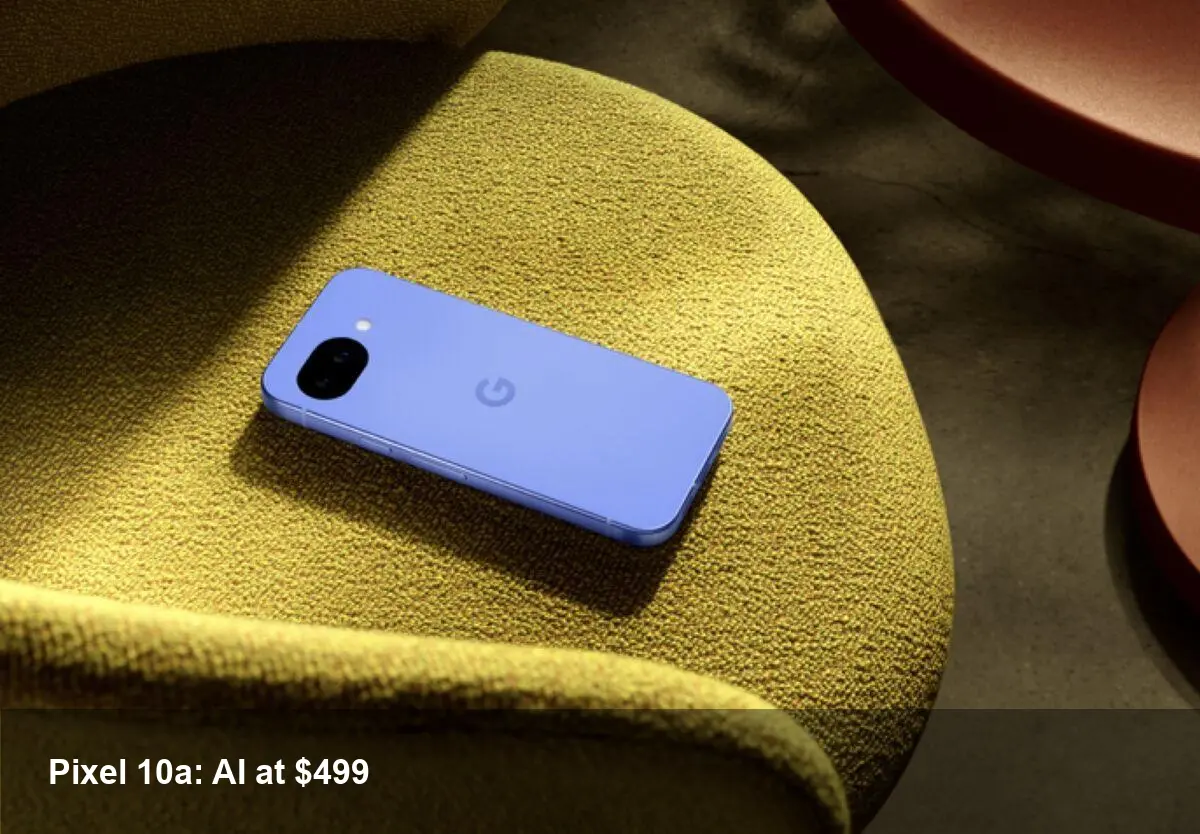
Google's new Pixel 10a arrives as the company's latest entry-level handset — priced at $499 and released just before Apple's iPhone 17e reveal. On paper it's not a radical reinvention: Google kept the same price, made modest hardware refinements and leaned heavily on upgraded AI-powered software to differentiate the device. For buyers, developers and small businesses, that positioning creates a different question than usual: can smarter software outmuscle more expensive hardware?
A quick background on Google's Pixel strategy
The Pixel "a" line has been Google's way of distilling flagship features into a more affordable package. Historically, this series preserves camera quality and core software experiences while trimming premium materials or cutting-edge internals. That trade-off is now being extended: rather than adding a faster chip or dramatically better sensors, Google is betting that software — especially AI features that run on the phone or closely integrate with cloud services — will drive perceived value.
What’s new in the Pixel 10a (high level)
- Price and positioning: $499 keeps the device within reach of mainstream buyers and shoppers comparing midrange Android phones against Apple’s lower-cost iPhone options.
- Software-first upgrades: Google emphasized new on-device and assisted AI features aimed at photography, voice interactions and productivity workflows rather than headline hardware specs.
- Subtle hardware changes: expect incremental refinements (camera tuning, battery management and materials) that support the software experience without raising the price.
Rather than chasing spec sheets, the Pixel 10a represents a continuation of Google’s thesis: deliver differentiated, useful software experiences and leave high-end hardware for the flagship models.
How this looks in day-to-day use
Below are practical examples showing how the Pixel 10a’s AI-forward approach plays out for different users.
- Photo editing and content creation: Imagine shooting a quick portrait and using an on-device feature that suggests creative edits, removes background clutter, or recomposes a shot automatically. For social creators who need polished assets on the go, this can reduce reliance on desktop software.
- Faster, smarter messaging and calls: Features such as live transcription, summarized voicemails, or AI-generated reply suggestions (where allowed) shorten the friction of handling calls and catching up on conversations.
- Travel and multilingual support: On-device translation and real-time captioning can make short trips and interactions smoother without sending every audio snippet to the cloud, improving latency and privacy.
- Small business productivity: For solo entrepreneurs and micro-businesses, the Pixel 10a can act as a compact productivity hub — scanning receipts, summarizing meetings, drafting emails, and producing short marketing clips — tasks that used to require a laptop.
Each of these scenarios relies less on raw horsepower and more on intelligently applied models, integration with Google services and user-friendly tooling.
What developers and startups should know
The Pixel 10a's release is not just a consumer story; it matters to app makers and services because it represents a lower-cost device with access to advanced software features.
- A wider audience for AI-enabled apps: If a $499 phone can run or access smart assistants, on-device editing, or transcription features reliably, developers can target a larger user base without leaving advanced features only to flagship owners.
- New opportunities for lightweight, edge-aware apps: Developers can experiment with hybrid architectures — doing initial inference on-device and offloading heavier tasks when necessary — to optimize latency, cost and privacy.
- Integration points: Expect Google to expose APIs or partner programs that let third-party apps tap into the Pixel’s software-layer features (permissions and privacy rules permitting). For startups building productivity or creator tools, this can speed go-to-market and raise product differentiation.
- Testing and compatibility: Lower-end hardware variations mean developers must test for memory, thermal throttling and battery patterns more broadly. Even modest hardware has different performance envelopes compared with flagships.
Market implications: why launch now, before iPhone 17e?
Timing this device just ahead of Apple’s iPhone 17e reveal is strategic. It sets a value benchmark for shoppers considering both ecosystems and forces a comparison on where differentiation lies: price and AI features versus the iOS experience and Apple’s own ecosystem advantages. For Google, it's a way to shape buying intent among price-sensitive customers who might otherwise default to an iPhone.
If Google's AI features gain traction among mainstream users, other OEMs and even Apple will feel pressure to match not just specs but smart software experiences across price tiers.
Limitations and realistic expectations
- Not a flagship substitute: If you need top-of-the-line gaming performance, the latest camera sensors, or premium build materials, the Pixel 10a isn’t intended to compete there.
- AI feature availability: Some advanced features may require server-side processing or specific regional availability; privacy settings and offline capabilities will vary.
- Longevity questions: Historically, midrange phones receive fewer major hardware upgrades over time; software support windows will determine long-term value.
Three forward-looking implications
- Software-as-differentiator becomes the norm: As Google proves AI can meaningfully change the user experience at lower price points, the industry will shift to compete on smart features rather than raw specs alone.
- Edge-first design for apps: Developers will architect apps to take advantage of on-device inference where possible, reducing latency and data transfer costs while preserving privacy.
- Pricing dynamics tighten: Entrenched margins on entry-level devices may compress further as manufacturers offer richer software bundles to secure buyers.
For shoppers, the Pixel 10a is an intriguing option if you value intelligent software that simplifies everyday tasks at a sensible price. For companies and developers, it opens a larger addressable market for AI-aware apps and highlights the importance of building privacy-conscious, hybrid architectures. Whether software can consistently outshine premium hardware is the question the Pixel 10a is designed to answer for a broader audience.