PC Builders Tell Buyers to Bring Their Own RAM

- Key takeaways:
- Maingear and other prebuilt vendors are offering PCs without RAM as DDR5 prices spike.
- AI-driven demand and tighter allocation have pushed DDR5 costs and created scarce inventory.
- BYO (bring-your-own) RAM reduces upfront cost but requires customers to check compatibility and speeds.
- Expect memory supply pressure to persist into 2026–2028, per Micron and SK Hynix projections.
Why vendors are asking customers to bring RAM
Rising demand for server and AI infrastructure, combined with constrained allocation from memory makers, has driven DDR5 prices sharply higher. Manufacturers and resellers report depleted inventories and wild price swings on retail sites like Amazon and eBay.
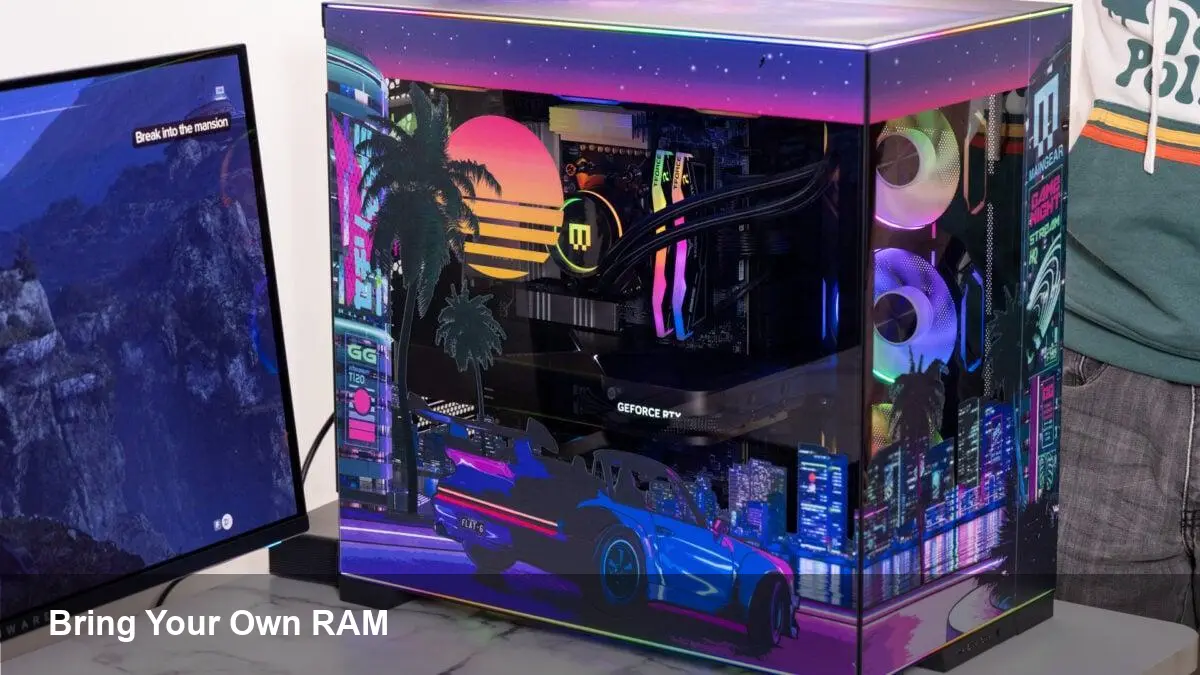
Maingear’s BYO RAM program
Custom-PC builder Maingear announced a BYO RAM option: buyers can ship their own DIMMs or source sticks independently and have the company install and validate them at its New Jersey facility. Systems ordered this way are priced lower than fully populated builds, Maingear says.
How the program works
Customers either send existing modules from an older machine or buy memory to be mailed to Maingear for "standard validation" testing. If the supplied modules aren’t used, Maingear will return them with the completed PC or ship them back separately.
How bad are prices?
High-end gaming DIMMs have ballooned in price: some 32GB kits from makers such as G.Skill are selling for several hundred dollars, and specific 16GB sticks (TeamGroup T-Force and similar) have been spotted at hundreds more than earlier this year. Scalpers on secondary markets have also pushed markups well into triple- and quadruple-digit percentages.
What’s causing the shortage
Maingear summarized the drivers as a "perfect storm": surging AI demand, tighter manufacturer allocations, and limited availability across popular DDR5 capacities and speeds. Memory suppliers Micron and SK Hynix have warned shortages will linger into 2026 and possibly beyond.
What buyers should do
If you already have compatible RAM, reuse it — that’s often the cheapest option. If you must buy, verify capacity, DDR generation (DDR5 vs DDR4), speed (MHz), and motherboard support before purchasing.
Market implications
The prebuilt market’s traditional convenience premium is under pressure. Offering no‑RAM builds shifts more technical responsibility to consumers and may deter buyers who prefer a fully tested, ready-to-use system. Expect more vendors to adopt BYO options while prices remain volatile.